

The Smart Alternative to Risky Independent Courier Contracts To Secure Your Brand
Secure guaranteed zero downtime ✓ and a dedicated, permanent delivery team ✓ at Ontime Delivery Solutions.…
Our logistics experts share practical tips on choosing the right strategy to improve your business efficiency. This guide breaks down the critical differences between forward scheduling and backward scheduling to help you determine which approach ensures your Australian business operations stay competitive and reliable. By implementing dedicated delivery services, you can achieve superior route optimisation and significant cost savings over time.
Managing logistics involves a daily battle against real world variables like traffic, vehicle maintenance, and supplier delays. A perfect schedule on paper is only valuable if it can withstand the chaos of the road. This guide provides a strategic framework you can implement today to turn your operations into a resilient business asset.
Here is the roadmap of what you will learn:
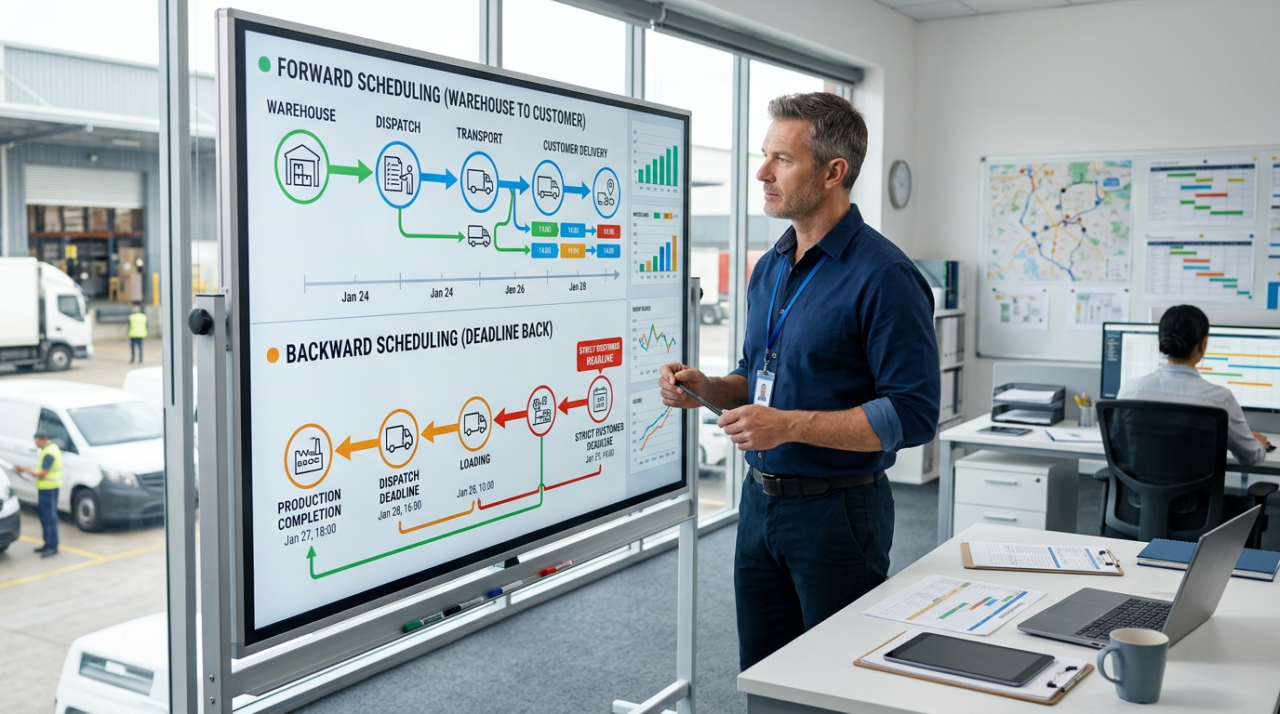
Before we build the framework, it is important to understand that these scheduling methods, known as forward and backward scheduling, represent two fundamentally different philosophies regarding how work moves through your business. These methods dictate whether you prioritise keeping assets busy or meeting strict customer deadlines. Choosing the correct approach is the foundation of a healthy supply chain.
The philosophy of forward scheduling is simple: an idle machine or an idle worker is an unnecessary expense. The goal is to maximise productivity by starting production the moment resources become free. This forward approach means you “push” products through your system, creating a buffer of stock ready for sale. The goal of this planning is to keep the production line moving.
For example, if your business involves manufacturing standard hardware components, you might start the next production run immediately after finishing the last one because the machinery is available. By building up inventory, you ensure that you always have stock ready to ship whenever a customer order arrives, regardless of when it was placed. This forward strategy, a core part of production planning, provides a data backed case for maintaining high service levels even during unexpected demand spikes, which sets you up perfectly for the next step.
The philosophy behind backward scheduling is that the most expensive thing in your logistics is waste, including wasted time, excess materials, and cash tied up in inventory holding costs. The goal of this method is to let a non-negotiable customer deadline “pull” work through the system at the last possible moment. One of the main benefits of this backward scheduling approach is its focus on efficiency and reducing waste.
For example, a supplier providing critical parts for manufacturing to an automotive assembly line must meet a strict 8 AM delivery window on Tuesday. You work backward from that deadline, using this planning method to calculate the exact moment you need to begin manufacturing, packing, and shipping each order. The order arrives precisely when it is needed, rather than sitting in a warehouse for days.
“Most managers view planning as a way to keep assets busy, but true profitability is found in the moments when resources are not moving. Forward scheduling builds a mountain of expensive stock to hide internal inefficiencies. The forward method can be costly. In contrast, backward scheduling exposes those inefficiencies so you can eliminate them with better planning.”
— Ontime Delivery Solutions
Establishing a baseline for these two methods allows you to see your operation through a new lens. By understanding the core philosophy of each, you can move from reactive planning to a more intentional, strategic approach.
The most successful Australian operators do not stick to just one strategy. Instead, they use a clear system to decide which approach fits each specific job or customer to ensure maximum efficiency for every shipment.
First, you need to understand the real world consequence of a delay. This helps you determine how much risk you can afford to take with your planning. The level of control your customer has over your timeline determines the best strategy to use.
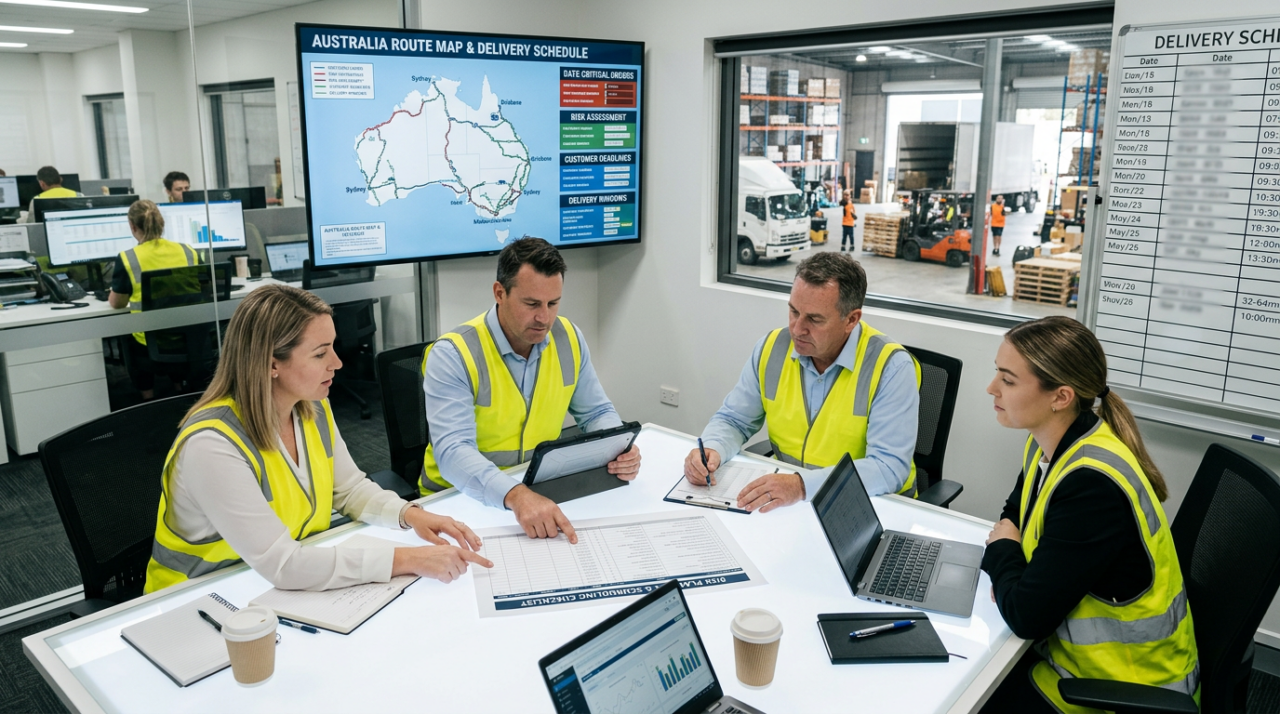
Aligning your operational risk with your financial risk allows you to focus your most rigorous planning on the orders that carry the highest cost of failure. This focus on meticulous planning ensures your team prioritises the right tasks, which sets you up perfectly for the next step.
Next, you need to understand the trade off between cash in the bank and stock on the shelf. It is a common mistake to think inventory costs are limited to warehouse rent. The true cost includes storage, insurance, labour to manage the stock, and the cost of capital tied up in unsold goods. Successful order management depends on understanding these costs.
The Liquidity Tax: Why Holding Stock Costs More Than You Think
Australian businesses lose 20% to 30% of their stock’s value every year through storage, insurance, and obsolescence. This represents a “liquidity tax” where your capital is frozen in physical goods rather than flowing through your business. High inventory levels, often a result of inefficient forward scheduling, are not a buffer; they are a direct drain on your ability to reinvest in growth.
Making a data driven planning decision about where to hold stock and where to hold cash helps you free up capital to reinvest in business growth. Having this financial clarity allows you to move to the final step of assessing your team’s capability.
Finally, you must be honest about what your team and your transport partners can actually handle. A high risk, high reward backward scheduling plan requires a foundation of absolute reliability. A forward scheduling plan, with its built in buffers, is much more forgiving of everyday logistics problems.
Choosing a scheduling strategy that fits your current operational reality prevents costly failures and team burnout. This honest assessment ensures your planning is based on facts, providing a stable foundation for your business logistics. This sets you up to improve your overall performance with better production scheduling.
Call our team today to find your hidden delivery savings and see your transport options.
Choosing the right method is only the first step. The next is building a system that remains stable when things go wrong. Before looking at external partners, you should strengthen the elements you can control within your own warehouse and dispatch areas.
A resilient partner does not just provide a service; they provide certainty. Their job is to absorb the real world chaos so that you can execute your plan flawlessly. For example, a backward scheduling plan is invalidated by a single unreliable vehicle. With up to 81% of Australian consumers likely to avoid a brand after one bad experience, the risk to your order pipeline is significant.
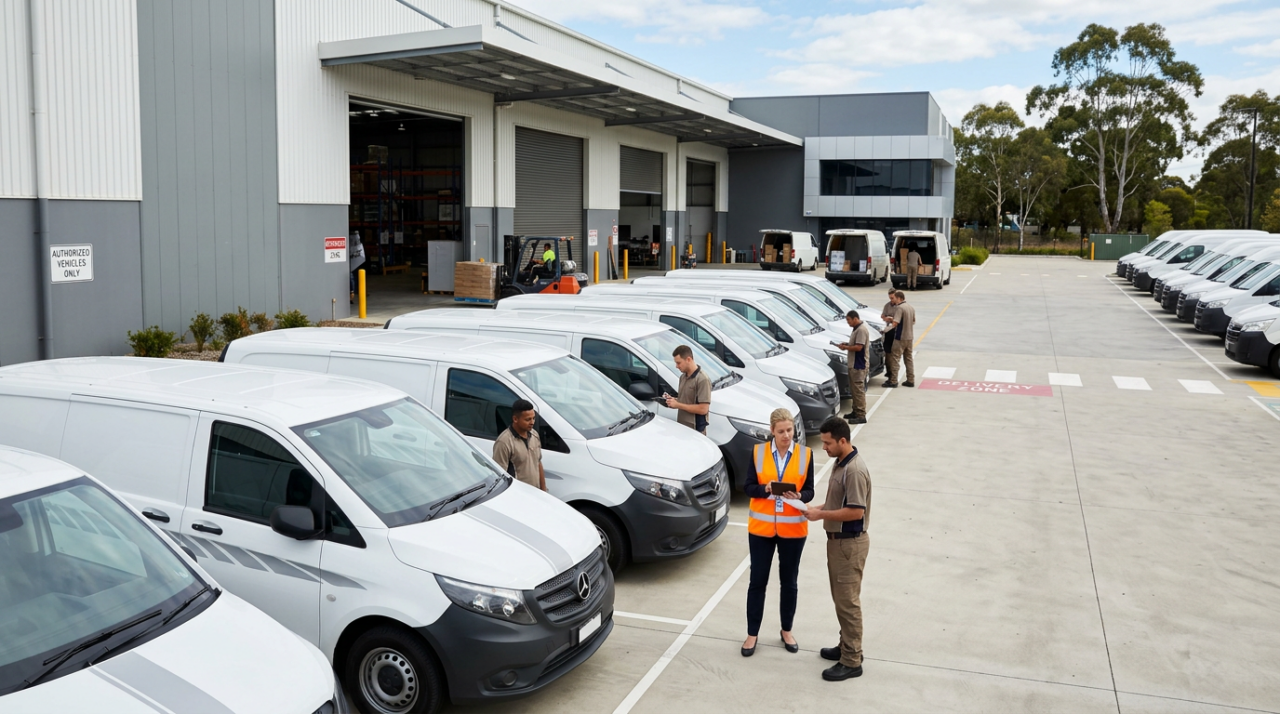
A dedicated partner provides the exact fleet mix your strategy demands and guarantees continuity with a reserve fleet. This turns the risk of a vehicle breakdown from a catastrophic failure into a seamless operational pivot, ensuring your operations remain uninterrupted and all deadlines are met.
A good plan is the start, but a resilient operation is built on flawless execution. By using this framework for forward and backward scheduling, you can move beyond simply scheduling and start delivering with unwavering consistency. If your current in house fleet is a source of unpredictability, it may be undermining your entire delivery strategy and production schedule.
The primary difference in forward and backward scheduling lies in the starting point and the operational priority. Forward scheduling begins today to determine the earliest possible completion date, prioritising high asset utilisation and labour efficiency. Backward scheduling begins at the customer’s required deadline and works backward to identify the latest possible start date, prioritising “just in time” fulfillment and minimal inventory holding costs. The forward approach provides a buffer against internal delays, while the backward approach minimises waste and capital lock up.
A hybrid model combining forward and backward scheduling is most effective when a business manages a diverse product range with varying demand profiles. You should apply forward scheduling to high volume “A items” (following the 80/20 rule) to ensure constant availability and smooth warehouse operations. Conversely, backward scheduling is ideal for bespoke, high value, or slow moving items to ensure cash flow isn’t unnecessarily frozen in stock that may take months to sell. This balanced approach protects service levels while optimising liquidity.
Route optimisation software is the technical enabler for both strategies. For forward scheduling, it helps reduce the size of the “safety buffer” required by identifying the most efficient delivery routes. For backward scheduling, it is a non-negotiable requirement; it provides the precise transit time data and real time estimated arrival times needed to hit strict windows and deadlines. Without route optimisation, backward scheduling carries a high risk of failure due to the lack of visibility into Australian traffic variables and driver constraints.
The Fleet XRAY Analysis™ is provided at no cost as a diagnostic tool to help Australian small and medium enterprises identify hidden inefficiencies and quantify potential savings in their current logistics. Ontime Delivery Solutions generates revenue only when a client chooses to transition to our managed, dedicated fleet services. Our business model is based on providing a more cost effective, reliable, and scalable alternative to managing an internal fleet, allowing business owners to focus on their core operations while we handle the execution and the complexities of scheduling for every order.
Call us on 1300 778 919 to see your transport options and get a detailed fleet analysis today.
From pickup to drop-off, we make every step easier.
Need drivers? 1300 778 919