
A Deep Dive into Your Fleet’s Cost Per Kilometre
Do you know your fleet's true cost per kilometre? Our guide shows you how to calculate it, revealing…
This guide provides a step by step plan for Australian businesses to master their delivery scheduling, reduce costs, and significantly boost customer satisfaction.
Are rising fuel costs, customer complaints, and the daily chaos of managing your fleet holding your business back? We are Ontime Delivery Solutions, a dedicated delivery service built for businesses that need reliable, professional logistics support. Give us 10 minutes to help you improve your operations.
We’ll never forget one Friday afternoon in our early days. We had a single pallet of critical parts for a major automotive client. A simple scheduling error meant it arrived three hours late. We spent the entire weekend on the phone and personally apologised. We knew that one mistake could have cost us a contract we desperately needed. That’s when we learned a lesson that manufacturing experts have known for decades. A business is only as fast as its slowest part. In a factory the bottleneck might be a slow machine. In your delivery business it’s the one driver stuck in traffic on the M1 who’s now holding up every single delivery scheduled after them.
Our goal in this guide is to give you the exact professional methodology I use to find and fix these hidden bottlenecks. By the end of this article you won’t just have a list of tips. You’ll have a set of diagnostic tools you can use this week to find the hidden costs in your operation. You’ll also have a clear communication plan to build trust with your customers and a framework for making data driven decisions that prevent problems before they start.
Before you can fix your routes you must prove to yourself and your team exactly how much your current process is costing you. A real number is a catalyst for change.
Here’s the first diagnostic we run and you can do it this week. We call it a ‘Route Autopsy.’ Grab a driver’s run sheet from last week. Now open a free tool like Google Maps and enter every single stop in the order they were completed then ask the tool to optimise the route.
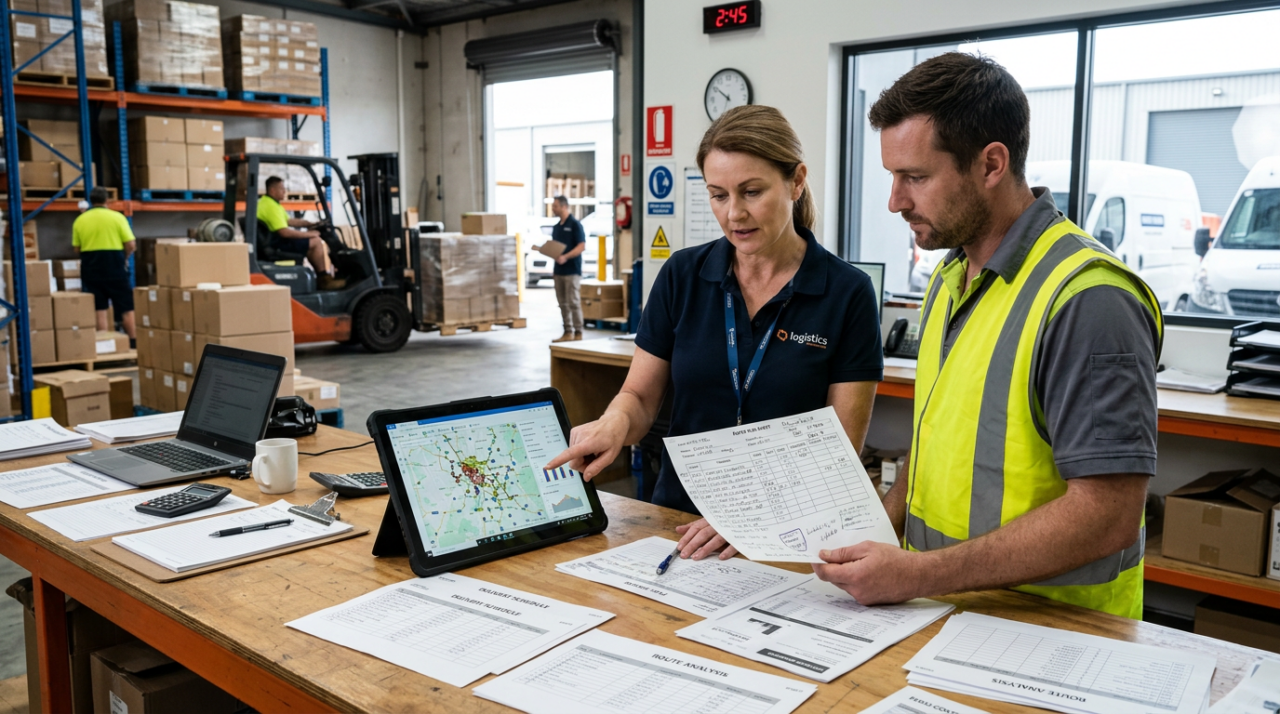
The next step is to translate that into hard numbers. If the optimised route is 15km shorter and your vehicle’s cost per kilometre is $1.50 then that’s $22.50 wasted on a single run. That wasted money isn’t just a number on a spreadsheet. It’s the fuel for a competitor’s extra sales call. It’s the budget for a pay rise you can’t afford to give. It’s a tangible loss. With a 10.5% rise in Australian transport costs this is a diagnostic you can’t afford to skip.
If you find a consistent variance of 10% or more between your actual and optimised routes then route planning is your primary bottleneck. This is your first priority.
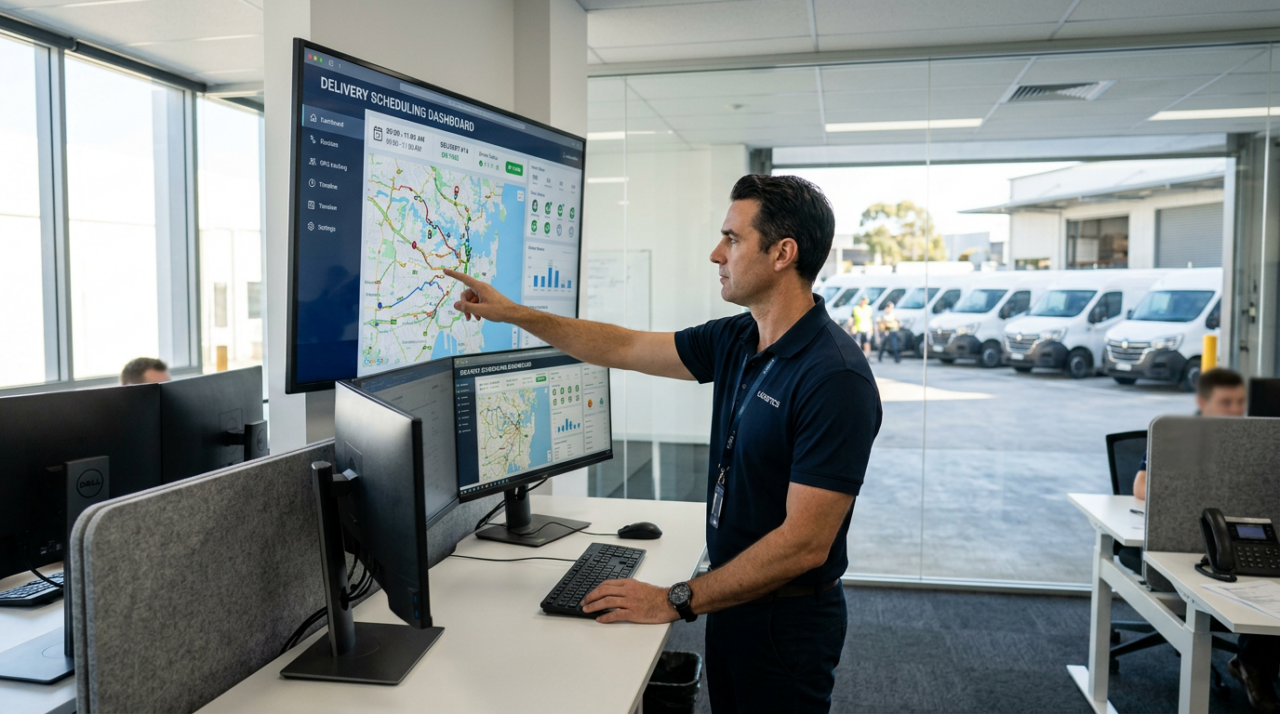
Professionals don’t just watch the dots on the map. They manage the exceptions. Your goal isn’t just to see where your fleet is but to be instantly alerted when something goes wrong.
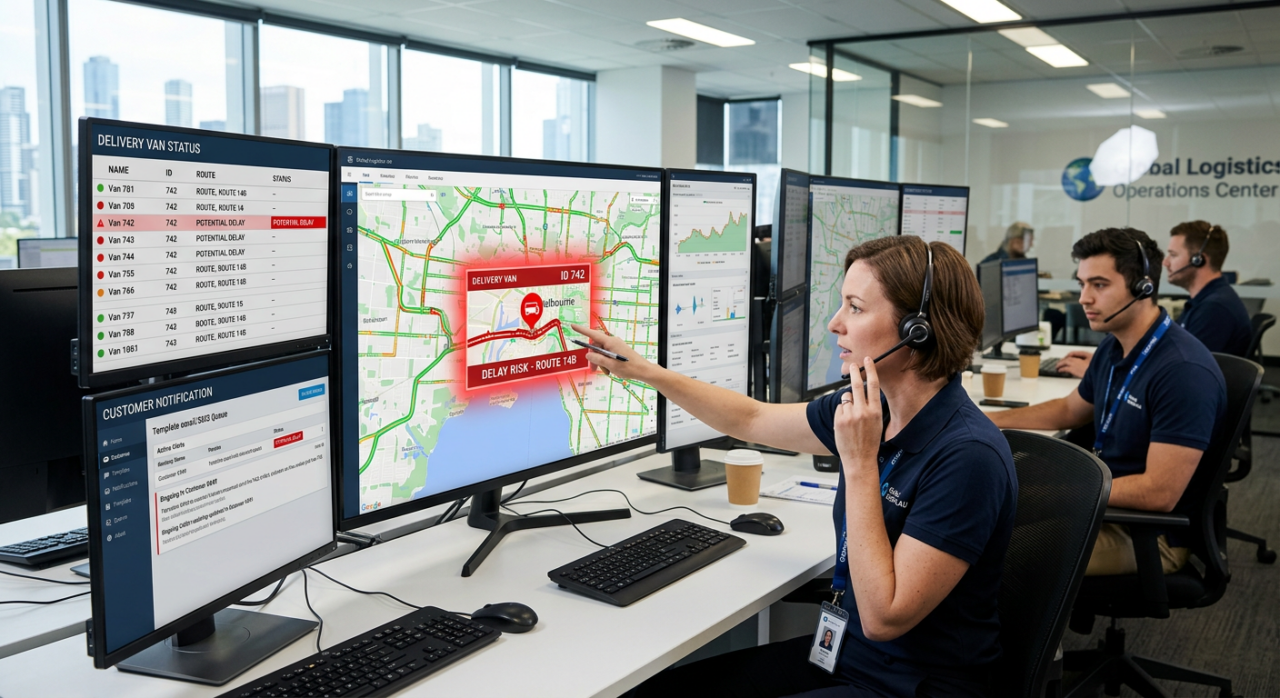
This isn’t just about good service. It’s about understanding how your customers form memories. Nobel laureate Daniel Kahneman’s research on the ‘Peak-End Rule’ shows that people remember an experience based on its most intense point and the end. Imagine your customer has bought a new mattress from a retailer like Snooze. The frustration of waiting for a delayed delivery becomes a negative peak. If it arrives late with no explanation that frustration is the memory they’re left with. Active Exception Management means setting rules in your system that flag anomalies before they become that negative peak. For instance you define a standard stop as taking 10 minutes. If a vehicle is stationary for 25 minutes you get an alert. This allows you to call the driver and solve the problem. You can then proactively inform the customer and turn a potential negative into a positive.
“Proactive communication” is a great goal but it fails without a system. A professional operation defines its communication points and makes them a non-negotiable part of the process.
Delays without communication can cause a 25 to 30% drop in satisfaction. To prevent this you should implement a mandatory four point communication cadence for every delivery:
This cadence isn’t just nice to have. It’s a system that manufactures trust and dramatically reduces “Where is my order?” calls.
We’ve all seen it happen. One last minute change sends a ripple effect of chaos through the entire day’s schedule. A system that can absorb change rather than break under it is so critical. Here’s a simple breakdown of the two approaches:
| Feature | Static Route Planning | Dynamic Route Planning |
|---|---|---|
| Flexibility | Routes are fixed for the day. | Routes update in real time. |
| Efficiency | Becomes inefficient with changes. | Always finds the smartest path. |
| Customer Impact | Often have to say no. | Easily adapts to requests. |
Imagine a high value client like a Repco or Burson Auto Parts store calls at 10 AM needing an urgent part for a car on a hoist. With a static plan you’d have to say ‘no’ or cause chaos trying to manually adjust. With a dynamic system you add the job then the software optimises everyone’s routes in seconds and your driver becomes a hero. The cost of the software is almost always dwarfed by the value of retaining that one key client.
Get a complimentary data driven analysis of your current delivery operations. We’ll uncover hidden costs and reveal your potential for savings.
Amateurs report on what happened. Professionals analyse why it happened. Your goal isn’t just to know your on time delivery rate. It’s to know exactly what’s dragging it down.
Don’t just track your on time delivery percentage. For every delivery that fails to be on time your team must log a reason from a predefined list. Examples include ‘Warehouse Delay’ or ‘Traffic on West Gate Bridge’ or ‘Customer Not Home’. At the end of the month you don’t just have a number. You’ve a pie chart that reveals your true bottleneck. If 40% of late deliveries are due to ‘Warehouse Delay’ you’ve just discovered the problem isn’t your drivers. It’s your picking process. This is how you use data to find the true source of your problems. In Australia the Chain of Responsibility laws are a legal framework holding all parties in the supply chain responsible and good data is your best defence to prove you’re managing your part of the chain effectively.
An unmanaged expectation is a guaranteed disappointment. The damage isn’t just an unhappy customer. It’s the real cost of a failed delivery attempt and a one star Google review.
Vague promises create confusion. The solution is to provide clear expectations aligning with advice from the Australian Competition and Consumer Commission (ACCC, n.d.). When a delivery fails because a customer wasn’t home you pay for it twice. Once for the driver’s wasted time and fuel and again for the cost of redelivery. Setting clear choices manages this risk:
This simple act manages expectations while giving customers control and preventing costly disappointment.
A manual system’s biggest cost isn’t just time. It’s the inevitability of human error. A single typo in a texted address can derail an entire delivery run.
Trying to manage all these steps with spreadsheets and phone calls is why so many businesses feel overwhelmed. We’ve all seen it. A dispatcher is trying to reroute three drivers over the phone during peak hour while juggling maps and run sheets. In the chaos an address is misheard or a job is forgotten. Modern delivery scheduling software eliminates these single points of failure. It’s the central nervous system that ensures every driver has the same correct information in real time. It’s not an expense. It’s an investment in consistency.
The ultimate solution to the Theory of Constraints in logistics is to stop fixing your own bottlenecks and instead adopt an entire system that is already optimised from end to end.
This brings us to a strategic choice based on a classic business principle called Core Competency Theory. It’s the simple idea that companies achieve the greatest success when they focus on what they do best and outsource the rest. Think about a successful auto parts distributor. Their core competency is sourcing the right parts and building relationships with mechanics. Every hour their managers spend dealing with a broken down van or a sick driver is an hour they’re not spending on their core business. That’s the real cost.
Partnering with a dedicated delivery solutions provider means you get access to the expert team, technology and optimised processes from day one. Fleetcare notes that outsourcing fleet management can reduce overheads by replacing in-house costs such as salaries, training, equipment and software with specialist support, economies of scale and fleet technology. For broader guidance, the Australian Government also advises businesses to consider outsourcing time-consuming or specialist tasks to contractors or other businesses.
Once your in-house fleet requires a dedicated person to manage it (even part-time) it’s time to run a cost benefit analysis against a dedicated partner. The moment logistics becomes someone’s job title is the moment you should seriously consider making it our job instead.
You now have the professional’s methodology for transforming your delivery operations. Let’s recap your new diagnostic toolkit:
What this playbook really gives you is more than just efficiency. It’s about turning the daily chaos into quiet confidence. It’s about getting your time back. It’s about getting your focus back so you can lead your business forward. The real goal here isn’t just a healthier bottom line. It’s a healthier life for you as a business owner.
Ready to make that change? Call us on 1300 778 919 to get started.
Transform your delivery operations from a costly liability into your greatest competitive advantage. Let our team handle the logistics so you can focus on what you do best.
Speak to a Delivery Expert Today
The return on investment (ROI) goes far beyond just a monthly subscription fee. For an average Australian business running a few vehicles the savings are concrete. By reducing fuel costs by 10 to 15% and cutting driver overtime through more efficient routes and increasing the number of deliveries per day most businesses see a positive ROI within months. The most significant return however is in customer retention. Preventing the 25 to 30% satisfaction drop from poor communication directly protects your future revenue.
This is one of the biggest hidden costs of an in house fleet. A single driver calling in sick can derail an entire day’s schedule leading to broken promises and expensive last minute couriers. A dedicated delivery partner solves this by design. We maintain a reserve pool of trained drivers and vehicles so if a driver is unavailable we deploy a replacement seamlessly. For you it means zero downtime and uninterrupted service guaranteed.
Not at all. In our experience the tipping point is often around 3 to 5 vehicles. This is when the headache of managing maintenance and compliance and payroll starts to pull focus away from the core business. Outsourcing allows a growing business to scale its delivery capacity predictably without the huge capital expense of buying new vehicles or hiring more staff.
That’s a great question and the real difference is fundamental. To help illustrate here’s a simple comparison of how the two models stack up:
| Aspect | Standard Courier Service | Dedicated Delivery Partner |
|---|---|---|
| Driver Consistency | A different driver every time. | The same driver serves you daily. |
| Brand Representation | No connection to your brand. | Acts as your brand ambassador. |
| Flexibility & Training | Follows a generic process. | Trained on your specific needs. |
| Accountability | Fragmented and difficult. | A dedicated account manager. |
A standard courier is a transactional service for one off jobs. A dedicated partner is a strategic relationship designed to provide consistency and reliability and a superior level of service that a revolving door of couriers simply cannot match.
Stop firefighting logistics and start focusing on growth. Our experts can analyse your needs and build a tailored delivery solution that saves you time and money.
From pickup to drop-off, we make every step easier.
Need drivers? 1300 778 919