
A Deep Dive into Your Fleet’s Cost Per Kilometre
Do you know your fleet's true cost per kilometre? Our guide shows you how to calculate it, revealing…
This guide explains the strategic distinction between shipping and delivery, providing Australian operations managers with a framework to reduce transport costs and optimise last mile logistics performance.
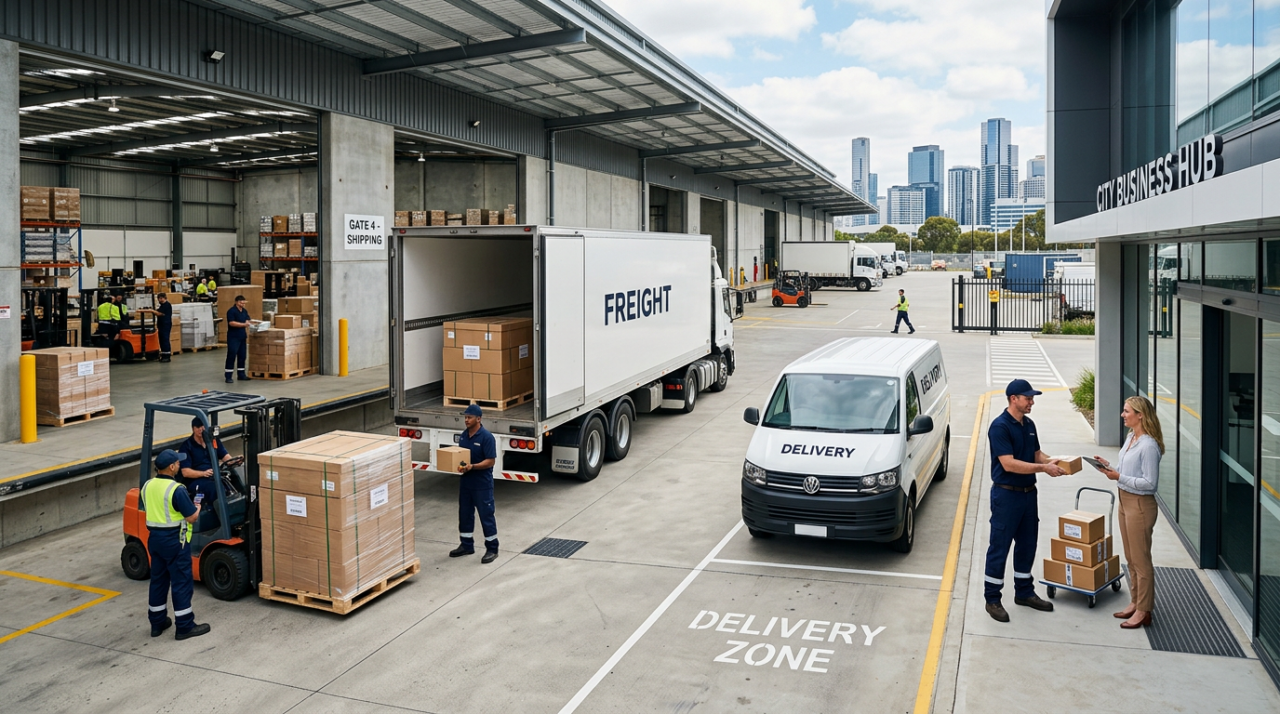
We are Ontime Delivery Solutions, a dedicated delivery service built for businesses that need reliable, professional logistics support. Having started this company with a single van, we understand the daily pressure of juggling fleet logistics and driver reliability. After three decades serving the Australian market, we have seen how confusion between the shipping and delivery stages leads to budget blowouts and eroded trust with customers. Implementing professional dedicated transport services can help close these gaps by providing the oversight necessary to manage complex supply chains. For an Operations Manager, these logistical headaches often stem from a misdiagnosis of where the distribution network is failing.
This guide provides a strategic framework to help you identify the root causes of delays so you can reclaim your time and turn a costly transport function into a competitive advantage. To help you improve your last mile logistics, we will cover the key differences:
While people often use these terms interchangeably, they represent two different stages of the supply chain with distinct cost structures and risk profiles. Understanding these differences is the first step in moving from reactive troubleshooting to proactive oversight of your transport spend.
By defining these roles, you create a foundation for diagnosing your supply chain costs, which allows you to move from general troubleshooting to targeted improvements in your distribution network and shipping services. This is crucial for evaluating different options like standard parcel shipping or specialised freight shipping.
When companies treat all transport as a single shipping stage, they often overlook the specific demands of the final mile. This oversight creates four gaps that can reduce your profit margins and damage customer trust.
During the shipping phase, your products are often with a large carrier where a delay is just a tracking update in a massive network. During the final handover, the accountability is entirely yours. Without a focused approach, you lose the ability to ensure your specific standards for all shipments are met at the point of fulfilment.
“A random courier is a gamble with your brand reputation. A dedicated driver is an investment in it. When a driver understands your client requirements, they transition from a delivery person to a brand ambassador who protects your commercial relationships.”
Shipping has virtually no customer interaction, but the handover is the primary customer touchpoint. For many business customers, the driver is the only physical representative of your company they ever encounter. A professional driver in uniform provides a far better experience than a standard courier leaving fragile components on a wet loading dock.
Good handovers build loyalty, while poor experiences drive customers toward your competitors. Strategic fleet oversight ensures that the experience at the receiving bay matches the quality of the product inside.
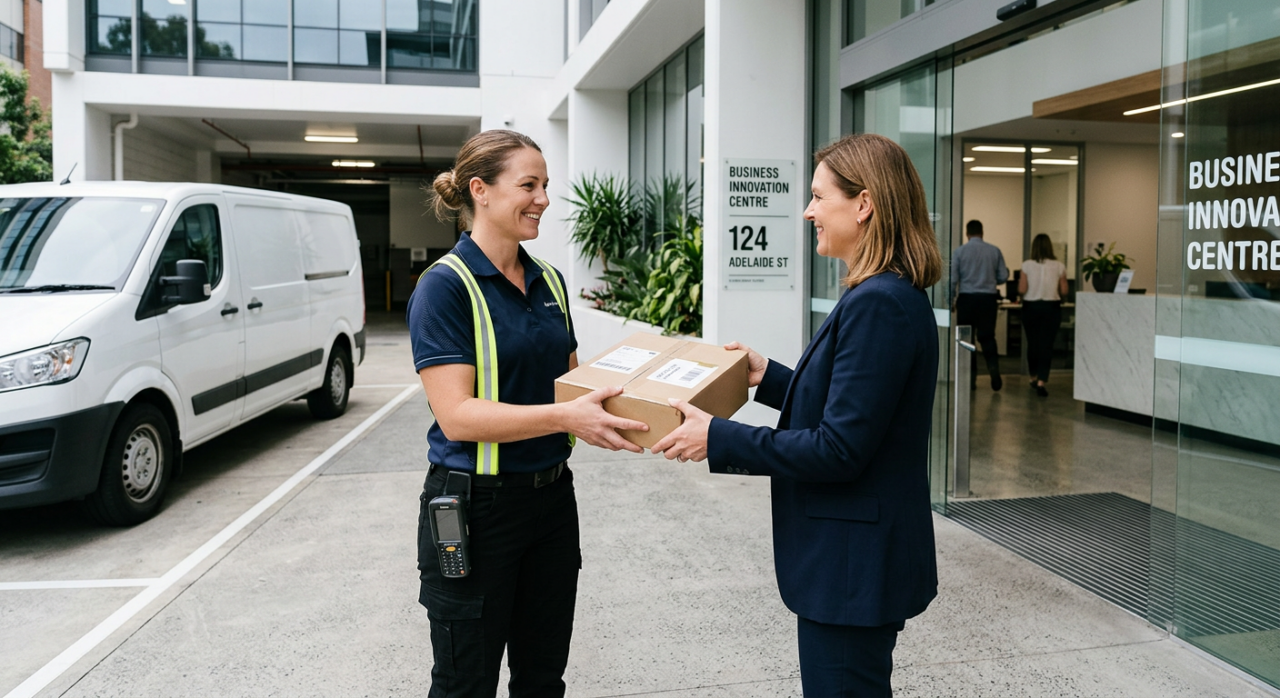
Bulk shipping is a high volume tool, but distribution requires precision. Using a general freight service for urgent or multi-stop local runs is often inefficient and expensive. By focusing on logistics, businesses may use route optimisation to reduce time on the road and fuel consumption.
The Final Mile Is The Most Expensive Part Of Your Supply Chain
In bulk shipping, the shipping costs are spread across thousands of units moving between two points. In distribution, that efficiency disappears. Every stop, traffic light, and manual handover represents an unrecoverable cost for a single customer. This complexity makes the last mile responsible for over 53% of total logistics expenses.
General shipping services often use rigid or generic systems. Customisation, however, creates a competitive edge. Using the wrong vehicle for the job is a major source of hidden cost in transport operations, and a poor shipping choice. A flexible tailored fleet allows you to match the vehicle size to the load requirements to lower your operational overheads.
Identifying these four gaps has transformed your logistics from a vague operational headache into a clear map of your operational leaks, which sets you up perfectly to take action.
See your custom delivery options today.
Moving from a state of constant stress to strategic control is a manageable process when you follow a clear framework. This system is designed to replace guesswork with data driven certainty for your fleet oversight and last mile distribution.
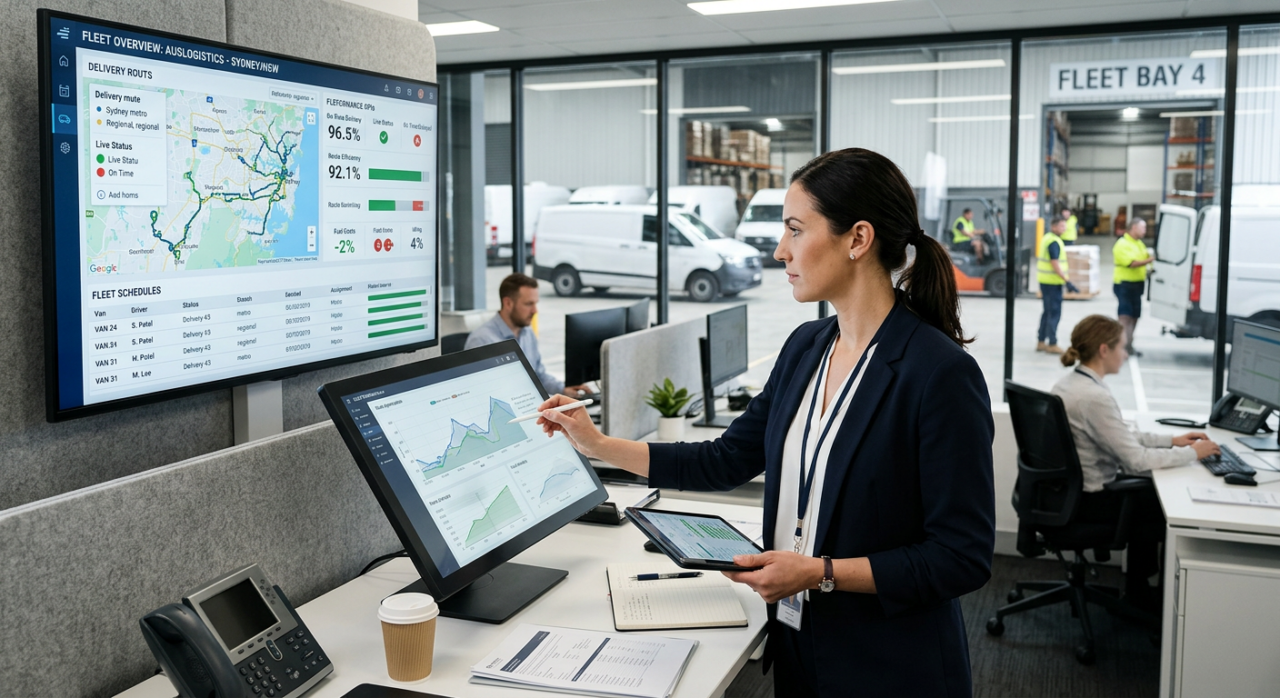
To improve a transport system, you must first identify the biggest drain on your resources. Most Australian companies find their problems fall into these three categories:
Successful operations stop chasing vague goals and start defining a concrete standard with a single key performance indicator: delivery in full, on time. It is a simple percentage that tells you how perfectly you are meeting your customer promise for their orders.
To calculate this, divide the number of perfect consignments (on time and error free) by the total number of consignments. This transforms the customer experience from a wish list into a measurable objective, ensuring your team and partners are accountable for real world performance.
Armed with your success metric, you can make an informed choice about your operational model and shipping strategy. This decision comes down to whether you want total operational control or absolute focus on your core product.
| Operational Model | Best For | Key Considerations |
| In House Fleet | Companies that have the internal staff to manage vehicle maintenance, HR, and compliance. | Your company bears all financial risk, administrative burden, and is vulnerable to driver shortages. |
| Dedicated Partner | Businesses that want to eliminate distractions and focus on their core product or service. | Provides a fixed cost model and removes fleet stress, but requires a partner that understands your brand. |
By selecting the right model and setting clear metrics, you have replaced guesswork with a data driven strategy, giving you the clarity needed to lead your logistics team with confidence.
The primary difference is the level of control and brand integration. An ad-hoc courier service operates on a multi-tenant basis, where one driver handles packages for dozens of different companies simultaneously, which is not ideal for reliable parcel delivery. In contrast, a dedicated service provides a driver and vehicle that work exclusively for your company. This allows for total customisation of standard operating procedures, specific optimisation, and a driver who acts as a direct extension of your brand.
Last mile transportation typically accounts for 53% of total shipping costs. If your internal data shows your cost per unit is rising while your volumes remain static, or if you are frequently paying “emergency” surcharges for ad hoc vehicles to cover fleet downtime, your current model is likely inefficient. A healthy operational model should provide a fixed cost structure where vehicle maintenance, insurance, and driver relief are managed as a single and predictable line item rather than fluctuating variable expenses.
Outsourcing to a dedicated partner like Ontime Delivery Solutions offers significant tradeoffs compared to an in house fleet:
We provide a free Fleet XRAY Analysis™ to identify operational inefficiencies and hidden costs within your current transport model. We generate revenue through our core services: providing permanent and outsourced fleets. Businesses partner with us once they see the data driven savings available by moving from a high risk in house fleet or an unreliable ad-hoc courier model to a fixed cost and dedicated driver solution for all their shipping needs.
Gaining clarity on the difference between shipping and distribution allows your company to stop treating transportation as a generic expense and start seeing it as a tool for growth. By focusing on the final mile, you can protect your profit margins and ensure your customers receive the high quality experience they expect from your brand, with effective delivery tracking on every consignment.
See your custom delivery options and request a fleet review now.
From pickup to drop-off, we make every step easier.
Need drivers? 1300 778 919