

An Insider’s Blueprint On Choosing the Best Logistics Software for Your Business Needs
Stop choosing the best logistics software ✓ and get a complete, managed fleet partner ✓. For your…
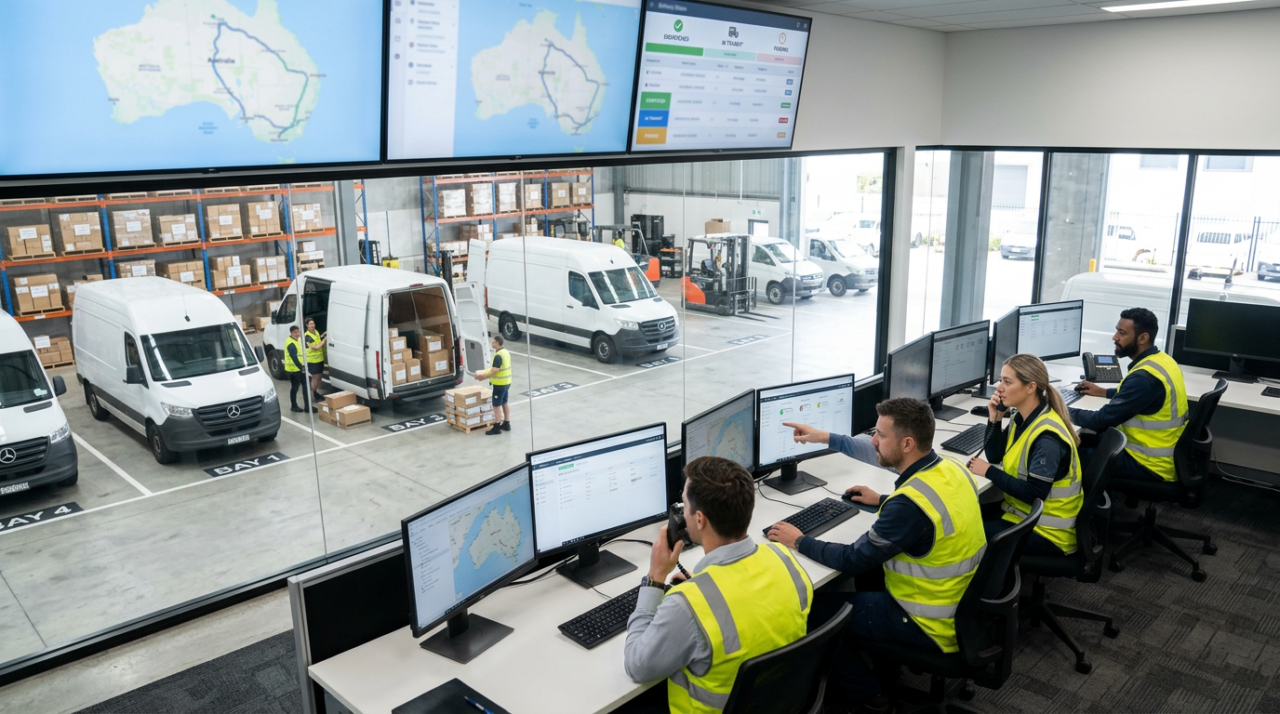
For growing businesses, choosing the right logistics software is a critical operational decision that can feel overwhelming. The right technology can transform your entire supply chain and turn your transport operation into a competitive advantage, but the market is flooded with options. This blueprint gives you a 4-point framework for selecting the best software solutions, helping you cut through the noise, identify what your business really needs, and make a smart investment in your shipping management and logistics operations. Getting this right is fundamental to streamlining how you manage your inventory and warehouses.
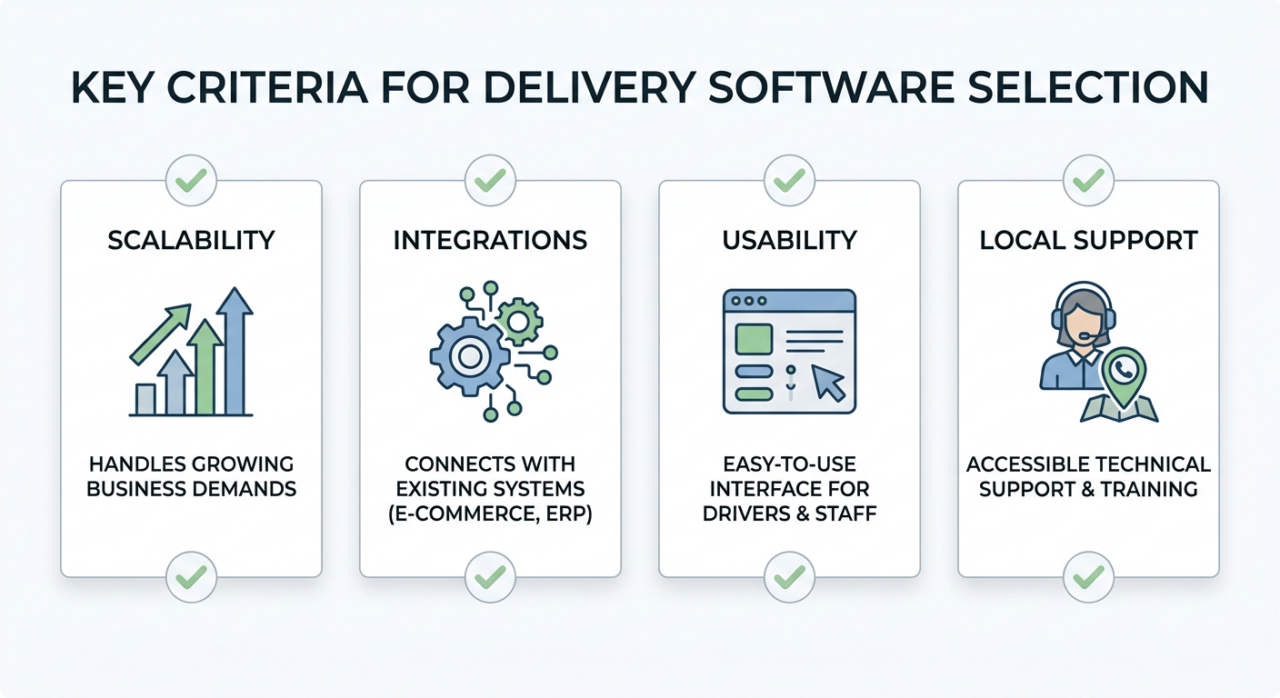
Before assessing specific product features, confirm that any potential platform meets these four essential operational criteria. In my experience with countless businesses, these are non-negotiable for effective logistics and fleet management.
The problem: A cheap system that caps out at 10 vehicles will force you to pay for a costly, disruptive replacement as you succeed. Many businesses find that entry-level logistics software solutions cannot handle an expanding supply chain, leading to significant operational bottlenecks.
What to do: Ask the provider about their data and vehicle limits to ensure the system can scale with you. A key part of selecting a platform is confirming it supports the long-term growth of your operations and its logistics.
The problem: Without the right API connections, teams often waste hours on manual data entry between systems, leading to errors in inventory and order management. Your logistics platform should be a central hub, not an isolated data island.
What to do: Ask for a list of available API integrations. The management software should include pre-built integrations with essential system tools like Xero and Shopify to ensure a smooth flow of data across your operations. These features are crucial when you compare options from different logistics software companies.
The problem: Complicated software is a recipe for human error and frustrated staff. If the platform isn’t intuitive, its advanced features become useless, and you won’t see the promised efficiency gains in your transport operations.
What to do: Ask for a live demonstration. If your office staff and drivers can’t master the core functions in under an hour, it’s too complex and will cause errors. A good logistics software solution should simplify management, not complicate it. It’s important to choose the right platform.
The problem: When a problem happens on the road, you need fast, local support that understands the local transport landscape. Time is critical in logistics, and waiting for an overseas call centre can bring your supply chain to a halt.
What to do: Ask where their support team is physically located. When a truck is delayed in Sydney traffic, you need help from a team that understands the local reality of transport, not one reading a generic script.
Ultimately, software is a tool, not a complete solution. A business must decide on the operational model that best serves its strategic goals. The choice is between self-managing the tool or outsourcing the entire outcome.
In this model, the business purchases logistics software (like a Transportation Management System or Fleet Management Software) and takes on the full responsibility of running the delivery operation. This includes managing drivers, maintaining vehicles, and using the software to coordinate the moving parts.
In this model, the business partners with a dedicated logistics provider. This provider supplies the software, the trained drivers, the vehicles, and the operational management as a single, integrated service. The business gains a complete, high-performance delivery department without the capital expenditure or management overhead.
Good logistics software aims to give you a “Digital Twin”: a live model of what’s happening on the road. But a model is only as good as the real-world operation it represents. You’re in business to be brilliant at what you do, not to become a logistics expert overnight. Here are the core functions, their impressive features, and their real-world limitations.
| Function | The Business Impact | The Real-World Failure Point |
|---|---|---|
| GPS Vehicle Tracking | Creates a live map of your fleet assets. This technology is fundamental to tracking your delivery success, enabling robust transportation management and allowing you to give customers accurate ETAs. | It only reports problems, but it doesn’t solve them. The map shows your truck is broken down, but it can’t get the shipment made or manage the impact on your inventory. |
| Route Optimisation | An algorithm calculates the most efficient multi-drop route. This software protects profit margins by reducing fuel and time costs. | A perfect route is useless if the assigned driver calls in sick. Without a backup driver, the entire plan for that vehicle collapses, halting a segment of your supply chain. |
| Electronic Proof of Delivery | Drivers use a mobile app to capture a GPS-stamped photo or signature. This feature provides the data to invoice immediately. | Its value depends entirely on the driver using it correctly. If they’re rushed and skip the process, you have no proof of the shipment, and your management processes suffer. |
Let us handle the complexities of your delivery operations so you can focus on what you do best. Our managed solutions provide the technology, the drivers, and the expertise to ensure your deliveries are always on time, every time.
Book a Free Fleet XRAY Analysis Today
When you buy logistics software, you’re not buying a solution. You’re buying a new, specialised, full-time job management function for your team. The software is just a tool. It can’t train a driver, cover a sick day, or fix a flat tyre. The real cost isn’t the subscription. It’s the colossal amount of extra work and fleet management required to make it effective. This oversight is a common pitfall for many businesses venturing into self-managed logistics.

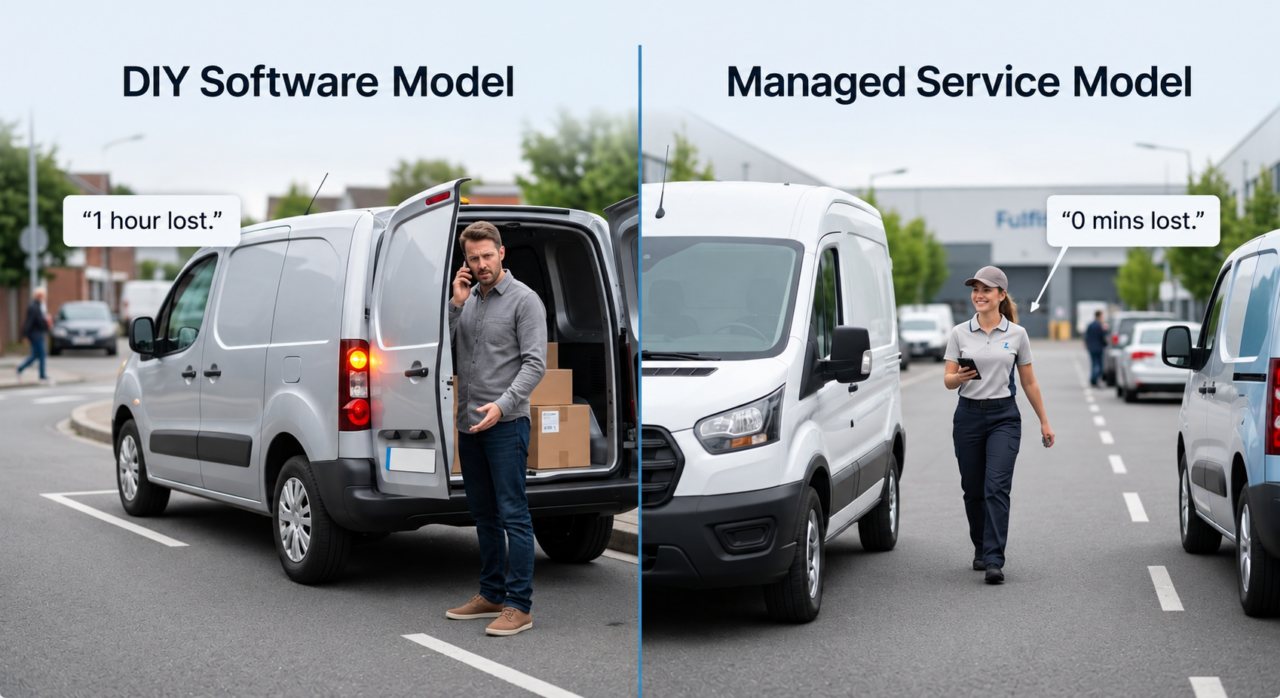
Let’s compare a typical Tuesday for a business owner under two different models to see how logistics management plays out.
The Verdict: A Managed Service Executes the Outcome
A managed service isn’t just about providing software. It’s about providing an expert operations team and robust solutions to handle the inevitable daily logistics problems. This professional management frees you to focus on your core business, safe in the knowledge that your supply chain and warehouse management are kicking goals.
This blueprint gives you a clear framework for evaluation. The next step is to apply it to your own business and get the hard data to see which path is truly the most profitable and least risky for you. Making the right choice in logistics software and management can define your growth trajectory.

Yes, absolutely. A good partner provides total transparency. You should get full access to a technology platform. This should include live GPS tracking of your dedicated drivers, instant electronic Proof of Delivery, and detailed performance reports on all your logistics operations.
While the monthly fee for a managed service is higher than a software subscription, the total cost of operation for your business is often significantly lower. A software-only model doesn’t account for driver wages, vehicle costs, maintenance, insurance, or the hidden costs of downtime and poor fleet management, which can severely impact your supply chain and bottom line.
Yes. Many clients start with an existing set of vehicles. A good partner can integrate your current assets into their managed service. They can take over the maintenance, compliance, and driver management, and develop a long-term plan to phase out older vehicles, improving your overall logistics efficiency.
Scaling with a managed partner is fast and direct. Because they operate a large pool of vehicles and maintain a network of trained drivers, they can add resources to your dedicated team with just a few days’ notice. This allows your business to react to market opportunities instantly and grow your supply capacity without the capital expenditure, a key factor to consider.
Our free Fleet XRAY Analysis compares your current in-house fleet costs with our outsourced solution, highlighting potential savings and operational efficiencies.
Contact an Ontime Delivery Solutions expert today on 1300 778 919 to book your free analysis.
From pickup to drop-off, we make every step easier.
Need drivers? 1300 778 919