

Evaluating Courier Software vs a Fully Managed Fleet Solution – The Real Cost and a Blueprint to Fix It
Get more than courier software ✓ by evaluating a fully managed fleet solution ✓. We provide the physical…

The real cost of delivery operations isn’t just what you spend on fuel and driver wages; it’s the time and focus drained from your main business. Many owners feel this pain but aren’t sure how to take control of their logistics without causing more disruption. This guide gives you a simple, data-backed blueprint for calculating the true expense and deciding on the right model. Whether it’s implementing delivery management software or engaging a fully managed fleet solution, the goal is to support growth, not hinder it. This isn’t about hiring a random courier or comparing courier companies: it’s about embedding a professional delivery arm into your business, giving you complete visibility and control over your operations.
To start, you must calculate the True Cost Per Delivery. A common mistake is just comparing a monthly management software fee to a service fee. This ignores the most painful expenses of an in-house operation, which are almost always hidden from a typical courier software dashboard. Gaining control over logistics starts with understanding every single cost, from vehicle maintenance to the time spent on dispatch.

Let’s imagine a hypothetical business, “Smith’s Wholesale Parts,” that runs its own fleet of two vans. Here’s how they’d find their true cost and begin to properly manage their operations.
Their Head of Operations, Sarah, earns $40 per hour. They track her time for one week and find she spends 5 hours on non-driving tasks like planning routes, managing dispatch, and fixing delivery issues. This is time that a sophisticated management system should minimise but often doesn’t without the right support.
Now, we add everything together to find the real number. Let’s say they make 1,000 deliveries a month.
Smith’s now knows their real cost is $17.10 per delivery, not just the cost of fuel and wages. But this doesn’t account for when things go wrong, which is a critical aspect of fleet management.
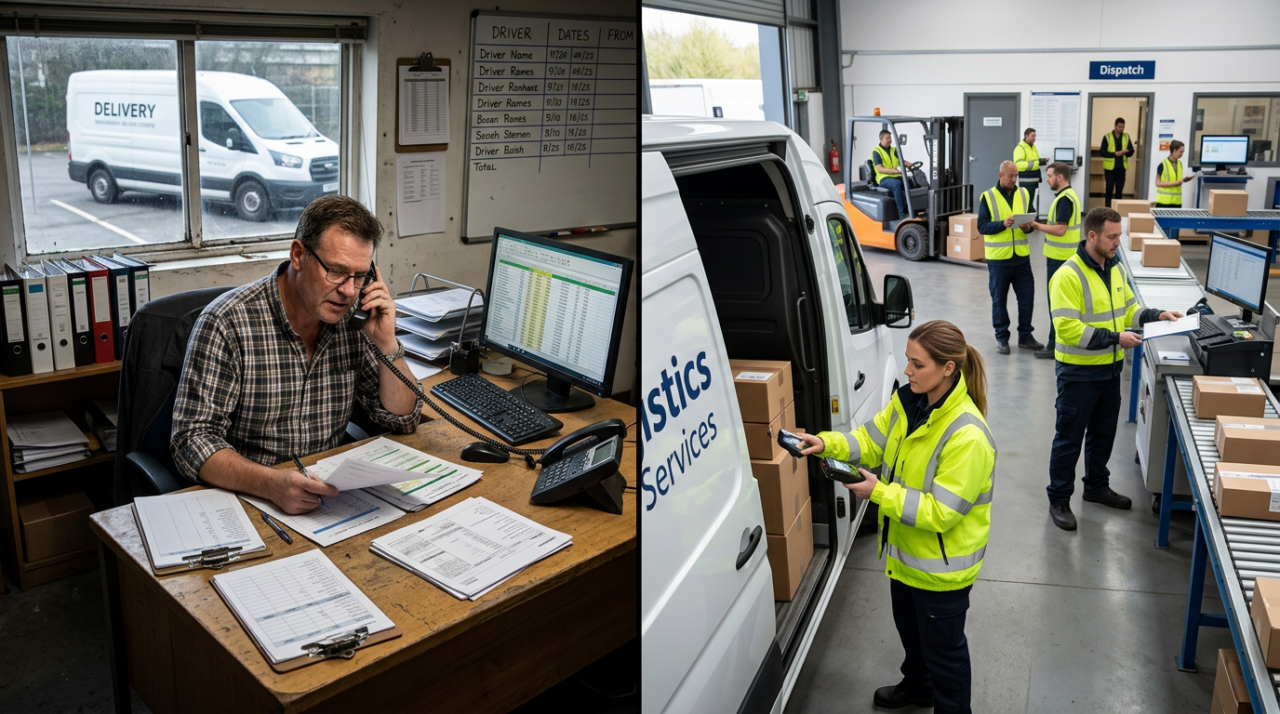
Next, you must account for what happens when things physically go wrong. This is where you need to understand the critical difference between having a tool and having a solution for delivery management.

Let’s go back to Smith’s Wholesale Parts. One of their drivers calls in sick. Their management software (the tool) sends an alert, but it can’t drive the van. What’s the real cost of this single event?
The Verdict: The true cost of that one sick driver was $480, a direct hit to their profit that no software could prevent. A managed fleet (the solution) would’ve had a backup operator ready, costing them $0 in downtime. The typical courier service model simply can’t offer this level of integration or reliability.
Finally, the blueprint must account for growth. Imagine Smith’s Wholesale Parts lands a huge new contract that requires one more van, starting next month. Planning must extend beyond today’s operations.

The Insider Rule: Delivery capacity should be treated as a flexible operating expense, not a fixed capital liability. This is the key to agile growth and effective logistics management.
Let’s compare their two options:
Our Fleet XRAY Analysis can help you find the hard data you need.
| Feature | Delivery Management Software (Tool) | Managed Fleet Partner (Solution) |
| Cost Structure | Low monthly subscription fee + all operational costs (wages, fuel, maintenance, etc.) | Single, predictable, all-inclusive operational expense. |
| Downtime Mitigation | Identifies downtime (e.g., vehicle breakdown alert). Does not solve it. | Eliminates downtime with a reserve fleet and backup drivers. |
| Management Overhead | Requires significant internal staff time for dispatch, problem-solving, and HR. | Removes all management overhead. Includes a dedicated account manager. |
| Scalability | Slow, requires significant capital outlay and a lengthy recruitment process. | Rapid. New vehicles and trained drivers are deployed in days or weeks with zero capital expense. |
Now that you’ve analysed the true costs, risks, and growth needs, the choice becomes clear. It comes down to scale and how much operational burden the business is willing to carry.
| Choose Software If… | Choose a Dedicated Delivery Partner If… |
|---|---|
|
|
Now you have a blueprint to see the real numbers behind your delivery operation. The choice is simple: continue using a tool that only highlights delivery problems, or partner with an expert to solve them. It’s time to stop patching leaks and start building a rock-solid foundation for growth and truly manage operations.
A fully managed fleet often has a lower total cost of ownership, even if the monthly invoice appears higher than a software subscription. This is because the single, predictable cost of a managed partner includes variables that an in-house operation must pay for separately. These variables include driver wages, fuel, insurance, vehicle maintenance, and costs associated with downtime due to sick days or breakdowns. A simple courier or delivery management software subscription doesn’t cover any of these operational realities, and the costs quickly add up.
A managed fleet provides flexibility during slow periods because it’s an operational expense, not a capital liability. Your service agreement typically defines a “core fleet” for baseline needs and a “burst capacity” for busy seasons. This model allows you to scale down active vehicles and costs during quieter months. In contrast, an owned fleet using a management system still incurs the fixed costs of vehicles and drivers, which must be paid whether the vehicles are on the road or sitting idle.
Yes, because the dedicated operator model is designed to solve this exact problem. Unlike a standard courier service that uses a different person each day, a fully managed fleet assigns a permanent, dedicated driver to your business. This individual is trained on your specific delivery processes, learns your customer routes, and acts as a consistent brand ambassador. They become an integrated part of your team, ensuring your brand is represented correctly on every delivery without the internal HR and management burden.
A key benefit of a managed fleet is its ability to scale rapidly. For businesses that win a large contract and need more vehicles, a managed partner can typically add fully-equipped vans or trucks and trained personnel to an operation within days or weeks. This is a significant advantage compared to scaling an in-house team, which involves a multi-month process of vehicle procurement, capital outlay, driver recruitment, and training. This speed allows your business to start servicing new contracts immediately.
A Fleet XRAY Analysis is a diagnostic process used to calculate the true total cost of ownership for a current in-house delivery operation. The process involves using your business’s actual invoices and operational data to uncover all direct and indirect costs, including fuel, wages, maintenance, and administrative time spent managing your logistics operations. The result is a data-driven report that provides a direct, black-and-white comparison of current spending against the fixed cost of a proposed fully managed fleet solution, making the decision clear and giving you the visibility you need.
Our Fleet XRAY Analysis gives you the hard data to make a smarter decision.
From pickup to drop-off, we make every step easier.
Need drivers? 1300 778 919