
The Smart Alternative to Risky Independent Courier Contracts To Secure Your Brand
Secure guaranteed zero downtime ✓ and a dedicated, permanent delivery team ✓ at Ontime Delivery Solutions.…
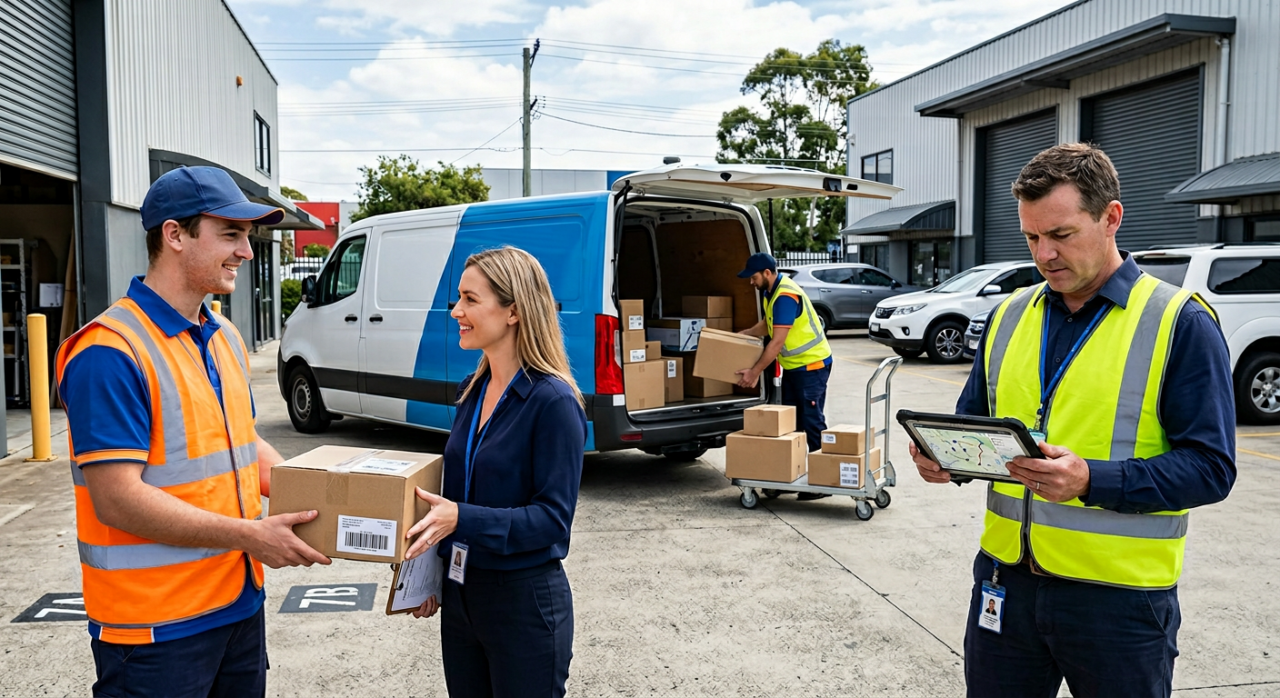
If you run a wholesale or manufacturing company, managing deliveries can quickly become a full-time, high-stress job you never signed up for. While running your own fleet of vehicles gives you a sense of control, that control often comes with hidden costs and headaches that drain your time and profit.
This guide gives you a simple 4-step framework, which we’ve developed over 30 years in logistics, to properly understand the true cost of owning a fleet. By the end, you’ll be able to make a clear decision based on solid numbers, not just a gut feeling, and get back to focusing on growing your business. Considering options like dedicated delivery services can be the first step towards this clarity and better transportation control.
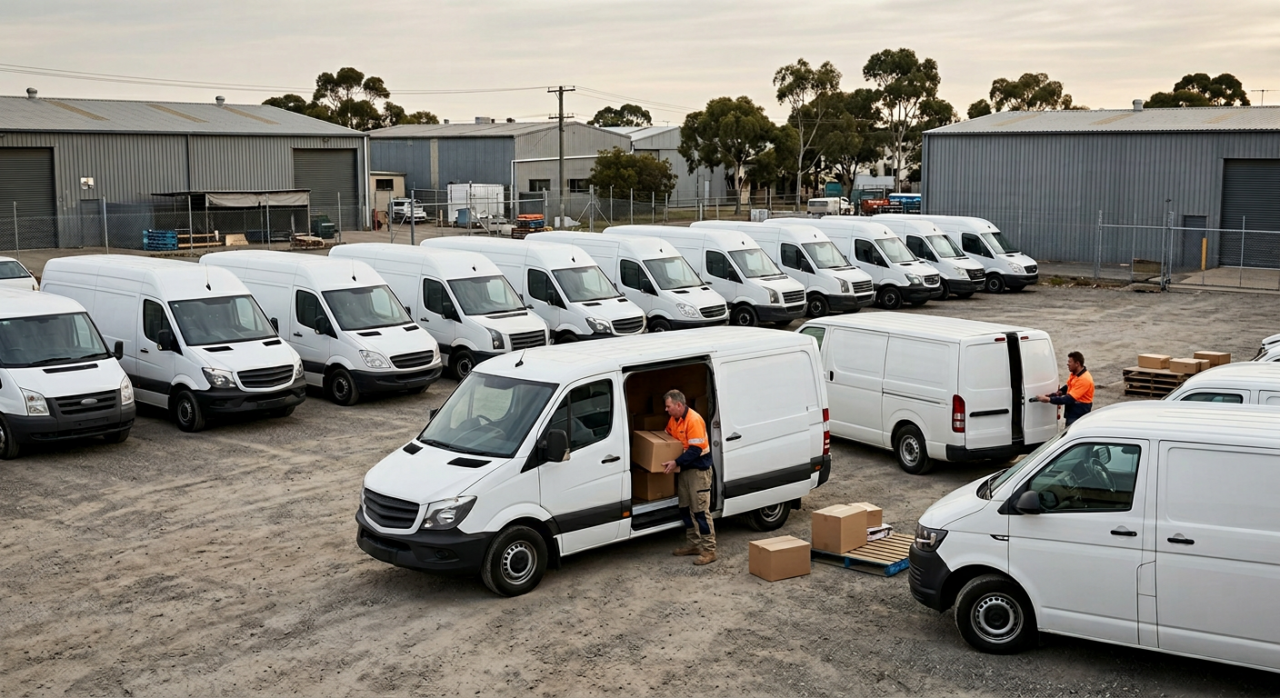
To find the real cost per shipment, you need to look at the hidden expenses that don’t show up on a spreadsheet. While your profit and loss statement shows clear costs like fuel and wages, it misses what I call “logistical debt.” This includes the hours your supervisors spend on the phone with mechanics instead of planning better routes to save money.
These hidden costs add up and can impact your entire business. A private fleet needs a lot of management, and if you don’t have the right systems, your transport budget can easily get out of control.

Here’s the simple audit we use to get the full picture of an in-house fleet:
| Invisible Cost Category | How to Calculate It |
| Management Tax | (Hours a manager spent on driver issues) x (Their hourly rate) |
| Vehicle Downtime | (Days a truck was off-road) x (That truck’s average daily revenue) |
| Fleet Creep | In our experience, you can expect 12-15% in cost increases each year. So, a private fleet costing $100,000 to run this year will likely cost around $115,000 next year. |
Our insider take: A truck is always a liability because it gets old and it breaks. The real asset is the successful delivery of your goods. Once you start seeing the numbers this way, you’ll realise the money you’re losing is only half the problem. The stress from running your own fleet is often just as costly.
Our Fleet XRAY Analysis reveals the true cost of your operations and pinpoints savings.
The driver shortage in Australia is a real problem you can’t ignore. It works on a simple rule: when more people want something than is available, the price skyrockets. It’s a battleground to find good drivers, and frankly, most businesses have more important things to focus on.
Why this matters: At any time in the year there are hundreds of unfilled driver positions across the country. This means your business is directly competing with huge logistics companies for the same small group of drivers. That’s an expensive fight to be in. A professional transport company has entire teams dedicated to hiring drivers, which is something most businesses can’t afford to do.
The smart move: After three decades in this industry, we’ve learned that the best strategy is to stop fighting a war you can’t win. The businesses that do well are the ones that partner with a specialist who has already found and secured the best drivers. They can do this because it is their only focus. This gives you a stable, professional team while everyone else is struggling to find staff.
To avoid overpaying, you must set a firm price limit for yourself before you start to negotiate for vehicles or an outsourced delivery service. Many suppliers use a trick called “anchoring bias.” They’ll start the negotiation with a very high price to make their real price seem like a great deal in comparison. It’s a classic sales tactic designed to confuse you.

Why this matters: This isn’t just a sales trick; it directly hurts your profit. Overpaying by just 10% on a vehicle lease adds up significantly over time. For a company with a 5% net profit margin, overpaying by $20,000 on a deal is the same as wiping out all the profit from $400,000 in sales. That’s a huge loss from one simple negotiation mistake.
The solution: We have a strict rule: we always calculate our “walk away” price before we even start talking. You should base this number on the true-cost audit from Step 1 and at least two quotes from competitors. If the final offer is even one dollar over your limit, you walk away. This proves you have other options, and in any negotiation, the person with the most options always has the upper hand.
The biggest difference is predictability. With an in-house team, you have costs that can change suddenly, like emergency repairs, driver overtime, or rising insurance bills. This makes it hard to budget accurately. In contrast, an outsourced service gives you a fixed monthly cost. This single fee usually covers the vehicle, the driver, fuel, and maintenance, turning many unknown expenses into one predictable payment.
Partnering with a delivery expert is often cheaper when you look at the total cost. The monthly loan payment on a vehicle might seem low, but that price doesn’t include the driver’s wages, insurance, fuel, registration, or maintenance costs. An outsourced solution bundles all of these costs together. This helps you avoid a large upfront payment for vehicles that lose value over time.
A dedicated delivery service combines several key functions into one package. A good service should include:
You now have the blueprint to make a smart, strategic choice for your business. The next move is to apply these frameworks to your own company.
If you run the numbers and find the hidden costs are higher than you thought, the logical next step is to see what a specialised solution looks like. Our XRAY Analysis uses the same deep-dive process outlined here, giving you a crystal-clear picture of your true costs and where you can save money.
Call us at 1300 778 919 for a no-obligation chat about smarter delivery solutions.
From pickup to drop-off, we make every step easier.
Need drivers? 1300 778 919