
The Smart Alternative to Risky Independent Courier Contracts To Secure Your Brand
Secure guaranteed zero downtime ✓ and a dedicated, permanent delivery team ✓ at Ontime Delivery Solutions.…
This comprehensive guide maps out exactly how to master the "middle mile" of line haul transportation and seamlessly integrate it with a dedicated metro fleet to drive efficiency and lower costs in your Australian supply chain.
Is Australia’s sizeable geography eating into your profits? If you’re dealing with interstate transportation delays, missed delivery windows for your shipments, and razor-thin margins, this logistics framework is for you. We are Ontime Delivery Solutions, a dedicated delivery service built for businesses that need reliable, professional logistics support. For more than 30 years, we’ve seen how the smartest businesses in this country don’t just react to problems; they engineer a resilient supply chain from the ground up.
With Australian road freight demand projected to grow 77% by 2050, mastering this flow of goods is essential. This practical roadmap covers the entire transportation process, giving you direct control over your supply chain, moving you from putting out fires to commanding your freight and shipping operations.
Here’s what we’ll cover:
To gain control over your logistics management, you first need a shared language. Misunderstanding core concepts like line haul is where hidden costs and compliance risks often begin.
The philosophy is simple: you must stop thinking in terms of individual shipments and start thinking in terms of a predictable transportation system. At its core, line haul transportation is the scheduled, bulk movement of goods. It is a type of haul between two major points or terminals in your distribution network. We call this the “middle mile” of your supply chain.
It’s about creating a reliable, rhythmic flow of freight that the rest of your business can depend on, like a train that always runs on time.
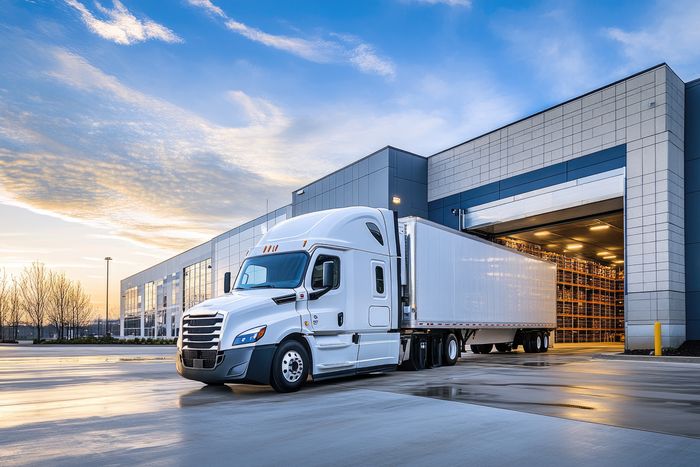
For example, line haul services don’t involve a single vehicle taking one pallet from Sydney to Melbourne when it’s ready. This haul is a B-Double moving 40 pallets of components from a factory in Melbourne to a distribution centre in Brisbane on a nightly schedule. This ensures your local metro fleet has the stock it needs for final mile delivery, ready to go at 6 AM the next morning. Moving enormous freight volumes inter-state securely requires the heavy-duty capability of a trusted general linehaul courier.
People often use these terms interchangeably, but they represent two vastly different operational and freight management strategies. Choosing the wrong transport solution for your business can lead directly to higher costs and increased legal risk.
The difference in this haul transportation comes down to the driver’s journey and how you manage fatigue. A long haul driver might take a single load from Adelaide to Sydney over multiple days while sleeping in their cab. This is an endurance model of road freight. Connecting major metropolitan hubs safely over vast highways is the core function of a general long distance courier.
A line haul system, a key part of line haul logistics, is an efficiency model. For the same interstate transport route, one driver might take the freight to a midpoint, swap trailers with a driver coming the other way, and return home that same night. The freight keeps moving continuously, but the drivers work in shorter, safer, and more sustainable shifts.
This isn’t just an operational choice. It is a strategic decision to control your legal risk. Research shows that being awake for 17 hours impairs driving performance to a level similar to a 0.05 blood alcohol content. By using a line haul structure, you actively manage fatigue, building a safer, more sustainable transport operation and protecting your business from massive potential fines under Chain of Responsibility laws.
An optimised line haul strategy directly impacts your profitability and supply chain efficiency. In a tight labour market, it also becomes your most powerful tool for recruiting quality drivers for your line haul trucking.
At this point, you might be asking: “How does my transport model help me hire people?” The answer is simple: it offers a better lifestyle. With Australia facing a shortage of tens of thousands of truck drivers, competing on pay alone is a losing battle.
By advertising “home daily” shifts, which is a direct result of a line haul model, you attract experienced drivers tired of the long haul lifestyle. This is a huge competitive advantage that improves the reliability of your transportation, so you reduce driver turnover, lower recruitment costs, and dramatically increase the stability of your entire network.
Let’s find the hidden costs in your supply chain together. Call for a no-obligation chat.
True supply chain optimisation requires a strategic framework, not just a few tips. This is the three-step process we use with businesses to transform their line haul operations from a source of chaos into a competitive advantage.
The philosophy here is simple: you can’t fix what you can’t measure. Before you change anything in your freight management, you need to find the precise points where you are losing time and money.
This audit gives you a clear, data-driven picture of your operational weaknesses, so that you can stop guessing where the problems are and start making targeted, high-impact improvements to your logistics.
With your data in hand, you can now design your distribution network for maximum efficiency, a key part of optimising linehaul operations. A resilient supply chain shouldn’t happen by accident. It must be engineered.
The philosophy here is that reliability has a clear dollar value. The slightly higher cost of a premium haul carrier is an insurance policy against costly retail fines and the reputational damage of not having your product on the shelf. This protects your brand and your bottom line.
Your haul transportation is only as fast as its final connection point. All the efficiency you gain on the highway is lost if your goods sit on a depot floor for hours waiting for final mile delivery.
This “metro distribution problem” is where most supply chains break. Relying on a patchwork of random couriers for this final, critical step is a recipe for chaos. The hand-off from the line haul truck to the local fleet must be a seamless relay race, not a scramble.
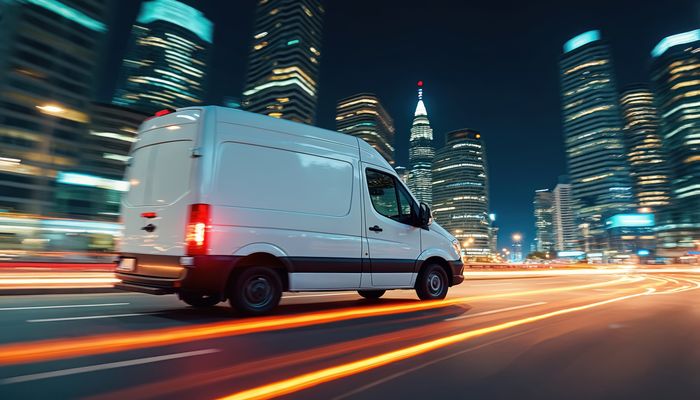
You need to integrate the scheduled arrival of your line haul truck with a dedicated metro fleet that is waiting and ready to go. This ensures your goods never stop moving and your customers get their orders on time, every time.
To master that final, critical hand-off, you need a dedicated delivery solution. The goal is to move from a transactional relationship with random couriers to an integrated partnership with a team that functions as an extension of your own. As a core component of our wider Third-Party Logistics services, this approach ensures seamless logistics management and efficient shipping.
This means a Permanent Vehicle Hire model where specific drivers and vehicles are assigned exclusively to your business. What does this transport solution mean in practice?
For a business in the medical equipment industry, your “tailored solution” isn’t just a truck. It’s a specific 4-tonne Pantech with a tailgate lift, a dedicated driver who is trained on your sensitive shipments and paperwork protocols, and a guaranteed backup driver in case of absence.
It’s about having a system built around your exact operational needs, so that you gain total control over the most important leg of your supply chain. This is the final delivery to your customer.
Line haul costs are calculated based on several factors. Efficient haul shipping depends on understanding these components to manage your budget. The total cost typically includes:
A typical line haul journey from an origin city like Melbourne to a destination like Sydney is a structured, three-part process designed for efficiency and compliance:
The Australian line haul trucking industry faces several significant operational and economic challenges. For businesses relying on these services, understanding these pressures helps in strategic planning. Many line haul carriers struggle with these key challenges:
Technology, especially a good Transport Management System, is critical for modern line haul operations. This moves beyond simple package tracking to provide actionable data for the whole transportation journey. If your goal is to reduce uncertainty and improve efficiency, these are the key tools to look for in a logistics partner:
Your supply chain is only as strong as its weakest link. By auditing your performance, engineering your distribution network, and integrating with a dedicated metro partner, you can turn your middle mile logistics from a source of frustration into a powerful competitive advantage.
The first step is to get an honest assessment of your current operations. Start by auditing your main freight carrier’s on-time performance this month. Any result below 95% is a clear signal that it’s time to review your supply chain management strategy.
Book your free Fleet XRAY Analysis™.
From pickup to drop-off, we make every step easier.
Need drivers? 1300 778 919