

A Deep Dive into Your Fleet’s Cost Per Kilometre
Do you know your fleet's true cost per kilometre? Our guide shows you how to calculate it, revealing…
This complete guide helps you evaluate the true cost of in-house fleet management against outsourcing, giving you a clear path to ending your delivery headaches for good.

Is your day held hostage by a driver schedule that’s constantly falling apart? Give us 7 minutes. We are Ontime Delivery Solutions, a dedicated delivery service built for businesses that need reliable, professional logistics support. Before we built this company, we remember the exact feeling that likely led you here. It was a 6 AM phone call on a Tuesday. Our best driver was sick, a van wouldn’t start, and a key client, a major auto parts distributor with workshops depending on us, had their entire morning run at risk. In that moment, we realised we weren’t running our business. The daily chaos of our small fleet was running us. This guide is designed to give you the exact tools an expert uses to analyse this problem. By the end of this article, you won’t just have an opinion. You’ll have a clear, data-driven framework to decide if outsourcing is right for you. Specifically, we’ll give you the following.
Let’s get started.
Does the delivery budget always seem to blow out? It’s a common frustration. It happens because the biggest costs are the ones you can’t easily plan for. Let’s move beyond guessing and give you a simple framework to calculate the real numbers.
When we consult with businesses, the first thing we do is a quick ‘True Cost’ calculation. An in-house fleet has three layers of cost.
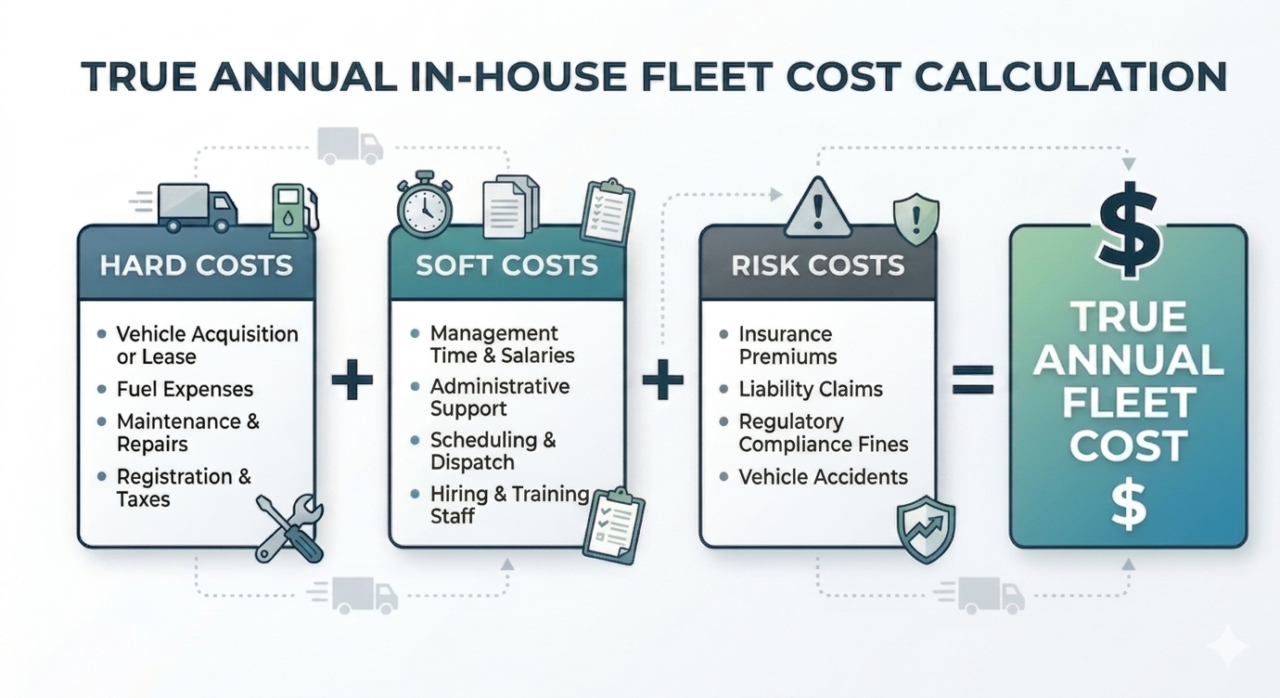
When you partner with a provider, you replace all three of those complex variables with a single, clear operating expense. Evidence from Australian businesses shows that outsourcing freight operations can lead to a 20% reduction in overall costs, with some studies indicating potential savings as high as 30% by eliminating these hidden soft costs and risks.
So why is this so critical? Because unpredictable costs kill growth. That “soft cost” of your manager spending 10 hours a week on logistics isn’t just a salary expense. It’s 520 hours a year they didn’t spend negotiating better terms with suppliers or optimising your warehouse layout. It’s a massive opportunity cost. And that “risk cost” of a surprise $15,000 transmission repair isn’t just an invoice. It’s the new piece of machinery you now can’t afford to buy, pushing your growth plans back another year. An in-house fleet forces your business to play defence with its cash flow, constantly reacting to problems instead of proactively investing in the future.
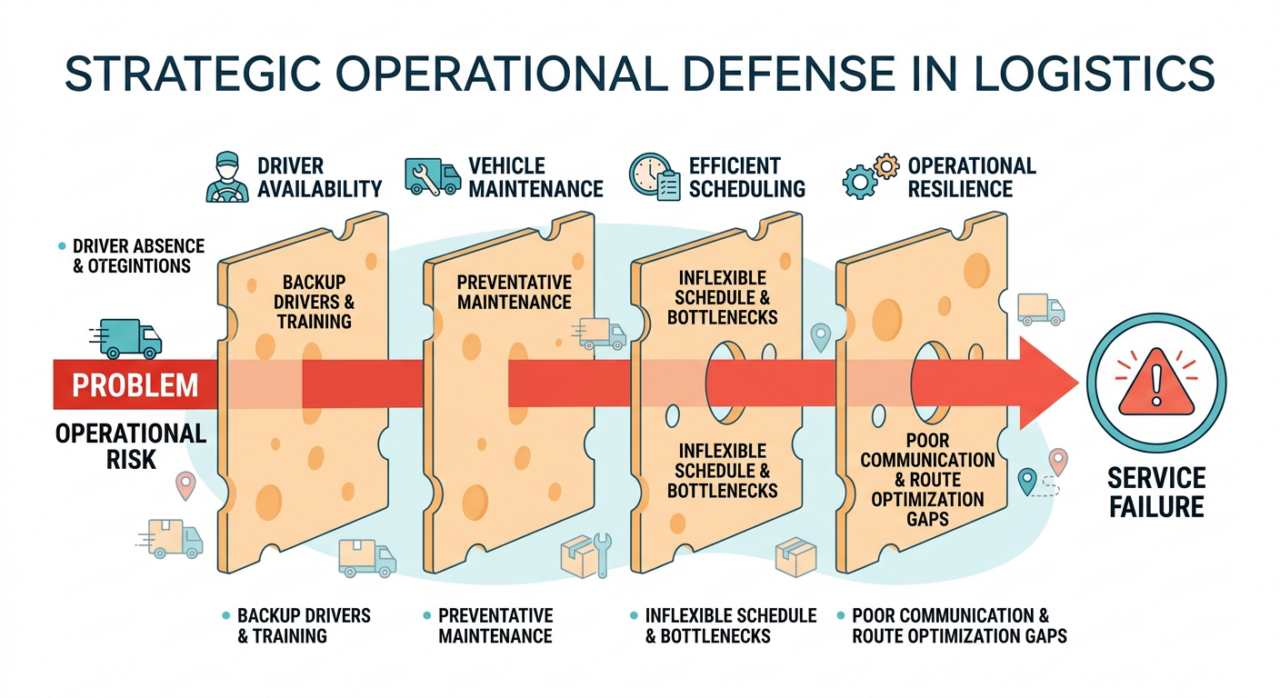
That sinking feeling when a customer calls asking “Where’s my delivery?” is a sign of systemic fragility. In high-risk industries like aviation and engineering, they use a concept called the “Swiss Cheese Model” to understand failure. It’s the single best analogy for what goes wrong in an in-house fleet.
Here’s the underlying logic. Imagine your delivery process is a stack of Swiss cheese slices. Each slice is a defence against failure, such as a reliable driver, a well-maintained van or an accurate schedule. But every slice has holes, which are unpredictable risks. A driver gets sick. A tyre goes flat. A service failure happens when, by sheer bad luck, the holes in every slice line up, allowing a problem to travel straight through. An in-house model is inherently vulnerable because it assumes all the slices will remain solid, which in the real world of logistics, they never do.
Why does one service failure matter so much? Because the consequences aren’t just a late package. They are commercial and severe. If you’re delivering to a major distribution centre for a retailer like Bunnings or Woolworths, missing your specific 30-minute delivery window doesn’t just annoy them. It can result in financial penalties, refusal of the entire shipment and damage to your supplier rating. Consistently failing to meet these strict requirements is one of the fastest ways to lose a major contract.
The logic here is reversed. A true outsourced partner acts as a final, solid barrier behind all the cheese slices. This is the Zero Downtime Guarantee. It’s a system designed to catch any problem that makes it through your daily defences. The reason it works is that their entire business model is built on creating redundancy, as their profitability depends on it. When a driver is sick, a reserve fleet of backup drivers and vehicles instantly plugs the gap. This system is why outsourcing can reduce delivery times by 15-18% and increase customer satisfaction by 20%.
Here’s Something We’ve Learned Over Thirty Years
Many business owners we talk to believe reliability comes from hiring good people and simply working harder. And that’s a huge part of it. But true operational reliability comes from a system designed to absorb failure. An in-house team can work hard, but they can’t magically produce a backup van. This is the core philosophy we built our entire service around. We provide that complete system for our partners, including the reserve fleet, the on-call drivers and the logistics expertise that makes uptime the default, not the exception.
One of the biggest anxieties for any business owner is the ‘what if?’ of a serious accident. In Australia, that ‘what if’ comes with significant personal and financial risk. Let’s move beyond fear and into a tactical assessment of your exposure.
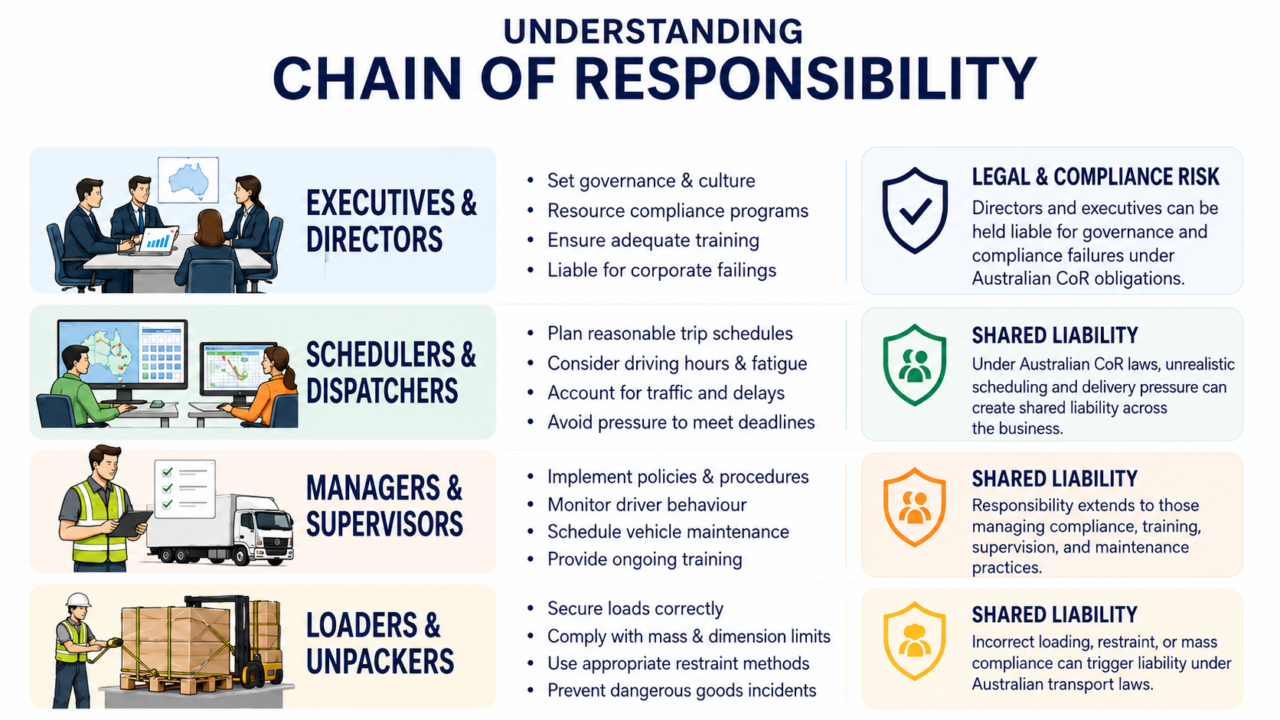
The core reason compliance risk is so high in-house is a mismatch of focus. When your main job is getting products out the door to meet a tight delivery window for a major retailer, dedicating the required resources to mastering Australia’s complex Chain of Responsibility laws is a constant battle. This is a huge vulnerability, especially when fatigue is a factor in 20-30% of all road deaths and severe injuries in Australia.
A professional delivery partner’s entire business is built on managing this risk. Their core competency is logistics and compliance. They have robust Safety Management Systems and training in place, as outlined by the National Heavy Vehicle Regulator. You’re sharing the risk with a specialist, which provides a critical layer of protection. This is essential when penalties can reach $3 million for a corporation and five years in prison for individuals.
If you’re considering a partnership, you need to ask questions that go beyond the sales pitch. You need to diagnose their operational DNA. Here are the three tactical questions we use to separate a true partner from a basic provider and the deep logic behind why they are so critical.
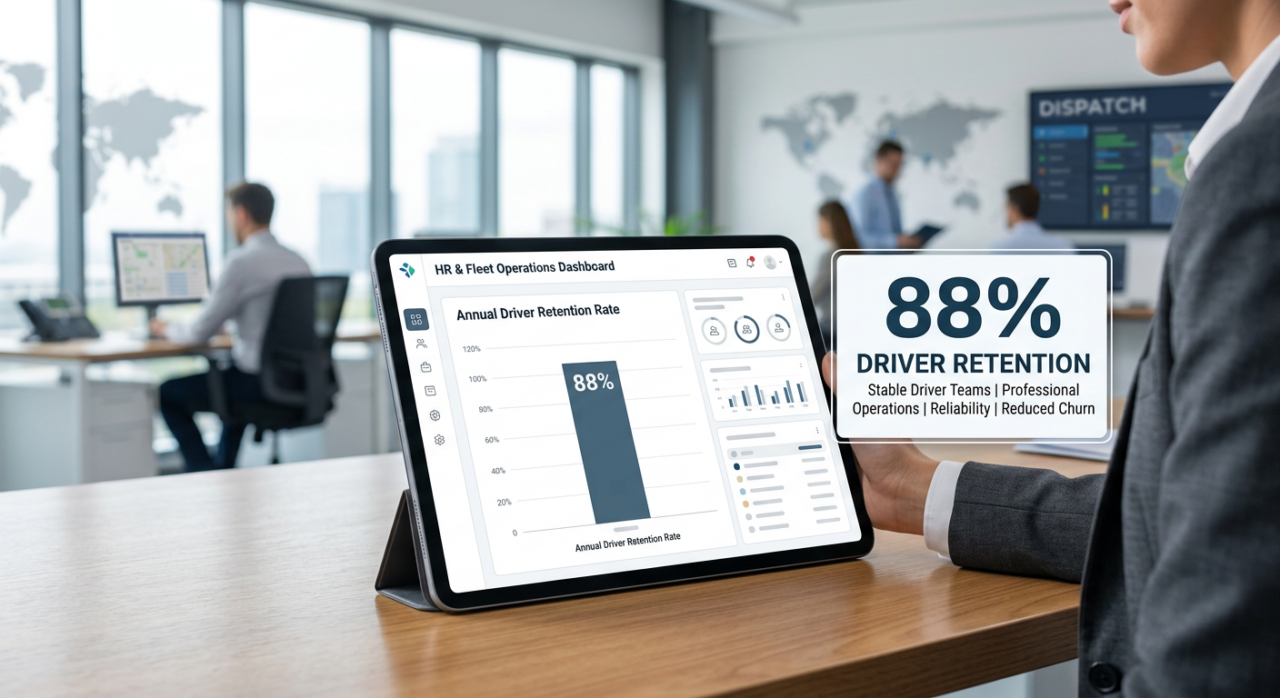
The Logic: A provider might tell you they have “good drivers,” but that’s a feeling, not a metric. Driver retention is the single most important indicator of a stable, professional operation. A low retention rate (anything below 70-75% in this industry is a red flag) means a constant churn of new drivers. Here’s what that churn actually costs you. New drivers don’t know your specific routes, they aren’t familiar with your unique delivery protocols and they haven’t built a relationship with your customers or receiving staff. This leads directly to delays, errors and a poor brand experience. A high retention rate (over 85%) is proof of a healthy culture and means you get a consistent, experienced driver who becomes a true extension of your team.
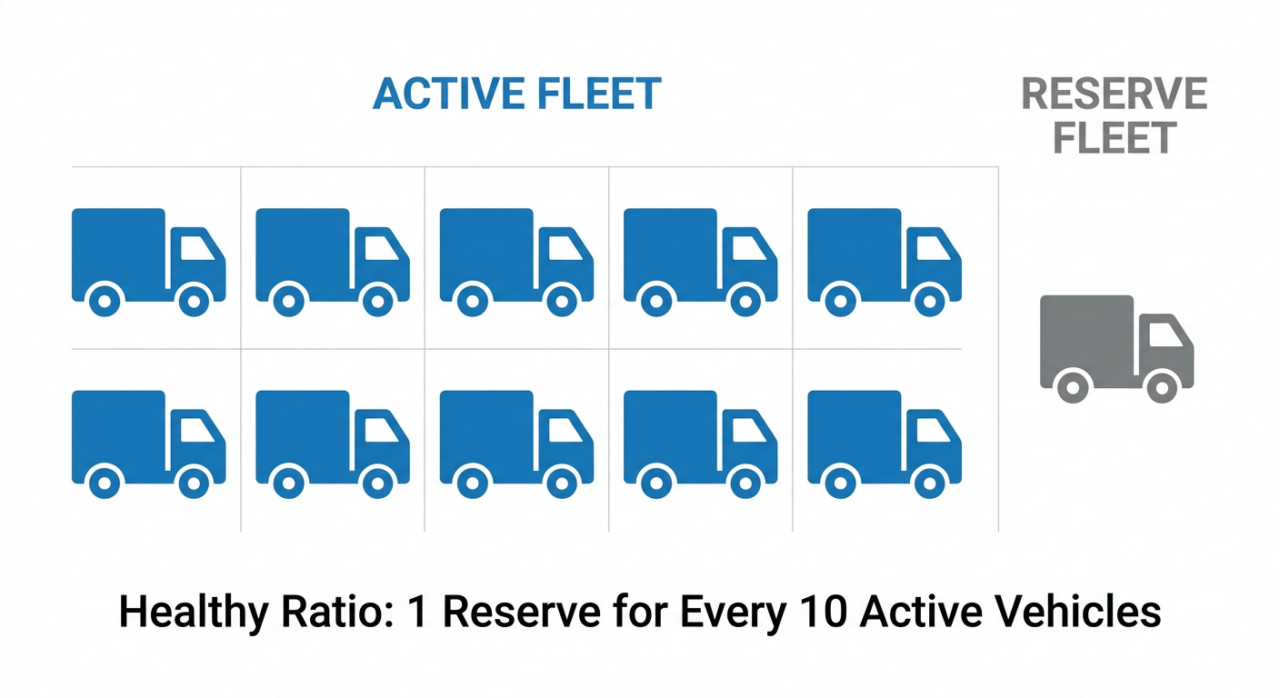
The Logic: Any provider can say they have “backups.” This question forces a number that reveals the mathematical truth of their reliability. A low ratio, like 1 reserve vehicle for every 50 active vehicles, is a disaster waiting to happen. On any given day, a 2% failure rate is standard. This means in a fleet of 50, at least one vehicle is likely to be down. If a second unexpected issue occurs, their system breaks and it’s your delivery that gets cancelled. A healthy ratio, like 1 reserve for every 10 active vehicles, demonstrates a serious investment in redundancy. It is the tangible proof behind a Zero Downtime Guarantee.
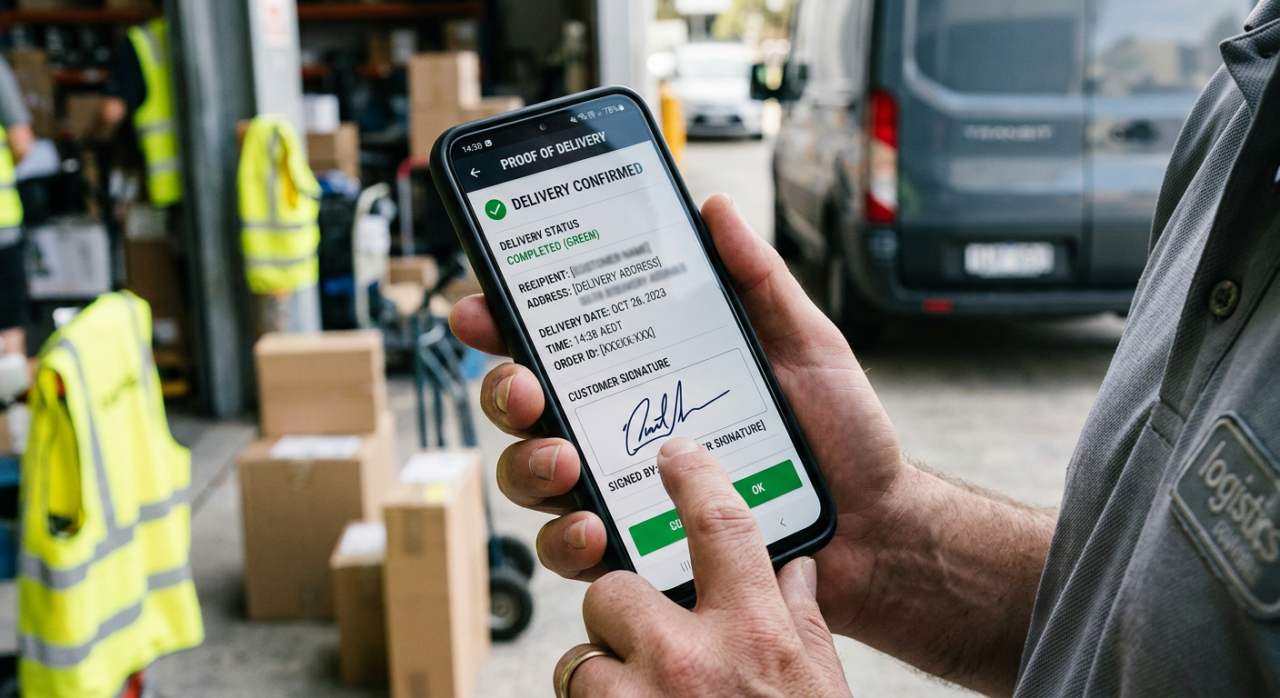
The Logic: Talk is cheap. Seeing the technology is everything. When we see a demo, we’re not just looking for a dot on a map. We’re looking for the tools that give me real control. Why? Because when a customer disputes a delivery and you can’t produce an instant proof of delivery with a signature and a timestamp, you lose that argument and that revenue 100% of the time. The quality of their portal is a direct reflection of their entire operation’s transparency and your ability to protect your business.
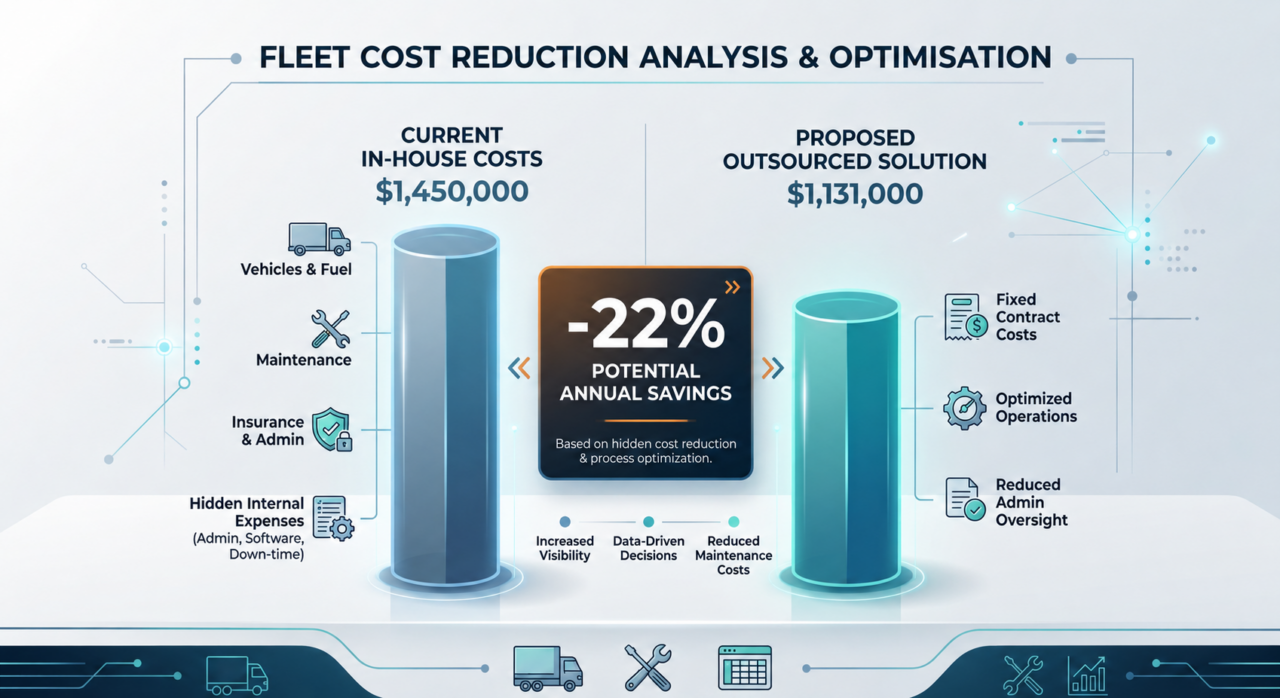
The final piece of the puzzle is to see the numbers for your specific business. A professional, data-driven analysis is the best way to compare your true total costs against a fully managed solution.
We offer a complimentary “Fleet XRAY Analysis“ for this exact purpose. It’s a deep dive that gives you a crystal-clear, side-by-side comparison. It shows you the hidden costs and highlights potential savings you can gain.
Take action today. Call 1300 778 919 for a friendly chat with our team. We can see how a strategic partnership could transform your business.
The biggest myth in logistics is that owning the vans gives you control. In our experience, the opposite is true. The vans end up owning you. True control isn’t about having the keys in your drawer. It’s about having certainty. It’s the freedom to focus on your business, not a business within your business. Based on what we’ve covered, here is your simple, three-step action plan to move from chaos to certainty.
Once you have this data, you’ll have the clarity to make a confident decision. You’ll be able to stop clinging to the illusion of control and start building a system that gives you the gift of certainty.

Think of it this way. A standard courier service, like you might find on an on-demand app, is a transactional tool. A dedicated partner is a strategic asset. A courier moves your boxes in a large, shared network with a new driver each day. A dedicated partner provides you with a permanent, exclusive team. They become a seamless extension of your own staff. They learn your products, know your customers and represent your brand with care.
This is the core of our Zero Downtime Guarantee. We don’t just react to problems. We’ve built a system to make them irrelevant to your business. We maintain a reserve fleet of backup vehicles and a pool of cross-trained, on-call drivers. If an issue occurs, our logistics team immediately dispatches a replacement. Often, it happens before you’re even aware there was a problem. This is how we shift the operational risk from your shoulders to ours.
Our integration process is designed to be seamless. The timeline is typically a matter of weeks, depending on your specific needs, like sourcing specialised vehicles. The process starts with a deep dive into your operations. Then we design a tailored solution, acquire the vehicles and train the drivers on your business protocols. Your dedicated account manager handles the entire transition, ensuring a smooth switch-over.
Absolutely. In fact, smaller businesses often feel the benefits most acutely. The administrative burden of a fleet doesn’t get much smaller with fewer vehicles. A two-vehicle fleet still requires a huge amount of management time for scheduling, maintenance and compliance. This burden often falls on a business owner or key manager, representing a massive strategic distraction. We’ve seen success across many sectors, as detailed in our industry case studies. Outsourcing allows a smaller business to access the efficiency and reliability of a large, professionally managed fleet without the large capital cost.
Stop managing deliveries and start growing your business. A strategic partnership is your key to reliable, scalable, and hassle-free operations.
Call Us on 1300 778 919 for a Friendly Chat
From pickup to drop-off, we make every step easier.
Need drivers? 1300 778 919