


Your 4-Step Guide to Eliminating Delivery Exceptions for Good
Get proactive 24/7 support ✓ to minimize and manage delivery exceptions ✓. We engineer redundancy into your…
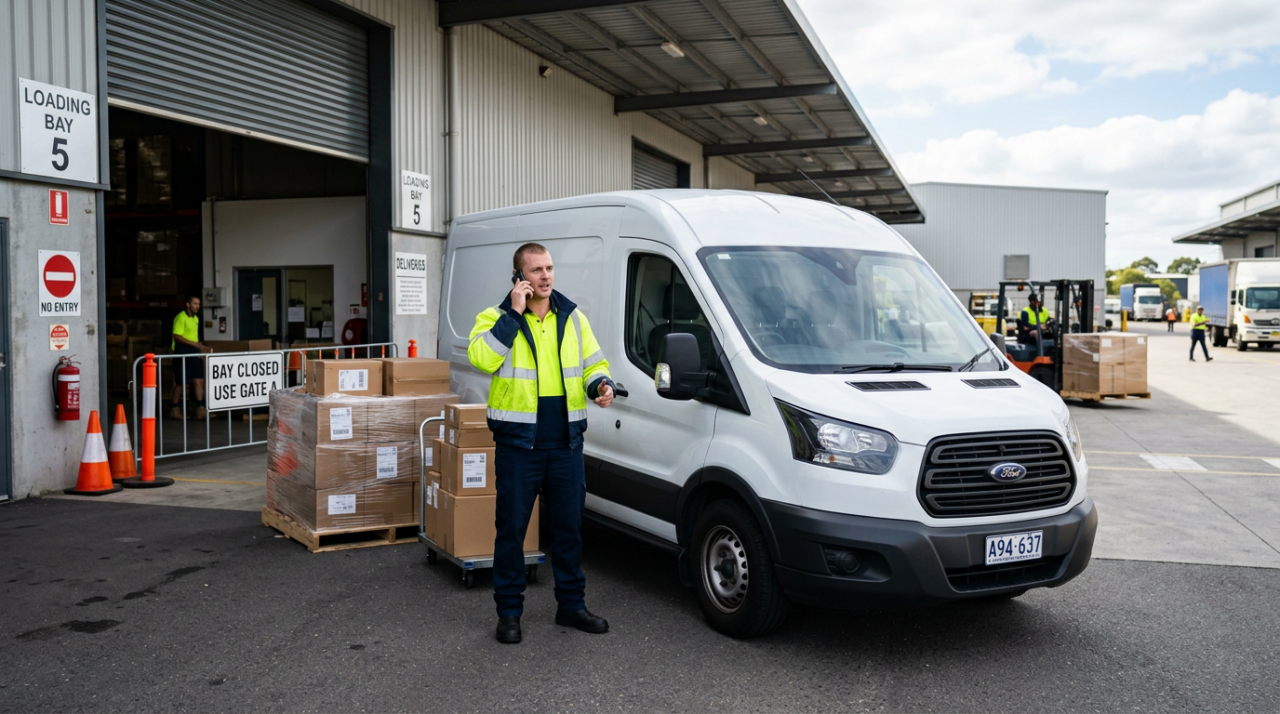
A delivery exception is an industry term for a shipment that fails to reach its destination on time. It’s more than just a logistical headache; it’s a direct hit to your profits, a broken promise to your customers, and a constant source of administrative chaos. Each failure is a direct operational cost, a calculable loss in fuel, wages, and administrative time spent on resolution. These failures are not a normal cost of doing business. This guide provides a clear, four-step process to improve accuracy and start reducing redelivery costs by using dedicated delivery services.
Before you can fix the system, you must control the immediate damage. How you respond in the first 15 minutes of a delivery exception determines whether you save the package and the customer relationship. Proper exception management starts with a clear plan to manage them.

Once the immediate fire is out, you must find out where it started. To do this, export the delivery records from the last 30 days from your dispatch software. If you don’t use software, start a simple spreadsheet today. A 30-day window is long enough to reveal a pattern of shipment issues.
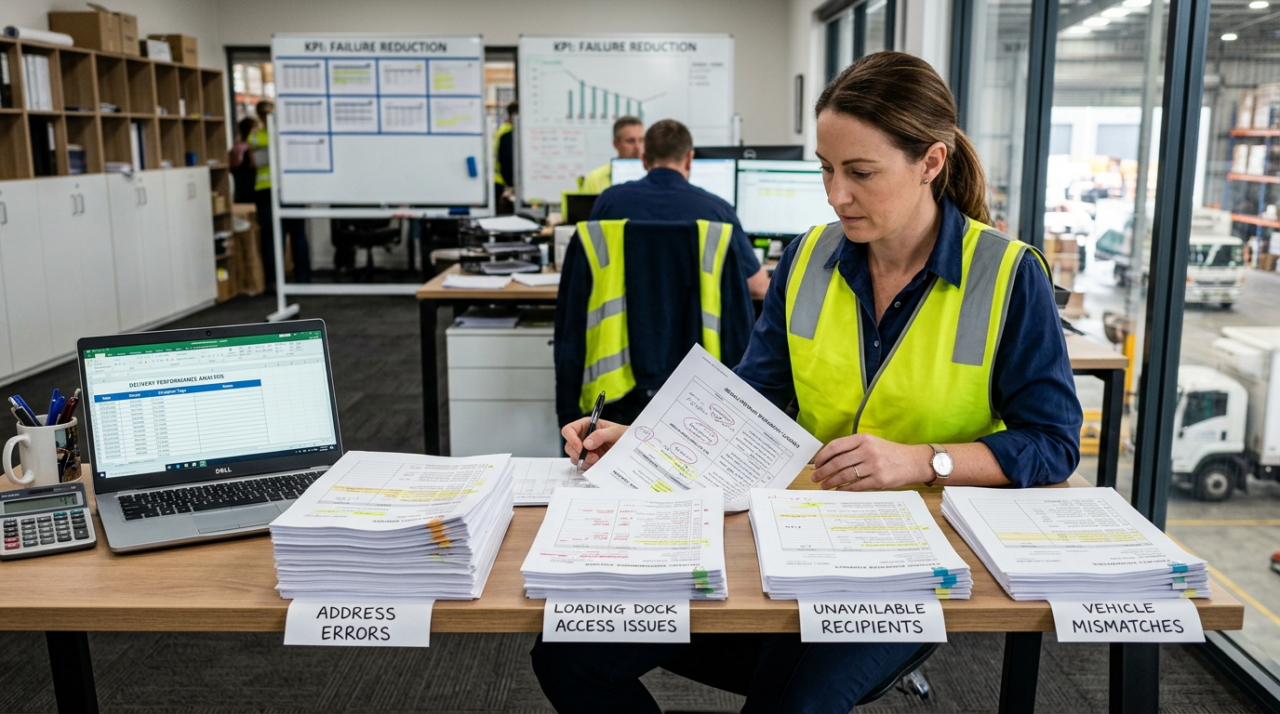
Why This Matters: You can’t fix a problem you can’t see. Instead of guessing, this data gives you a map of the common causes of failed deliveries, so you can focus your effort on improving accuracy where it counts. This is a crucial part of optimising your delivery management.
Imagine you run a business with 1,000 orders a month. Over 30 days, you had 50 failed deliveries. After categorising each delivery failure, your spreadsheet reveals a clear story.
The Verdict: In this scenario, 40% of your delivery exceptions (20 out of 50) are due to simple data entry errors. This tells you that fixing your pre-dispatch data process is the highest-impact change you can make. This is your starting point for handling shipment exceptions more effectively.
Now that you know the common causes of shipment failures, you can build a system to prevent them. The goal is to create a pre-dispatch process that acts as a fortress against bad data and equips your carrier with a clear plan. It’s about building smarter order fulfilment processes from the ground up.

These tools address the issues identified in the audit. This involves implementing address validation like automated systems that verify postcodes and unit numbers against a national database before a driver is even assigned, and other key methods.
Instead of relying on memory, every client has a simple, one-page guide attached to their account. This tool improves accuracy by eliminating failures caused by “On-Site Access Problems”.
Example Client Playbook: ABC Construction Site
This laminated card in every vehicle turns a guessing driver into a problem-solver who’s always kicking goals. It eliminates failures from “Recipient Issues”, and it’s a core part of any plan to prevent delivery problems. Working with a dedicated shipping carrier means you can implement better systems. For instance, our track-and-trace technology also helps by providing a tracking page and live GPS delivery tracking links, allowing customers to be ready when the driver arrives and to track shipments with full visibility.
Example If/Then Protocol Card
IF… No one is at the delivery point
IF… Goods are refused
Our Fleet XRAY analysis compares your current shipment costs against our fully managed solution.
After implementing these fixes, you’ll see improvement. But the final step is to fix the root cause of both the failures and the admin: your delivery model itself. You can’t build a reliable operation on a foundation of chance. When exceptions occur, you need a system, not a scramble.

The Real Problem: Using a rotating roster of ad hoc couriers or carriers guarantees inconsistent results because it’s rife with variables. A dedicated fleet is a system engineered for predictability, which is the most effective way to reduce delivery exceptions.
| Problem Variable | Fragmented Services (The Gamble) | Dedicated Fleet (The System) |
| Route Knowledge | A new driver every day means zero local knowledge of traffic or location quirks, leading to preventable delays and a potential delivery exception. | Your dedicated driver masters the optimal routes, improving accuracy and consistency for every package. |
| Customer Relationships | Anonymous drivers have no relationship with your receiving staff, which can turn a minor issue into a failed shipment. | Your permanent driver knows the names of the receiving staff, building the trust that makes resolving minor on-site issues effortless. |
| Correct Vehicle | You’re at the mercy of different carriers and the network’s available vehicles, risking equipment mismatches, a common cause of failed deliveries. | The correct vehicle is assigned to your run by default, every time, drastically improving accuracy. |
The true cost of a delivery exception extends far beyond the fee for a second attempt. It’s a combination of direct financial losses and indirect damage to your business operations and reputation.
If you’re choosing a delivery model, comparing a dedicated fleet to multiple delivery aggregator apps reveals critical trade-offs in control, consistency, and cost. It’s a key logistics consideration.
A dedicated fleet reduces redelivery costs by systematically eliminating their root causes and converting unpredictable expenses into a fixed operational cost.

Delivery exceptions aren’t a normal cost of doing business; they’re the direct result of an inefficient system. While the steps above will help you address the issue more effectively, the only permanent solution is to move to a dedicated, managed fleet. It’s the definitive solution for any business owner who wants to improve accuracy and get back to soaring above targets.
Our free Fleet XRAY shows the root cause of your delivery exceptions and their cost.
From pickup to drop-off, we make every step easier.
Need drivers? 1300 778 919