
Stop Wasting Time on Manual Data Entry And Start Integrating Your Order Management Software with a Dedicated Delivery Fleet
Seamlessly handle integrating your order management software ✓ with a dedicated delivery fleet ✓. Our…
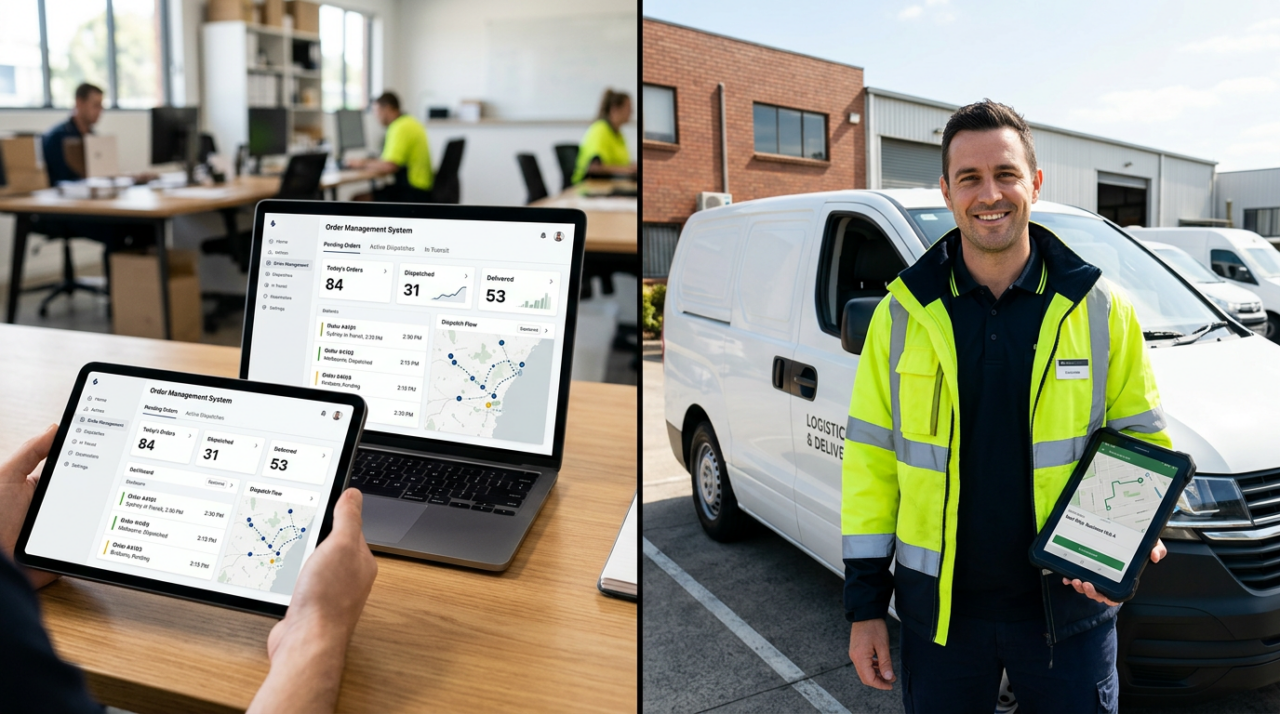
Integrating your Order Management System with a dedicated delivery fleet means creating an automated link that sends order information directly from your logistics management software to your transport team. Without this, businesses get stuck with manual data entry, leading to costly errors and frustrating dispatch delays. The good news is that setting up this automation is key to streamlining the order-to-delivery process and eliminating these operational bottlenecks for good. Effective fleet management starts here.
Before changing systems, it’s important to see the real financial damage a manual process can cause. One of the main benefits of this integration isn’t just saving time: it’s the huge reduction in costs from errors and customer service calls. Let’s be blunt: a manual setup is likely costing a fortune. You can use this checklist to find the hidden costs in the order fulfilment process right now.
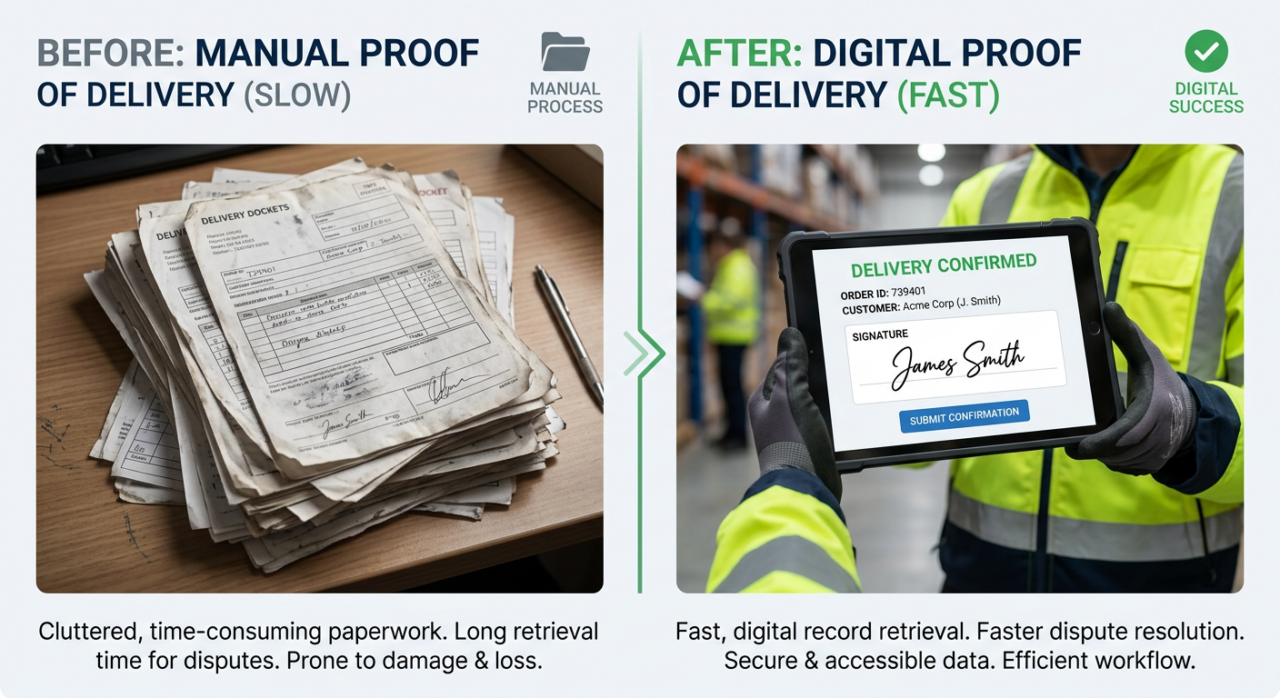
| The Daily Problem | The High-Risk Manual Way (How to find it) | The High-Efficiency Integrated Solution |
|---|---|---|
| Re-Delivery Costs | A single typo in an address causes a failed shipment. This means you pay for personnel time and fuel twice for just one job, damaging operational efficiency. How to find it: Look at the last 50 jobs. How many needed a second trip because of a simple data error? |
Order details go directly from an Order Management System to the operator’s device. This completely removes the risk of human error in last-mile logistics, a crucial part of smart fleet management. |
| “Dispatch Drag” | This is the wasted time between when an order is ready and when the operator actually leaves. It’s the time spent printing run sheets and manually typing addresses into a GPS. How to find it: Time this process for a few orders. That gap is the “dispatch drag.” |
The second an order is ready, it’s live in the dispatch system. This management software gets shipments out the door much faster. |
| Proof of Delivery Disputes | When a customer claims a shipment never arrived, the team has to dig through paper dockets or call the operator. This looks unprofessional and wastes time. How to find it: Ask the admin team how many “Where’s my order?” calls they get each day. |
Automating dispatch management and tracking provides a live dashboard with time-stamped, signed proof of delivery for every single order. |
Let’s see how these “small” issues add up for a hypothetical auto parts supplier with three vans on the road and an inefficient order fulfilment process.
The Verdict: Between dispatch drag and a single weekly error, this business loses $287.50 every week. That’s over $14,000 a year in pure, preventable waste. Stop bleeding cash and start kicking goals.
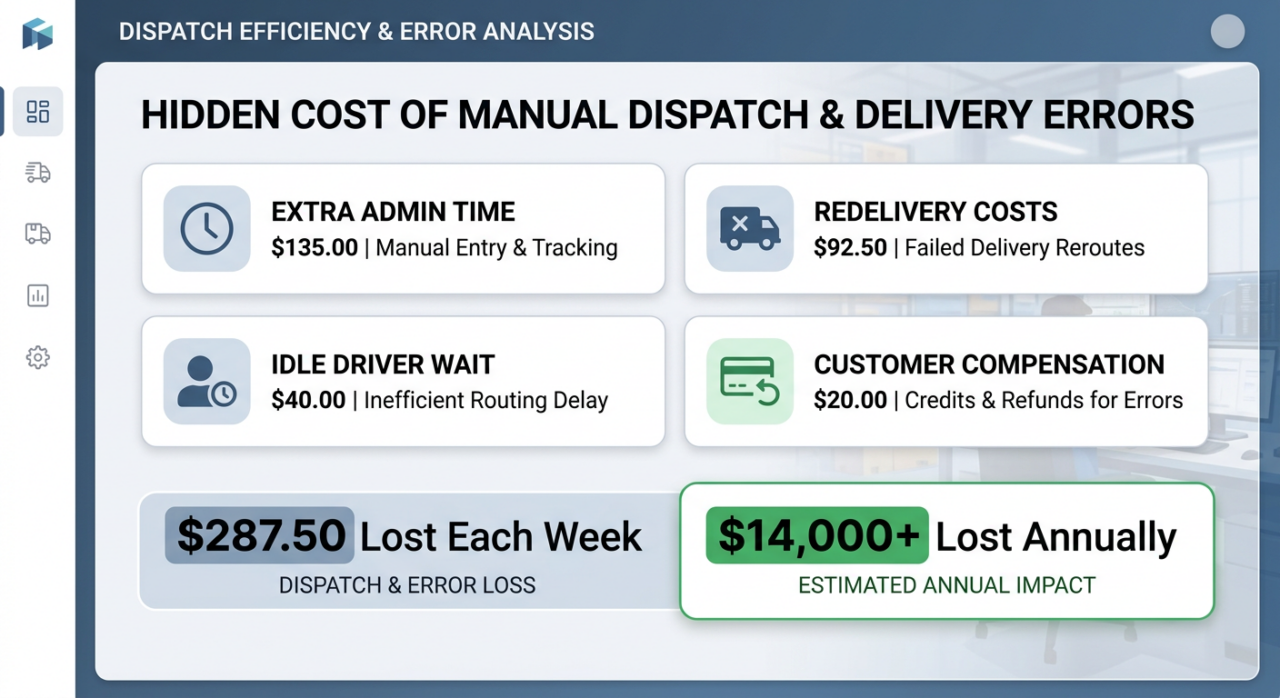
With an integrated system, run sheets are digital, and routes are optimised automatically, eliminating dispatch drag. Address data is sent directly from the Order Management System, removing the risk of typos. This is the foundation of efficient delivery operations with the right delivery software.
The Verdict: The business recovers $14,000 and improves its service by fixing the root cause of the problem with better management software.
Once you see these numbers in your own operation, the case for fixing the problem becomes undeniable.
Our team handles the tech and linking process, so you can focus on your business.
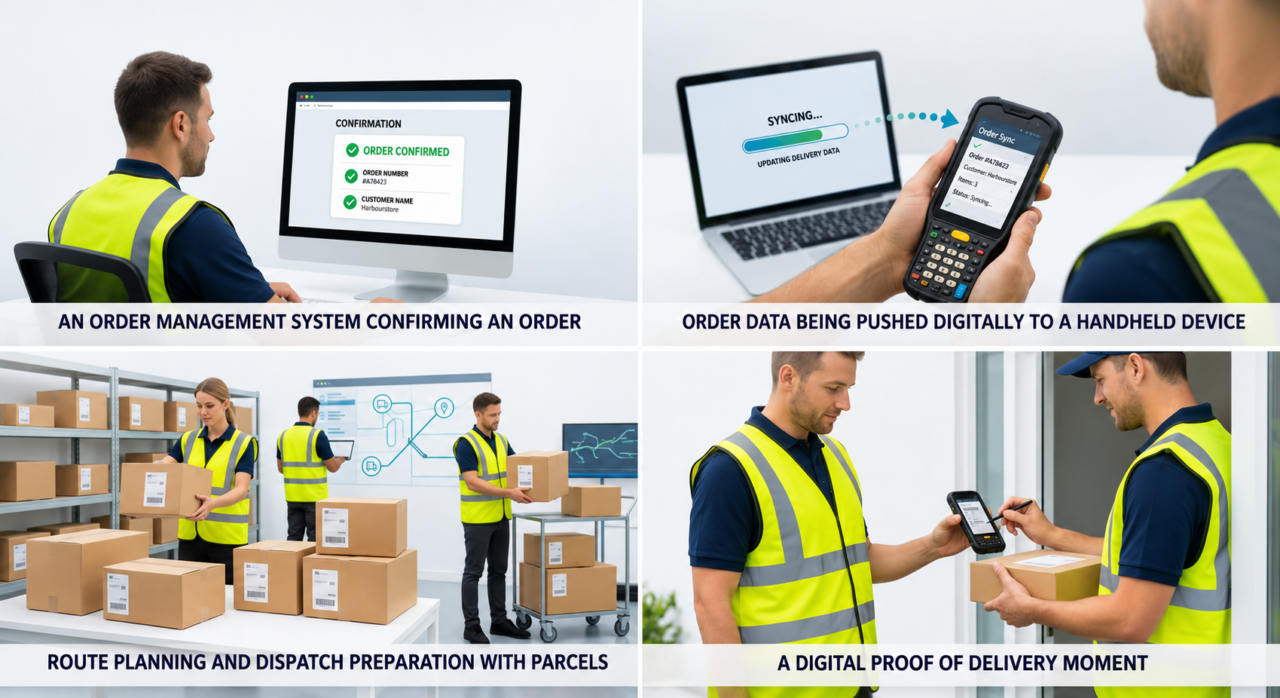
The entire system works using an Application Programming Interface. Think of this logistics interface as a secure translator that lets different computer programs, like your order system and your logistics partner’s app, communicate with each other. This is the key to automating dispatch and tracking. Here is the exact four-step plan:
With the technology clear, the final step is making the single most important decision in the entire project.
This is where many businesses make a crucial mistake. Successfully linking your order management software depends on choosing a partner whose technology is as reliable as their people.
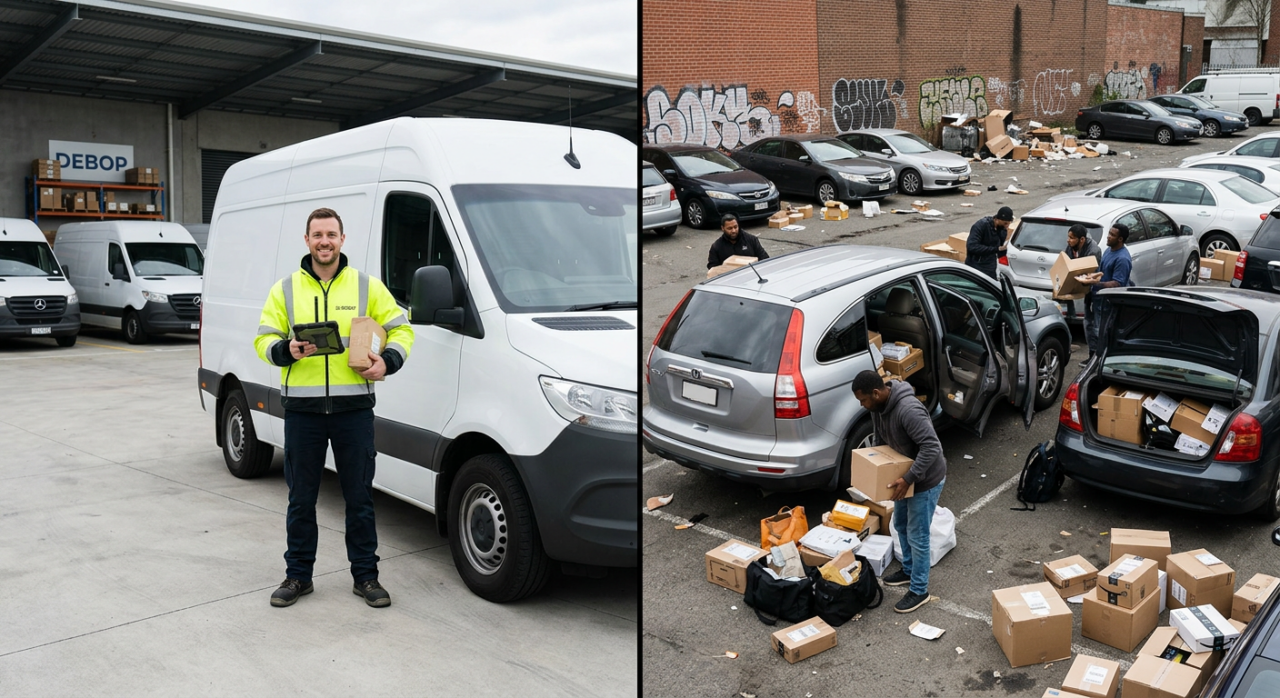
From medical suppliers to auto parts distributors, the management software is the easy part. The real challenge is getting consistent, reliable results every day. The only way you’ll achieve that is by choosing a delivery partner with tech capabilities and a stable, dedicated team.
Why this matters: A permanent operator who shows up for your business every day becomes an expert on your routes and customers. You’ll never get that level of care from a rotating cast of gig drivers. If you link your Order Management System to a network of ad-hoc drivers, you’re building on an unstable foundation. The result is unreliable data, which defeats the entire purpose of automating your dispatch process.
Insider Tip: Worried your custom software won’t connect? When choosing a delivery partner, ask if they have an in-house tech team to build a custom interface bridge. If a potential partner says they only connect to major e-commerce platforms, it’s a red flag that they don’t have the technical depth you need for a successful long-term connection. Proper fleet management software should be adaptable.
Putting this automated system together involves getting both the technology and the team right. For many business owners, this can feel like another major IT project. The most direct path to streamlining order fulfilment is to work with a dedicated partner who can handle both pieces for you.
For businesses evaluating this type of integration, the primary benefits are increased efficiency, reduced operational costs, and improved customer satisfaction. This is achieved through several key automations:
API linking for logistics functions as a secure digital bridge between your Order Management System and your logistics partner’s technology platform, such as their operator app and dispatch portal. When an order is confirmed in your system, the interface automatically pushes the relevant data (like customer name, address, and delivery instructions) to the delivery system. It then facilitates a two-way flow of information, sending status updates such as “out for delivery” and the final proof of shipment back to your Order Management System for logging against the order. This creates a seamless, automated loop without manual intervention, a cornerstone of effective dispatch management.
The core difference lies in efficiency, accuracy, and scalability. A manual dispatch process relies on staff printing run sheets and verbally communicating with your team, which is slow, error-prone, and difficult to track. In contrast, an integrated fleet uses technology to automate these tasks. While a manual system might offer some flexibility for very small operations, it creates significant bottlenecks as delivery volumes grow. An integrated system requires an initial setup but delivers superior accuracy, real-time tracking, and operational efficiency, which are essential for scaling a business. This efficiency is why many businesses link their Enterprise Resource Planning systems and other core systems.
If you’re looking for a partner to streamline your delivery operations, their technology capabilities are just as important as their vehicles and personnel. Key features to look for in their fleet management software include:
A partner with robust tech capabilities provides a comprehensive solution, not just an operator.
Our complimentary Fleet X-Ray analysis will provide a detailed breakdown of the exact cost savings and efficiencies you’ll gain with an integrated, dedicated delivery partner. We handle the technology and the transition, so you can get back to focusing on your core business.
From pickup to drop-off, we make every step easier.
Need drivers? 1300 778 919