
Optimising Retail Delivery And How to Compete with the Giants
Leverage a dedicated team of brand ambassadors ✓ to deliver your products perfectly ✓ at Ontime Delivery…
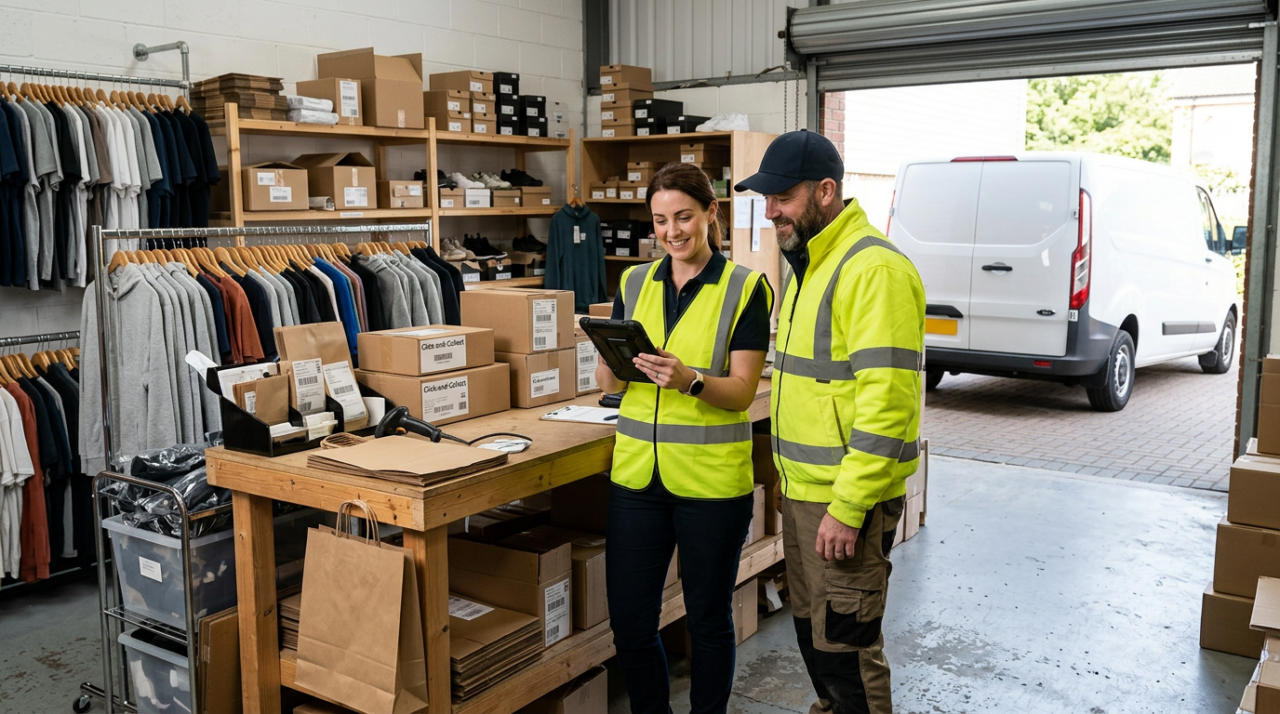
To compete with retail giants, you’ve got to optimise your service by leveraging your unique advantages: superior reliability, speed, and flexibility. You shouldn’t try to match their spending. For many retailers, it feels like an unwinnable fight against their massive scale and “free” dispatch offers. The secret isn’t a bigger budget: it’s a smarter strategy.
This guide is a direct playbook of proven methods that a small business can use to optimise retail delivery and win and retain loyal customers. It’s about turning your size into a strength and showing the big brands that personal, dependable service is something customers value more than a free but late parcel. We’ll explore how to transform your fulfilment into a considerable competitive advantage.
The Trench Reality: Your customers will forgive a reasonable fulfilment fee, but they won’t forgive a broken promise. The final stage of the online transaction is the most memorable part.
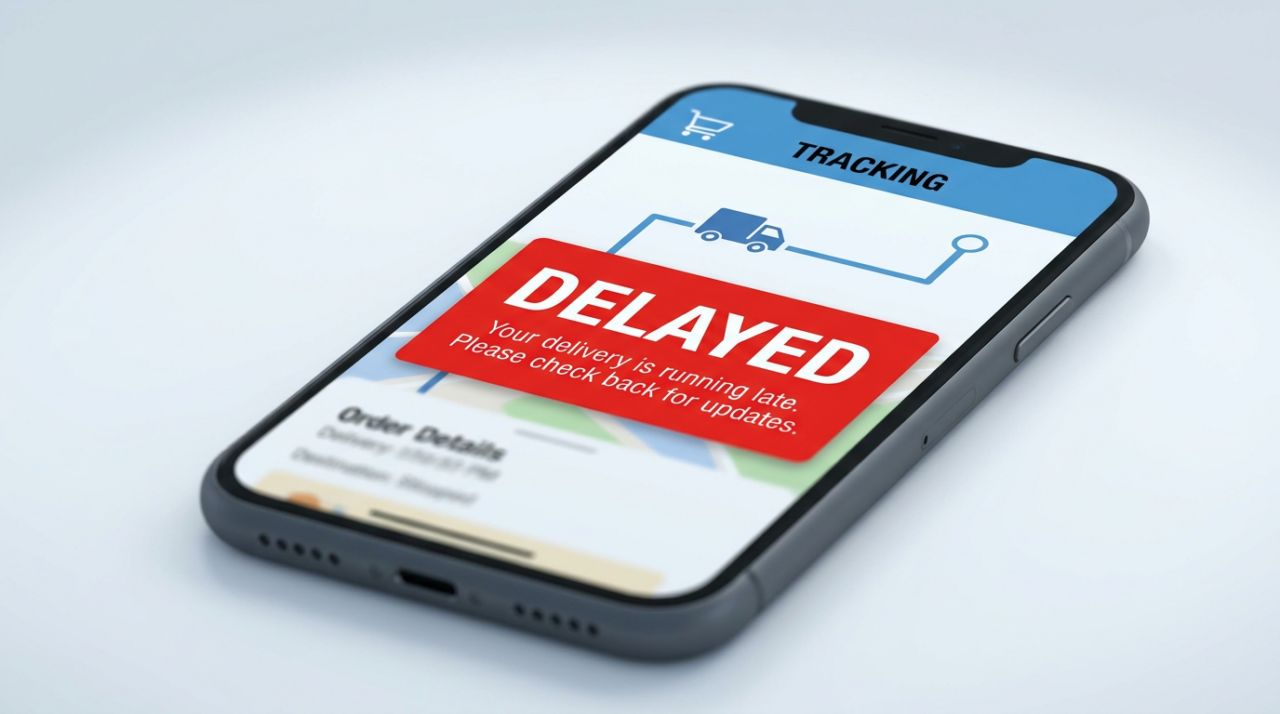
Your strategy’s got to be to provide a premium, dependable delivery service. While “free” dispatch is an attractive marketing tool, data consistently shows that reliability is a more powerful driver of long-term loyalty.
Meeting customer expectations is crucial for any business. A late or failed arrival, even if free, creates a negative experience that erases any goodwill and harms your brand reputation. Getting it right every time builds trust and community around your brand.
If you compete on “free” and fail to deliver the goods on time, you lose both the cost of the service and the customer’s lifetime value. It’s a battle you can’t win by copying the giants, but you can definitely win by outclassing them in dependability. This consistent performance becomes a cornerstone of your brand identity.
Your physical store network is your greatest strategic asset. The big players rely on massive, centralised warehouses, which makes fast, local fulfilment mechanically difficult and expensive for them. You’ve got to leverage your proximity to the customer by implementing a ship from store model. This approach is central to optimising last-mile delivery offers.
By transforming each store into a mini distribution hub, you can provide a rapid service in metro areas that the competition simply can’t match without prohibitive costs. This isn’t just about speed; it’s about intelligent operational management that leverages the assets you already have, turning a retail footprint into a dynamic delivery network. You can even offer same-day delivery for orders placed before a specific cutoff time, a powerful incentive for immediate purchases.
A customer in Suburb A orders a product at 10 am.
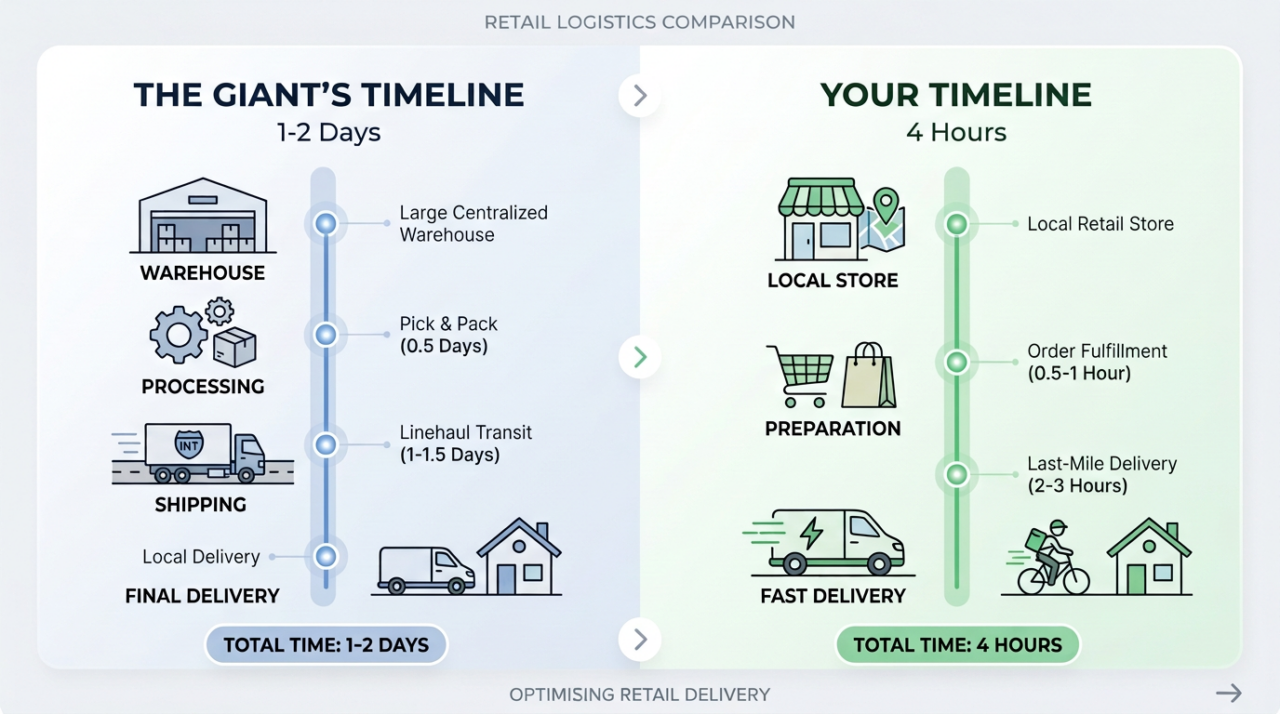
The Verdict: You’ve won on speed and convenience, offering a premium service that the competition cannot easily match without incurring immense costs.
Don’t let logistics hold your retail business back. Partner with Ontime Delivery Solutions to access professional drivers and cost-effective delivery models tailored to your store network. We help you turn your physical locations into a competitive speed advantage!
Talk to Our Retail Logistics Team Today!
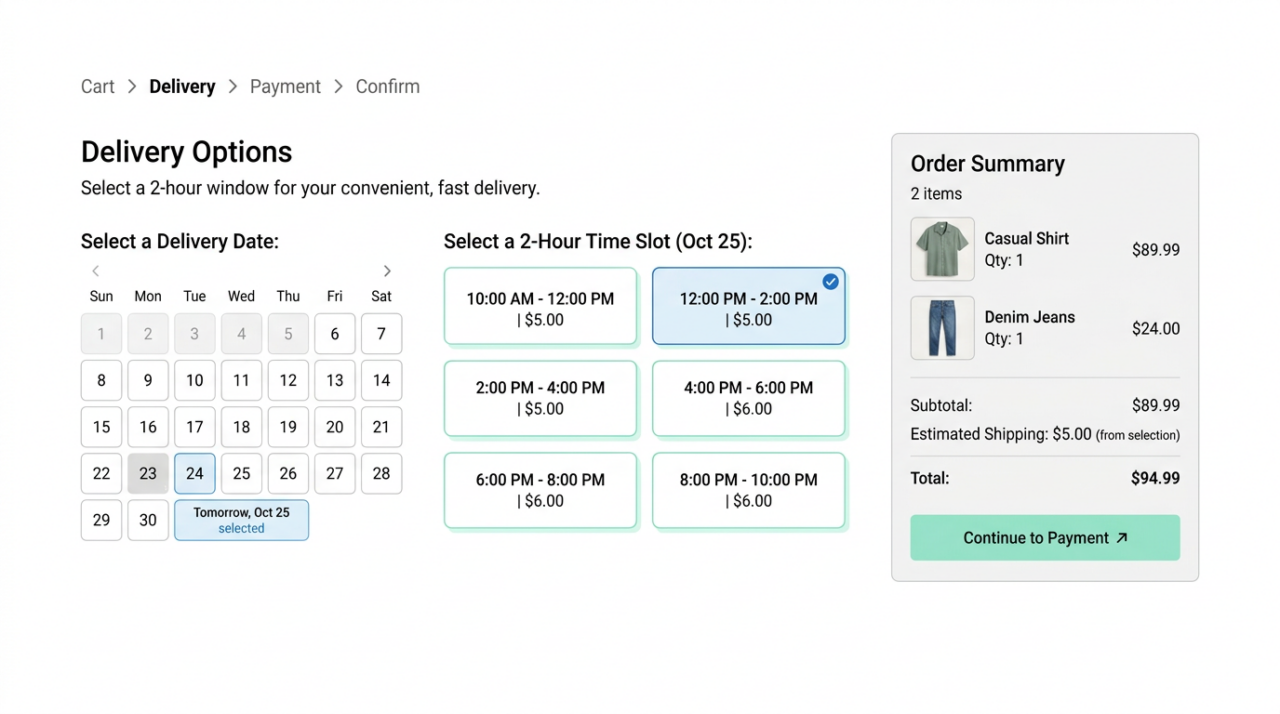
Where large corporations offer rigid, automated systems, a nimble retailer can win by offering better delivery options. This isn’t just about speed: it’s about giving customers a sense of control and proving you’re kicking goals in service. When you provide more choice, you cater to individual needs, which is a powerful differentiator that builds a loyal customer base. It shows you understand that your customers have varied schedules and preferences. The three most effective options are:
For most retailers, the single biggest barrier to offering a premium delivery service is the high, unpredictable cost of owning and running vehicles. Finding a cost-effective solution is a major challenge, but the smart financial decision is to avoid this capital risk. Investing in a fleet means dealing with maintenance, insurance, driver wages, and unforeseen repairs. This complexity distracts from your core business and creates financial uncertainty. Outsourcing your delivery operations is the strategic move that allows you to concentrate on what you do best: selling your products.
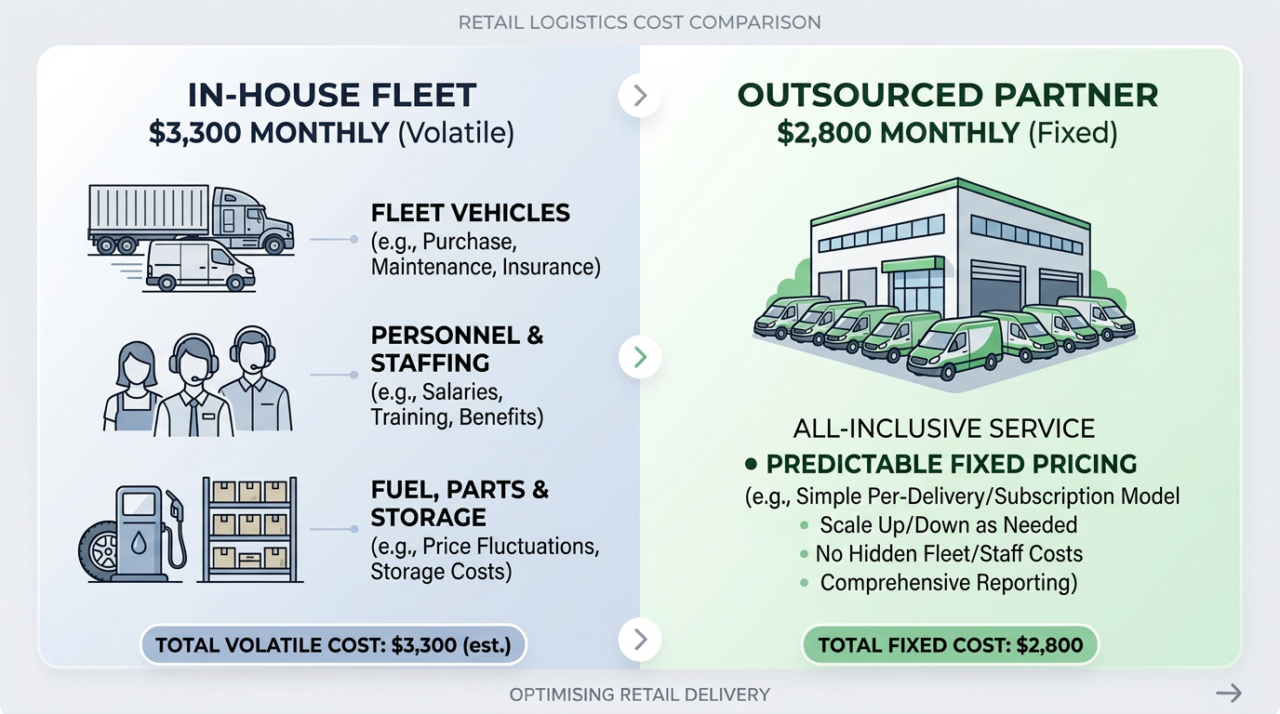
The Verdict: The outsourced model is not only cheaper in this scenario, but it also provides absolute budget certainty. It converts a huge, volatile upfront capital investment into a predictable, regular expense. This move gives small businesses access to enterprise-level capabilities without the enterprise-level headache or cost, allowing them to scale their operations with confidence.
Your final competitive advantage is the human touch. The big players often rely on a revolving door of anonymous gig-economy drivers. You can provide a superior experience by using a consistent, professional driver who is permanently assigned to your business. This consistency builds familiarity and trust, turning the final point of contact into a positive brand interaction. Customers begin to see the driver as part of your team and an extension of your company’s values, especially when you have unique product offerings that may require specialised handling or expertise. A professional, courteous driver becomes your best brand ambassador, reinforcing the quality and care that defines your business.
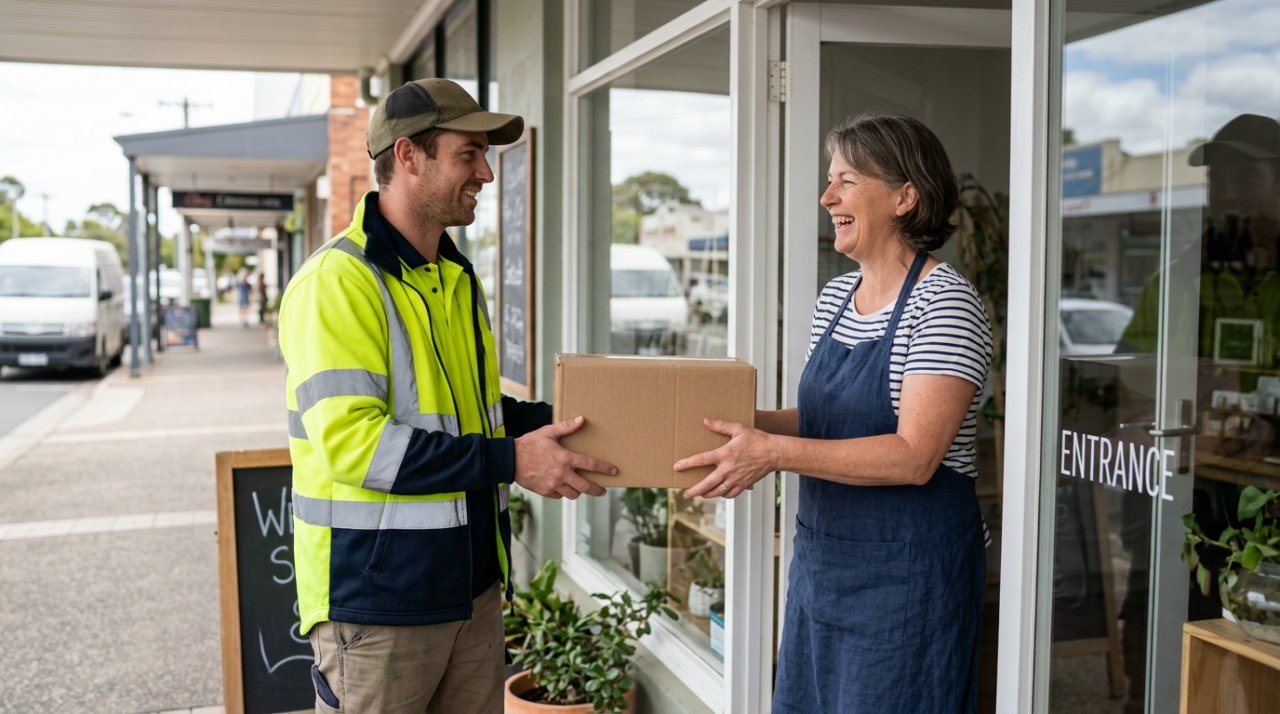
This neighbourhood barista effect forges a powerful emotional loyalty that an algorithm or a random driver can never replicate.
A small business can use its physical stores by implementing a ship-from-store model. This strategy transforms each retail location into a mini fulfilment centre for processing online orders in the area. Compared to a giant’s centralised warehouse, a nearby store enables genuine same-day service. This approach leverages a retailer’s existing physical assets and inventory to create a significant advantage in speed and convenience, complete with order tracking for customer peace of mind. Smaller retailers who adopt this can significantly reduce their order fulfilment times.
For customer loyalty, reliability is more important than speed or cost. While fast and free are attractive, a late or failed drop-off creates a powerful negative experience that undermines customer trust. Meeting expectations with a service that arrives on time, every time, is the most effective strategy for retention. A reliable paid service is better for building long-term loyalty than an unreliable free one. This consistency demonstrates that you respect the customer’s time and you’re a trustworthy business to deal with.
An outsourced delivery partner improves your operation by shifting your financial model from upfront capital costs to recurring operating costs. Instead of a large, upfront investment in vehicles, this partnership converts fleet costs into a fixed monthly fee. This gives your business the capability of a professional fleet, including advanced route optimisation technology to design the most efficient delivery routes and provide real-time data, all without the financial risk and volatility of ownership. This strategic approach ensures you get maximum efficiency from every single route.
You cannot outspend the big players, but by implementing these strategies, you can absolutely outservice them. You’ll be soaring above your targets in no time. By focusing on reliability, flexibility, and a premium human experience, you can complete your project to optimise your retail operation and transform your fulfilment from a simple cost centre into your most powerful weapon for winning and retaining loyal customers.
If you’re tired of delivery headaches, an expert review is the first step. Our free Fleet XRAY analysis can show you how to leverage your unique advantages.
Talk to a Retail Logistics Expert
From pickup to drop-off, we make every step easier.
Need drivers? 1300 778 919