
The Smart Alternative to Risky Independent Courier Contracts To Secure Your Brand
Secure guaranteed zero downtime ✓ and a dedicated, permanent delivery team ✓ at Ontime Delivery Solutions.…
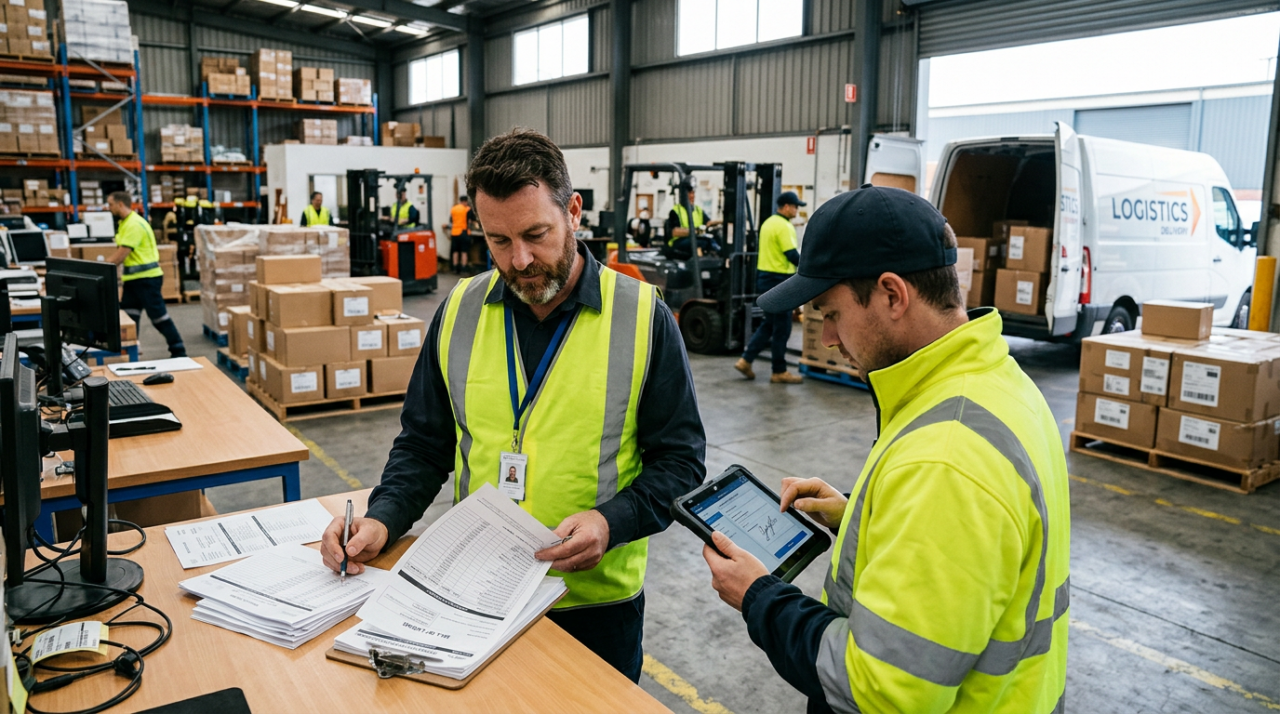
In the world of logistics and freight management, two pieces of documentation are absolutely critical: the Bill of Lading and the Proof of Delivery. A Bill of Lading is a legal document with a logistics provider that initiates a shipment, while a delivery confirmation is a final receipt confirming the goods were delivered to the customer.
For any business involved in shipping physical products, understanding the distinct roles of these shipment documents is essential for smooth operations and winning payment disputes. Getting your paperwork right from the start means you’ll spend less time chasing claims and more time kicking goals. This guide explains the mechanics of each document and how robust logistics management protects your cash flow.
The Bill of Lading is a legally binding document created before goods are picked up by a third-party transport company. It functions as the official contract between the business sending the goods (the sender) and the logistics company transporting the freight (the transport provider).
Modern logistics even supports electronic versions, streamlining the start of the shipping process. The document contains all the vital details required to process the shipment and should be considered the single source of truth for the entire journey.
The Trench Reality: Without a properly executed Bill of Lading, you’ve no contractual evidence of what you handed over to a freight company. In a dispute over lost or damaged goods, their word will often win over yours without this essential paperwork.
The lading document performs three distinct mechanical jobs in the shipping process:
A Proof of Delivery is the final piece of paperwork in the logistics chain, created at the exact moment a shipment is handed to the customer. Its sole function is to provide clear, indisputable evidence that the delivery service you were paid for has been successfully completed, and the goods are now in the recipient’s hands.
Securing a clean Proof of Delivery is the mechanical trigger that allows a business to:
Let’s walk through a hypothetical shipment to see exactly where each document fits into the shipping and logistics process and where things can go wrong.
Imagine you’re a business sending 10 boxes of high-value electronics from your warehouse in Sydney to a client in Melbourne. This requires a third-party freight company with specialty freight handling capabilities.
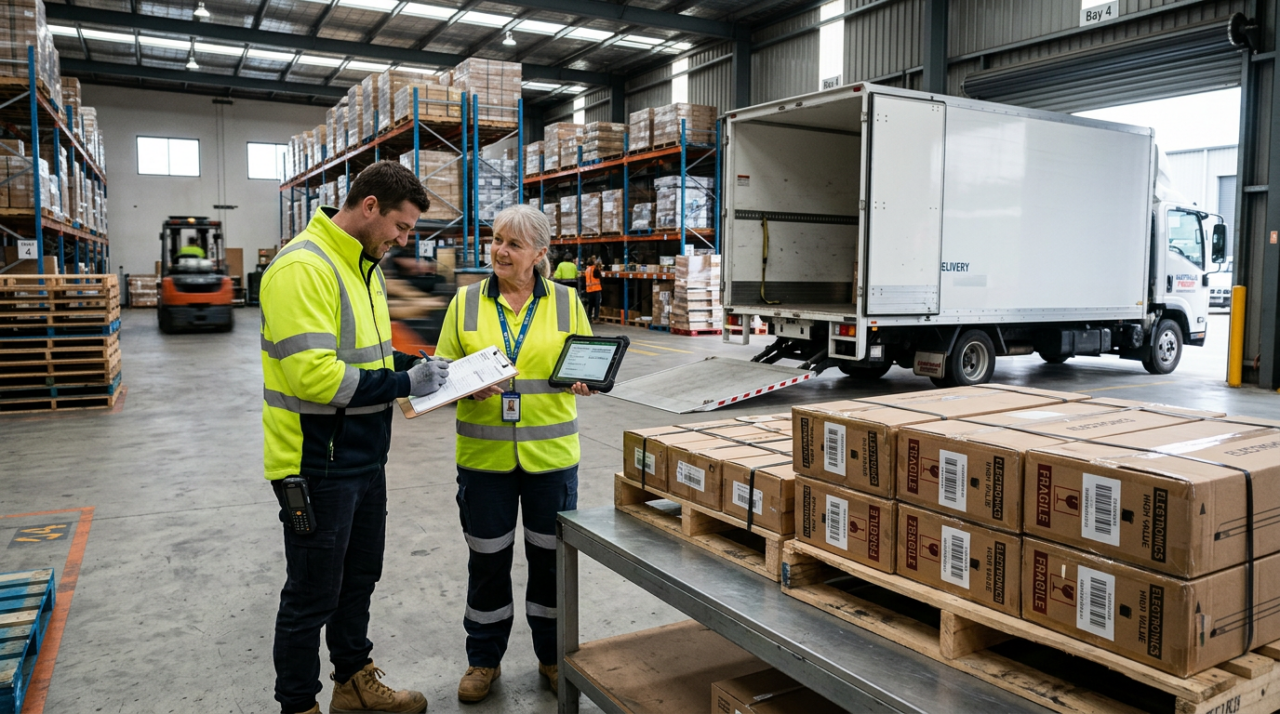
The 10 boxes from the shipment arrive at your client’s store in Melbourne.
Book your free, no-obligation Fleet XRAY Analysis™ to get a clear picture of your savings potential. Call us on 1300 778 919.
In any payment dispute, the business with the most robust and objective evidence wins. A simple paper docket with a messy signature is weak evidence. The industry standard for creating undeniable confirmations is a digital system, which is a core part of effective freight management.

A digital system uses technology to eliminate the ambiguity of paper records. It provides multiple layers of objective data that are far more difficult to dispute. Our team, for example, uses a system that syncs this data to a client’s invoicing platform, closing the loop between delivery and payment instantly. A professional logistics system will always capture:
No, a Bill of Lading and a Proof of Delivery are legally distinct functions and aren’t interchangeable in the shipping process. A Bill of Lading’s a contract with a transport provider for a shipment. In contrast, a Proof of Delivery is a confirmation for the final customer that the goods were received. For business owners managing disputes, the Bill of Lading protects the sender against the transport company, while the Proof of Delivery protects the sender against the customer.
If a customer refuses to sign a Proof of Delivery, the driver shouldn’t leave the goods without direct permission. The standard protocols for the driver to document the refusal by noting the person’s name and the reason given. They should also use their device to take photos of the goods at the delivery location. This creates the strongest possible evidence trail for the shipment when a signature’s not available.
In Australia, a clean Proof of Delivery is critical evidence that you’ve fulfilled your obligations under Australian Consumer Law. In a payment dispute, this record serves as verifiable confirmation that the goods were delivered to the specified recipient at a certain place. Without a strong record, it’s difficult to defend against claims of non-delivery, which can result in chargebacks or unpaid invoices.
Yes, digital signatures are legally valid for a Proof of Delivery in Australia. According to the federal Electronic Transactions Act 1999, electronic signatures hold the same legal weight as handwritten ones, provided the method used is reliable and identifies the person signing. For businesses choosing a digital system, this means signatures captured on a driver’s device are legally binding evidence.
Understanding the difference between a Bill of Lading and a Proof of Delivery’s the first step. The next is implementing a logistics management system that ensures delivery confirmation is captured accurately and stored securely every single time. This is the most direct way to protect a business from payment disputes and secure its cash flow.
If shipping management paperwork is creating financial friction, a review of the current process can reveal the gaps. Our free Fleet XRAY analysis can show you how to build a more robust and dispute-proof shipping and delivery system.
Request My Free Fleet Analysis
From pickup to drop-off, we make every step easier.
Need drivers? 1300 778 919