

A Deep Dive into Your Fleet’s Cost Per Kilometre
Do you know your fleet's true cost per kilometre? Our guide shows you how to calculate it, revealing…
This guide breaks down the true cost of outdated B2B delivery tracking and provides a clear action plan for turning your delivery operation into a powerful competitive advantage.
Have you ever had that sinking feeling when a customer calls asking “Where’s my delivery?” and you just don’t have a good answer? We’ve been there. We are Ontime Delivery Solutions, a dedicated delivery service built for businesses that need reliable, professional logistics support. Over the last three decades, we’ve built this business from a single van into a nationwide dedicated delivery partner, but our most important lesson came from one tough phone call.
It was years ago. A great client was on the line, and he was furious. A critical delivery was late and holding up his entire operation. When he asked where it was, we had to give him the one answer no business owner ever wants to give. “We’re not sure, let me call the driver.” In that moment we realised a simple dot on a map doesn’t just fail your systems. It fails your customers.
Our goal here is to give you the exact mental model I now use to look at any delivery operation. By the end of this article, you’ll have a practical framework to do three things:
Let’s move your business toward a brighter future.
Think of your basic track and trace system as a smoke detector. It’s useful, and it’s even essential. It beeps loudly to tell you there’s a fire. But here’s a simple truth. A smoke detector has never put out a fire. It only alerts you to a problem that’s already happening. A professional doesn’t just react to the alarm. They calculate the cost of the fire. Let us show you how.
When a delivery is late, you don’t just lose time. You lose trust. Here’s a simple exercise we walk business owners through. First, estimate your average customer lifetime value. Now consider that 47% of customers will not order again after one poor delivery experience. If delivery issues cause you to lose just 5% of your customers this year, what is that hard number? That isn’t a “feeling” of frustration. It’s a quantifiable hit to your bottom line.
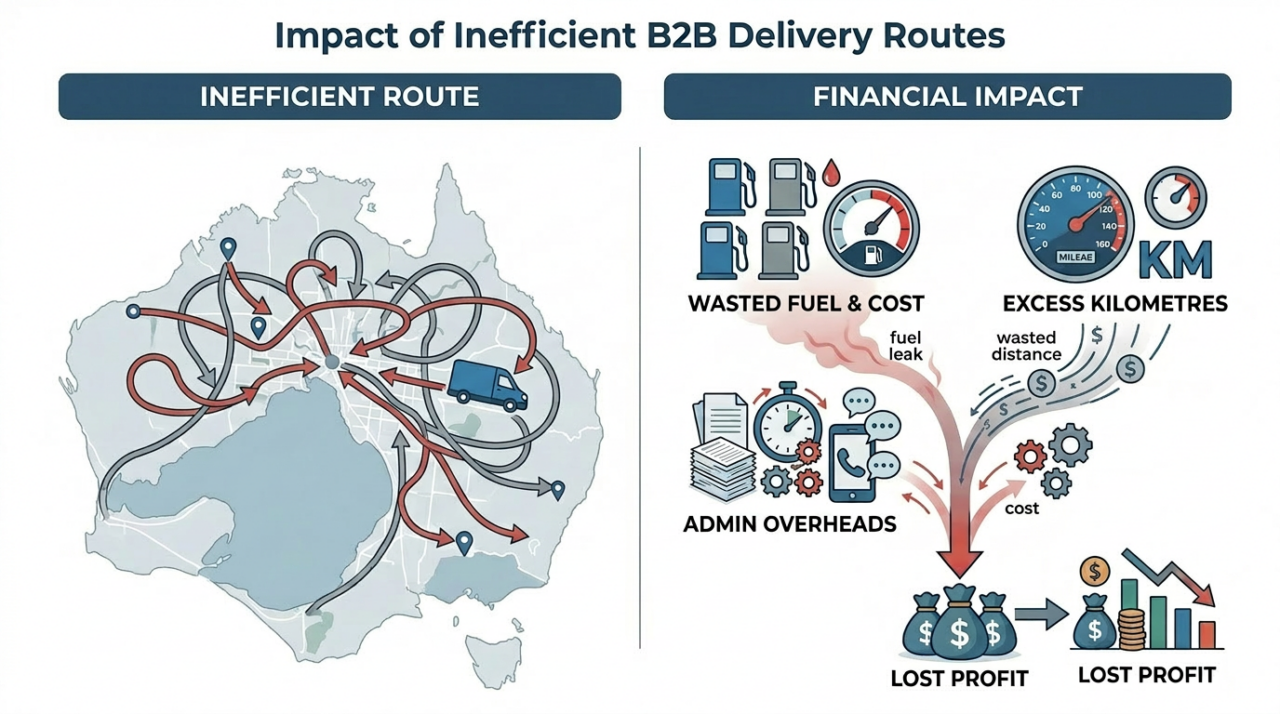
An unoptimised route is a leaky pipe in your finances. Let’s calculate the leak. A professional conservatively estimates that unoptimised routes are at least 10% less efficient. So do the maths. Take your Total Daily Kilometre and multiply it by 0.10 for 10% inefficiency, then multiply that by the Number of Workdays per Year. This equals your Wasted Kilometres. Now multiply that by your average running cost per kilometre. With diesel around 203 cents per litre, this number is often shocking.
Your team’s time is one of your most valuable assets. For one week, track the number of “Where’s my order?” calls and emails your team fields. Multiply that by the average time spent to resolve each one, which is usually 10 to 15 minutes. This reveals the total hours per week your team spends putting out fires instead of building your business. Proactive visibility can slash these calls by up to 40% and gives you those hours back.
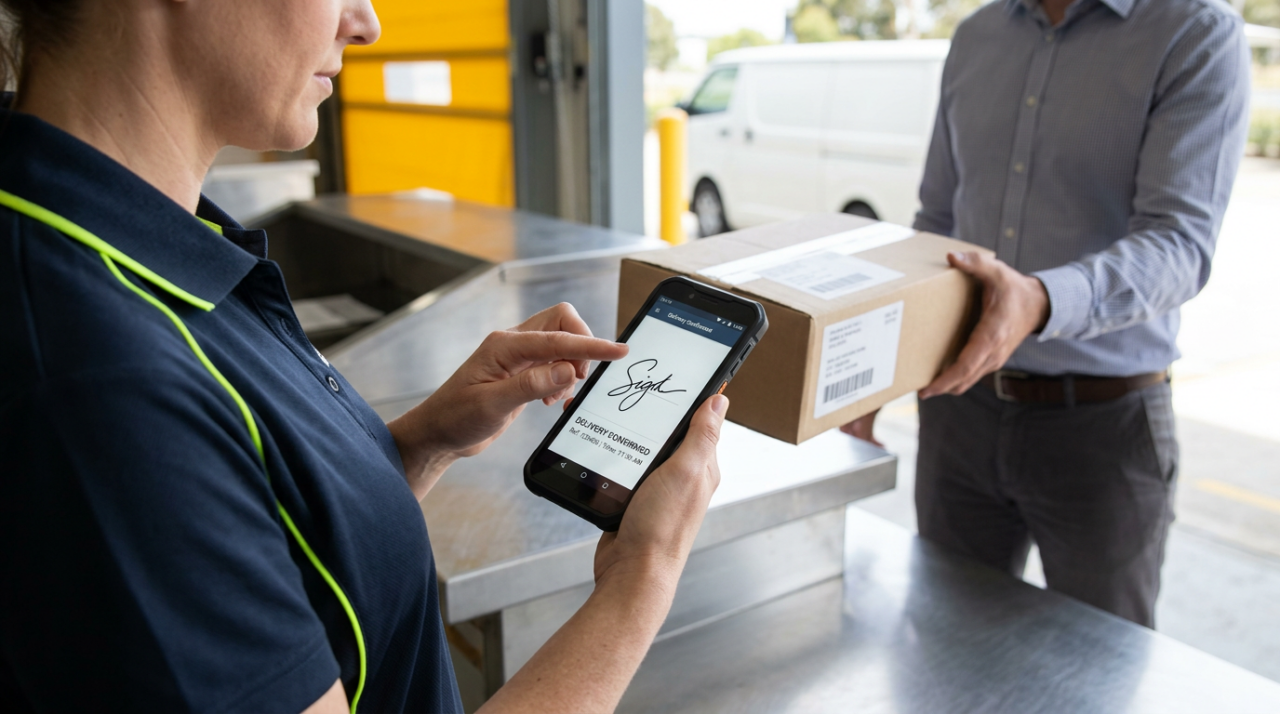
When a delivery is disputed, the cost isn’t just the value of the missing item. With around 4.1 million parcels lost or stolen in Australia each year the risk is real. The true cost of a single dispute includes the Cost of Replacement Goods plus the Admin Hours Spent Investigating plus the Unquantifiable Cost of a Damaged Client Relationship. Electronic proof of delivery makes this entire equation disappear by providing instant and irrefutable proof.
The hidden costs of inefficiency, disputes, and poor customer service add up. Discover exactly where you’re losing money and how a dedicated delivery partner can fix it.
Get Your Complimentary Fleet XRAY Analysis
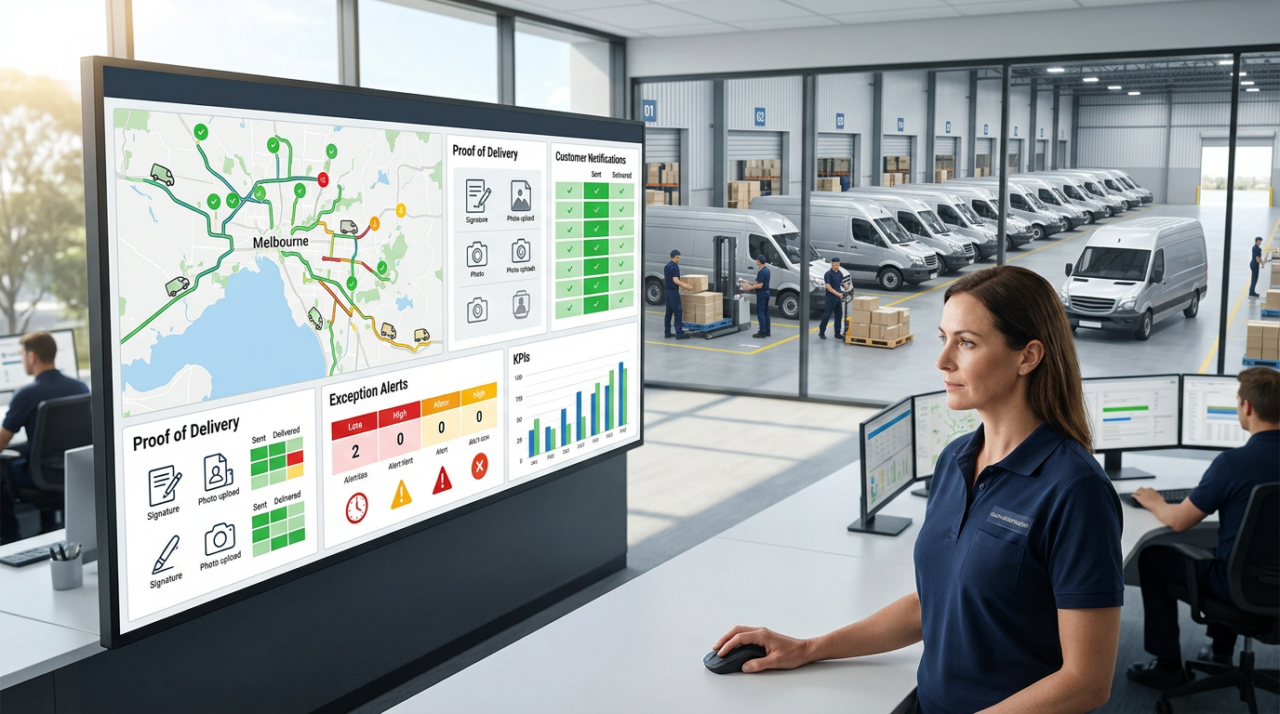
Seeing the limits of a simple smoke detector is the first step. The next is to build something better. Let’s talk about designing a complete fire suppression system for your logistics. This solution is a combination of powerful technology and a new mindset that creates a seamless and resilient extension of your business.
A professional delivery partnership isn’t just about features. It’s about solving specific and real world business problems. Let us give you two examples of what this looks like on the ground.
The Problem: Mechanics need specific parts urgently to clear their hoists. A late delivery doesn’t just annoy them. It costs them money and clogs their entire workshop.
The Professional Solution: We don’t just send “a van.” We implement dedicated multi-stop “milk runs” in 1 or 2 tonne vans that visit the same workshops at the same time every day. The driver becomes a familiar face who understands the urgency and knows the receiving docks and builds a relationship with the staff. That is how you turn a delivery from a risk into a competitive advantage.

The Problem: Delivering high value sensitive equipment to hospitals and clinics requires precision and care. A standard courier dropping a box at reception is a recipe for disaster.
The Professional Solution: This requires a tailored toolkit. We deploy a 4-tonne pantech truck with a hydraulic tailgate lift for safe unloading. It’s a two person job with both drivers trained in handling sensitive equipment and navigating complex hospital layouts. The delivery is booked into a specific time window and the clinic receives live arrival time updates. This isn’t just a delivery. It’s a white glove service that protects the product and the relationship.
Understanding the challenges and envisioning a better future is a huge step forward. This is a manageable action plan focused on practical and decisive steps to take back control and turn your deliveries into a genuine asset for your business.
The best starting point is always clarity. But why is this so critical? Because without knowing your true delivery costs you’re making business decisions with flawed data. You might be underpricing your products because you haven’t factored in all the hidden fleet expenses which slowly erodes your margins until they disappear. You can’t manage what you don’t measure. For helpful guidance the Australian Government provides resources for calculating business startup costs.
A powerful first step is to conduct a thorough analysis of these true costs. We call this a Fleet XRAY Analysis. It’s a supportive and data driven comparison of your in house expenses against a fully managed solution designed to reveal exactly where your money is going and where savings can be found.
This next step is less about tools and more about perspective. A transactional “courier” mindset keeps you in a race to the bottom where you’re always chasing the cheapest price which guarantees you the least invested service. A partner on the other hand is invested in your outcomes. Their goal alignment is the crucial difference. For example a partner is incentivised to improve your delivery in full and on time rate. This is a key industry metric because it makes their operation smoother and secures a long term contract. A cheap courier has no such incentive. The consequence of a transactional mindset is that your delivery function never improves. It remains a constant source of stress and cost.

When you’re ready to look at solutions you need to analyse them like an expert. Here are the questions a professional asks and the real world reasons why they matter.
That phone call years ago taught me a lesson that has shaped our entire business. In logistics visibility isn’t about data. It’s about trust. Your delivery system isn’t just moving boxes. It is the physical delivery of the promise you made to your customer. A dot on a map can’t do that. It can’t build the trust that turns a one time buyer into a lifetime partner.
So let’s recap the simple action plan from this guide.
It’s time to stop just tracking dots and start delivering on your promise.
Stop tracking, start managing. Let us show you how a dedicated delivery partner can give you complete control, reduce costs, and let you focus on what you do best—running your business.
Speak to a Logistics Expert Today
From pickup to drop-off, we make every step easier.
Need drivers? 1300 778 919