


A Deep Dive into Your Fleet’s Cost Per Kilometre
Do you know your fleet's true cost per kilometre? Our guide shows you how to calculate it, revealing…
This definitive guide gives you the exact framework to calculate your true cost per kilometre in Australia and reveals how a dedicated delivery partner can deliver absolute cost predictability.
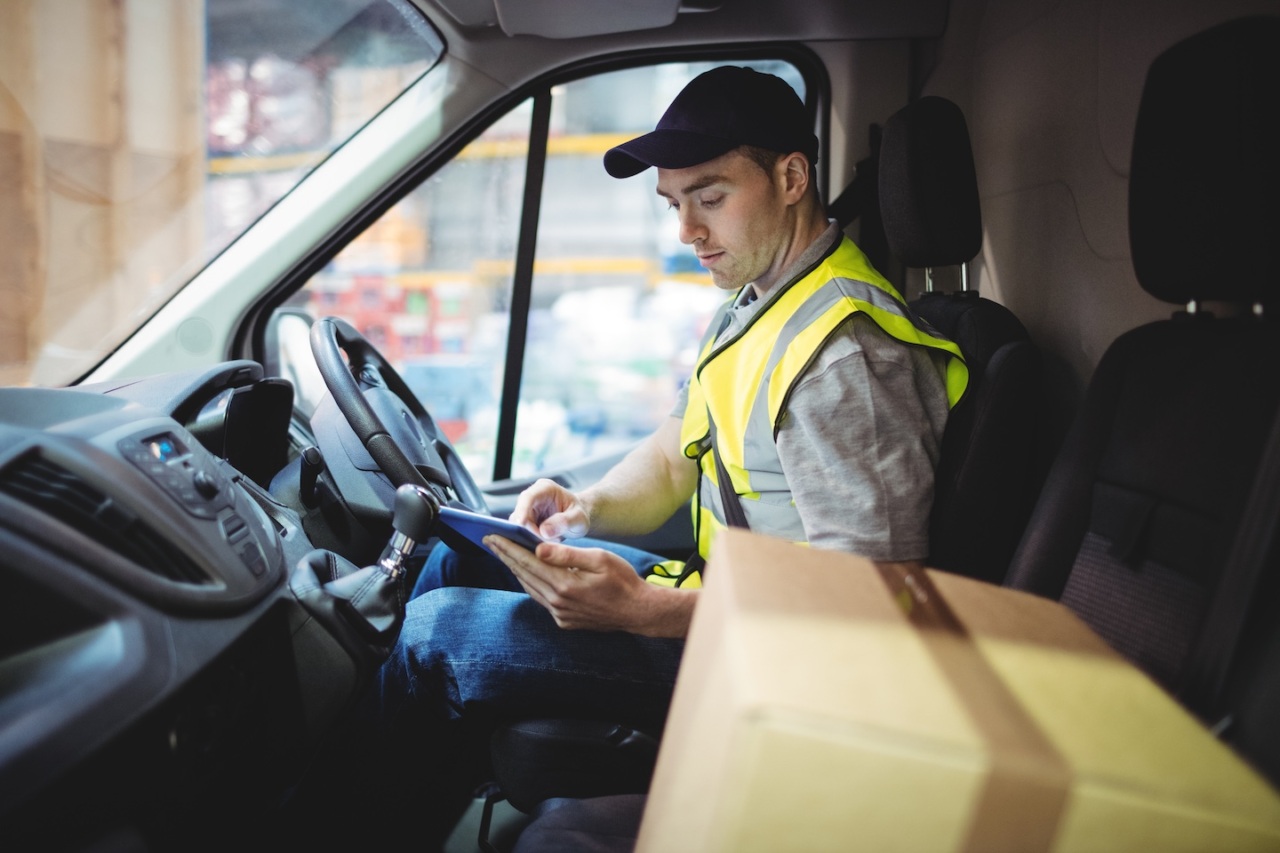
Do you know what it truly costs to run your delivery operation? Not a ballpark figure, but the real cost, down to the last mile?
We are Ontime Delivery Solutions, a dedicated delivery service built for businesses that need reliable, professional logistics support. We know the frustration of seeing earnings disappear into a black hole of unexpected automotive costs. Over three decades, we’ve seen that the most successful businesses aren’t the ones that just track delivery expenses. They are the ones that eliminate financial surprises altogether. This guide will show you how to calculate your delivery cost per kilometre and secure your margins for every transport delivery.
Here’s your roadmap to taking back control of your logistics budget:
Before we touch a calculator, let’s address the reality of managing deliveries. Most business owners we talk to track their fuel bill and think they have a handle on their total delivery expenses, but this pricing approach is often inaccurate.
This is a critical blind spot. The truth is, the most dangerous expenses are the ones you don’t see every day. We’re talking about the slow wear on a set of tyres, the sudden failure of a transmission, and the silent killer of profitability: downtime. These hidden running costs often blow out budgets unexpectedly.
According to recent industry research, the final stage of delivery can account for up to 53% of your total supply chain costs. That means over half your logistics budget is being spent on the most complex and unpredictable part of the shipping journey. If you aren’t tracking every dollar with precision, you’re gambling with your entire margin on every single delivery you make.
Now that you understand the stakes, let’s build a proper framework to get you an actionable number. This isn’t just about adding up receipts; it’s about creating a clear financial picture of your transport operations so you can finally make informed pricing decisions for each mile delivery.
First, you need all the facts. Go into your accounting software for the last financial quarter and pull every single expense related to your delivery automobiles and their servicing. Don’t leave anything out for any mile delivery.
Your checklist for accurate cost analysis must include all potential charges:
Here’s the approach for better budget control. To gain clarity, you must separate the expenses you can budget for from the costs that create chaos. We group these into two categories.
For example, a single major repair, like a new diesel particulate filter (DPF) on a van, can cost upwards of $4,000 AUD. That one unpredictable servicing expense can instantly wipe out the earnings from hundreds of deliveries, making your cost per delivery unpredictable.
Once you’ve categorised your expenses, the calculation is simple. This formula, which accounts for total miles driven, will give you your single most important operational number for any delivery route.
(Total Fixed Costs + Total Variable Costs) ÷ Total Kilometres Travelled = Your True Cost Per Mile or Kilometre
Let’s say your total costs were $30,000 AUD and your drivers travelled 25,000 km. Your true cost is $1.20 AUD per kilometre.
At this point, you might be asking: “How do I know if that number is good or bad?” While the ATO’s cents per kilometre rate is a common reference, it’s designed for personal cars and is not a realistic benchmark for commercial vans. From our industry data, a well-managed van typically costs between $1.10 and $1.60 AUD per kilometre. If your number is at the high end or above, it’s a red flag that hidden costs for each mile delivery are out of control, so that you can use this figure to make profitable pricing decisions and ensure every delivery contributes to your bottom line.
Call our team today.
You now have your number. But here’s the reality: that number is a snapshot of the past. It doesn’t predict the future chaos of managing an in-house delivery team.
It doesn’t account for your best driver calling in sick. It doesn’t account for your van breaking down on the M4 in peak hour with urgent automotive parts. And it doesn’t account for your significant legal risk under Chain of Responsibility (CoR) laws.
You might be wondering, “What is Chain of Responsibility in simple terms?” It means that everyone in the supply chain, including you as the business owner, is legally responsible for safety on the road. A driver’s mistake can become your personal liability.
An in-house van becomes a financial liability the second it’s not on the road. That downtime can cost your business hundreds of dollars per day in lost productivity, missed delivery opportunities and reduced efficiency.
Now, imagine a different reality. One where all the unpredictable expenses, including repairs, maintenance, and fluctuating fuel costs, disappear. One where you get a single, fixed invoice for your entire delivery operation, every month.
The concept is simple: you trade the chaotic variables you can’t control for a guaranteed outcome you can. This is achieved by transferring the financial and operational risk of running your own transport operation to a partner whose entire business is built to manage delivery logistics with maximum efficiency.
For example, when your in-house van breaks down, your business stops and the repair bills start. When our dedicated van in your dedicated delivery service breaks down, we provide a replacement and driver immediately, at our cost. Your deliveries continue without interruption, thanks to smart route optimisation, and your invoice doesn’t change, so that your business is insulated from chaos and can maintain its reputation for absolute reliability.
Insight: The “Last Mile” Problem Is Structural, Not Just Operational.
Why does the final leg of the delivery route consume up to 53% of total shipping costs? Because it breaks the economy of scale. While a highway truck moves thousands of units efficiently, a delivery van moves one item at a time while battling traffic and idle time. This structural inefficiency, rather than just the high cost of fuel, is what drains profitability from a delivery.
You’re an expert in your field, but you don’t have to be an expert in logistics management. The first step to gaining control is knowledge. We encourage you to use the framework in this guide to run your own numbers this week.
The shift from reacting to daily fires to planning for growth with certain costs is the single most powerful advantage you can give your business. Improving delivery efficiency is key.
Dedicated delivery services and standard couriers solve fundamentally different logistical problems. A standard courier optimises for route density by mixing items from multiple clients, which reduces cost but increases the risk of delays and damage. A dedicated transport partner optimises for brand representation and reliability by providing a permanent driver and van exclusive to your business. If your priority is low cost per item, a courier is suitable; if your priority is Chain of Responsibility (CoR) compliance, brand consistency, and guaranteed capacity, a dedicated service is the superior model for your delivery needs.
Yes, outsourcing is often cheaper due to the aggregation of purchasing power. While a single business pays retail for running their own vans, a large transport provider leverages economies of scale to reduce baseline delivery expenses.
These savings allow providers to offer a fixed monthly price that is often lower than the volatile, cumulative cost of running an internal team for your delivery operations.
Transitioning from an in-house team to an outsourced model requires a structured “lift and shift” process to ensure business continuity for every delivery.
To protect margins, your customer pricing strategy must account for the difference between certain and variable delivery costs. A hybrid pricing model is generally the most effective:
This pricing structure ensures you recover additional charges like higher fuel and labour costs of long-distance trips without overcharging local customers.
Book a free Fleet XRAY Analysis™.
From pickup to drop-off, we make every step easier.
Need drivers? 1300 778 919