
Why ‘Tendered for Delivery’ Is a Red Flag for Your Stuck Shipments

Walter Scremin CEO at Ontime
image

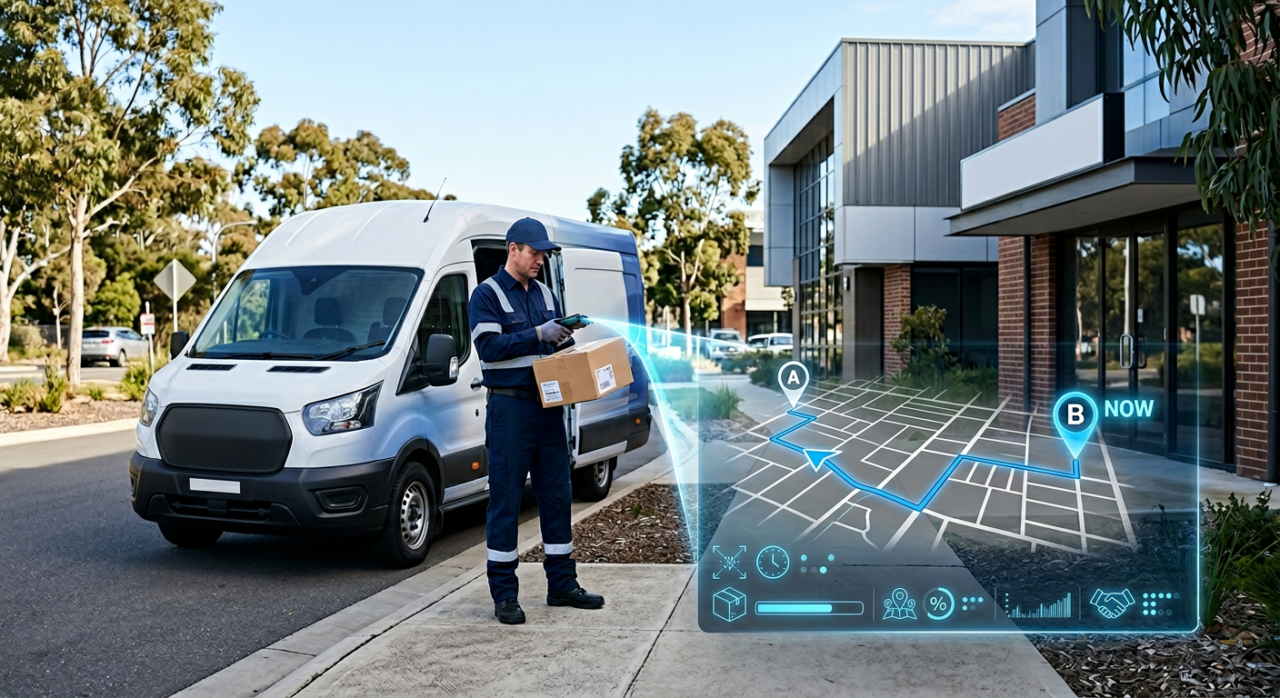
A professional delivery scene showing a courier van parked outside a business while a driver scans a parcel with a handheld device.

Does this sound familiar? A customer calls you, confused and frustrated. Their package tracking has been frozen for days on a status they don’t understand: ‘tendered for delivery’.

This isn’t just a small delay. When a package gets stuck, your customer’s trust disappears, and your support team is left to deal with the fallout. This guide gives you a simple 3-day plan to find these delivery black holes, understand how much they’re costing you, and take back control of your shipping for good.

Key Takeaways On Your Guide to the ‘Tendered’ Trap

What ‘Tendered for Delivery’ Means: This status simply means your package has been handed over to another local courier for the final delivery. This is the stage where tracking updates often stop.

  • Step 1: Find the Black Hole. Check the tracking data for your last 50 shipments. This will show you exactly how long your packages are getting stuck.
  • Step 2: Calculate the Real Cost. Use a simple formula to work out how much money you are spending on customer calls about missing orders.
  • Step 3: Build a Backup Plan. Find other local delivery partners for your most important routes. This stops your business from grinding to a halt when one carrier has problems.

On This Page

  • Step 1: Your 3-Day Blueprint to Regain Full Control
  • Step 2: Find the Hidden Cost of Every Customer Call
  • Step 3: Use Different Delivery Companies to Protect Your Business

Step 1: Your 3-Day Plan to Regain Full Control

You can start taking back control of your deliveries today. Here is the exact plan I would follow to diagnose the problem and fix this delivery failure.

Day 1: Audit the Black Hole.

First, export the tracking data for your last 50 shipments into a spreadsheet. Create a new column called “Time in Black Hole (Hours)”. For every shipment that was ‘tendered for delivery’, note how long it stayed that way before the next scan.

  • Why This Matters: This gives you hard data, not just feelings. When you talk to your shipping carrier, you will have clear proof of the delays. Without proof, it’s just your word against theirs, and nothing will change.

A logistics analyst reviewing shipment records and delivery performance on a laptop and printed reports.

Day 2: Calculate the Cost Per Inquiry.

Next, use the formula below to attach a real dollar cost to every “Where is my order?” call you received last month. This step changes the problem from a ‘customer service issue’ into a financial leak you can measure.

A delivery partner or logistics staff member sitting in a warehouse or inside a delivery van, using a calculator and reviewing notes.

Day 3: Design Your Backup Plan.

Finally, figure out which of your delivery routes are the most important, like those to your biggest clients. Then, find two other local delivery partners who can handle those specific areas. You can start with a quick Google search for a “dedicated delivery service in your city”.

  • Insider Tip: Think of this as a lifeboat for your business. When your main delivery company has a problem (and they will), you won’t be left stranded. Without a backup, you have no other options and no power to demand better service.

A strategic planning session where logistics managers redesign delivery routes and processes.

This simple audit gives you the facts you need to see the weak points in your shipping process. Now, let’s look at how these hidden costs can hurt your business.

Step 2: Find the Hidden Cost of Every Customer Call

A frustrated logistics manager reviewing unclear shipment status on a screen.

Every time a team member has to answer a call about a missing package, you are paying a hidden tax. I call it your Cost Per Inquiry.

In my experience, I’ve seen businesses waste over $50,000 a year on staff whose only job is to calm down anxious customers. These are calls that would not happen if packages weren’t handed off between different companies. It’s a huge drain on your profit that you can stop.

Here’s how to calculate this hidden cost:

  • Step A: Find Total Support Hours. Ask your customer service manager for a report. Find out how much time the team spent on delivery-related questions last month.
  • Step B: Calculate the Staff Cost. Multiply those hours by the average hourly wage for that team, including superannuation.
  • Step C: Get Your Cost Per Inquiry. Divide the total staff cost by the number of delivery questions you received. This gives you a dollar amount for every single time a customer has to chase an order.

As more people buy things online, the number of deliveries will keep going up. This means these hidden costs will only get bigger if you don’t fix the real problem. Once you understand how much this is costing you, the next step is to remove the cause.

The solution is to stop paying this hidden tax. By using a dedicated delivery service, one single company takes your package from your warehouse all the way to your customer’s door. This simple change gets rid of the handovers between carriers that cause customer calls and hurt your profits.

Tired of delivery black holes?

See how a dedicated fleet can give you full control over your deliveries.

Book Your Fleet XRAY Analysis Now

Step 3: Use Different Delivery Companies to Protect Your Business

A smart logistics plan involves using different delivery partners to protect your business. Relying on just one company for everything is a huge risk. A confusing shipping status is often the first sign that your delivery network is too fragile.

The Single Provider Trap

Many businesses make the mistake of using one big national company for all their deliveries. This seems simple, but it’s dangerous.

  • Why This Matters: If that one company has a major problem like a computer system failure, a workers’ strike, or a depot closure, your entire business stops. You have no backup and no way to get your packages to your customers. I’ve seen businesses lose huge contracts because their single delivery partner had a problem that stopped all deliveries for a month. The damage isn’t just a few unhappy customers; it can mean losing your most important clients.

My advice is firm: use different companies for different jobs. This is essential for a strong supply chain. For example, you could use:

When you are tied to one delivery network, you lose the ability to adapt. Partnering with the right delivery services helps you keep your promise to your customers.

Partner With the Right Delivery Service That Keeps Your Promise

Logistics is really about keeping your word. Every time a package arrives on time without any issues, your brand’s reputation gets stronger. You have the power to stop the frustrating blame game between different carriers and build a delivery process that works perfectly for your customers.

The Expert Promise

“I’ve spent three decades helping businesses make these exact changes. You can either accept the black hole of confusing shipping, or you can be the leader who takes control and builds a delivery network that makes your brand stronger. It’s time to build your business on control, not hope. Need help ending the handoff confusion? Book your Fleet XRAY Analysis now to find your hidden delivery costs and make your supply chain secure.”

—Walter Scremin, CEO of Ontime Delivery Solutions

Frequently Asked Questions About Delivery Statuses

What does ‘Tendered for Delivery’ Status Mean?

This status means the package has been passed to a local, third-party courier who will handle the final delivery. It’s a key step because this is where tracking information often becomes unreliable. For the customer, it can feel like their package has disappeared until it finally arrives at their door.

How Long Until Final Delivery After This Status?

The time it takes can be anywhere from a few hours to several days. The main reasons for the delay are:

  • The Local Courier’s Schedule: How busy they are and how many drivers they have in that area.
  • Depot Sorting Time: The package needs to be sorted at a local depot first, which can take time, especially during busy periods.
  • Time of Day: A package that is ‘tendered’ late in the afternoon probably won’t be delivered until the next business day.

For city areas in Australia, you should expect delivery within 1-2 business days. If it takes longer than 3 days, there might be a problem.
What’s the Difference between ‘Tendered for Delivery’ vs ‘Out for Delivery’?

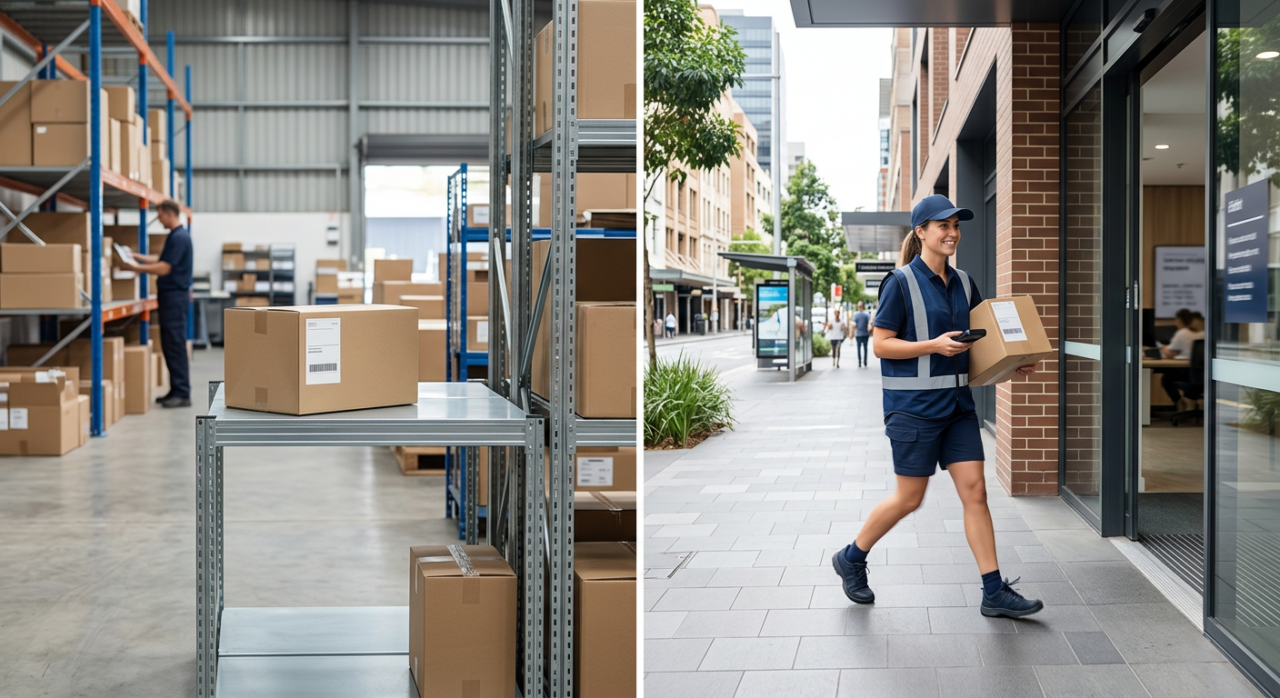
A split-screen comparison of two delivery states — left side shows “tendered for delivery” with a package waiting at a depot or handoff point, minimal movement; right side shows “out for delivery” with a courier actively delivering a parcel to a business.

These two statuses seem similar, but they mean very different things for your customer.

  • Tendered for Delivery: This is a waiting stage. The package is at a local depot and has been assigned to a local courier, but it is not in a vehicle on its way to the customer yet.
  • Out for Delivery: This is an active stage. The package has been scanned and loaded onto the delivery van. It is now on its way to the customer’s address that day.

The difference is certainty. ‘Out for Delivery’ means the package is very likely to arrive the same day. ‘Tendered for Delivery’ means it’s waiting, with a much wider and less certain delivery window.

What to Do If a Shipment Is Stuck?

If a package has been stuck on ‘tendered for delivery’ for more than three business days, it’s time to act.

  • The Solution: The most effective thing to do is contact the business you bought from, not the shipping company. The business is the shipping company’s direct client, so they have more power to get an answer. Give them your tracking number and tell them how long the package has been stuck. They can then contact their manager at the shipping company to find out where it is.

Need a more reliable delivery partner?

Let’s build a delivery chain that protects your brand and keeps customers happy.

Talk to Our Team Today!

Related articles

A delivery van in motion
Blogs -

In-House vs Outsourced Fleet: Which Is Truly Better for Business Profit?

Scale your business without the burdens of fleet management ✓ at Ontime Delivery Solutions. We're…

Line of white delivery vans parked at a distribution center
Blogs -

A Guide to the Last Mile Delivery Metrics Your Business Should Track

Last-Mile Delivery Metrics: Track What Actually Matters

A delivery partner carefully unloading package
Blogs -

The Insider’s Blueprint to Reduce Inventory Shrinkage with a Delivery Partner

Feel like we're an extension of your own staff ✓ with dedicated drivers ✓ at Ontime Delivery…

Contact Us

Please complete all mandatory fields

Please select an option
Please enter your first name
Please enter your last name
Please enter a valid phone number
Please enter a correct email address
Please select a state
Please tell us your industry.
Please enter message
Please agree to the terms