

Calculate Your True Cost Per Mile By Using This Simple Formula to Tame Your Fleet Costs
Benefit from data-driven route optimisation ✓ and cut fuel consumption ✓ at Ontime Delivery Solutions.…
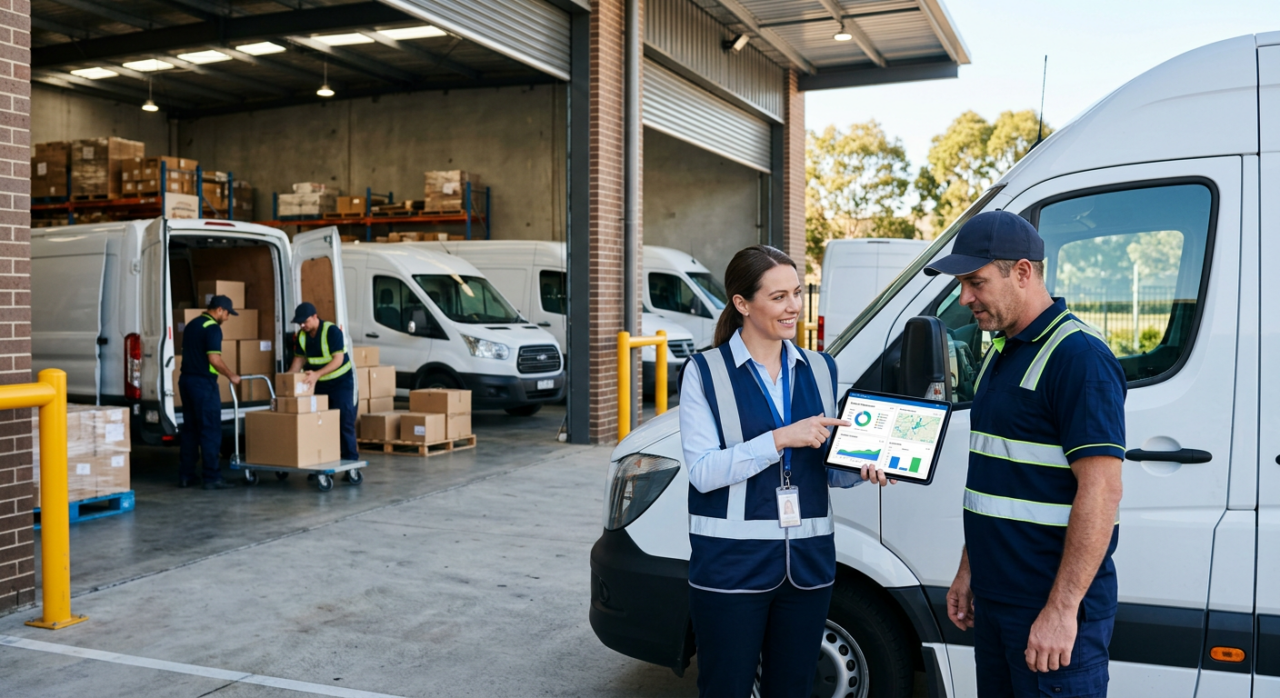
The Cost Per Mile is the total cost for a vehicle in your fleet to travel one mile. High fleet costs can secretly eat into your profits, and it can be hard to know where the money is actually going. This often involves partnering with dedicated delivery services to better manage the overall operating cost. This guide gives you a simple formula to find that number, protect your family home from business risks, and a 30-day plan to take back control.
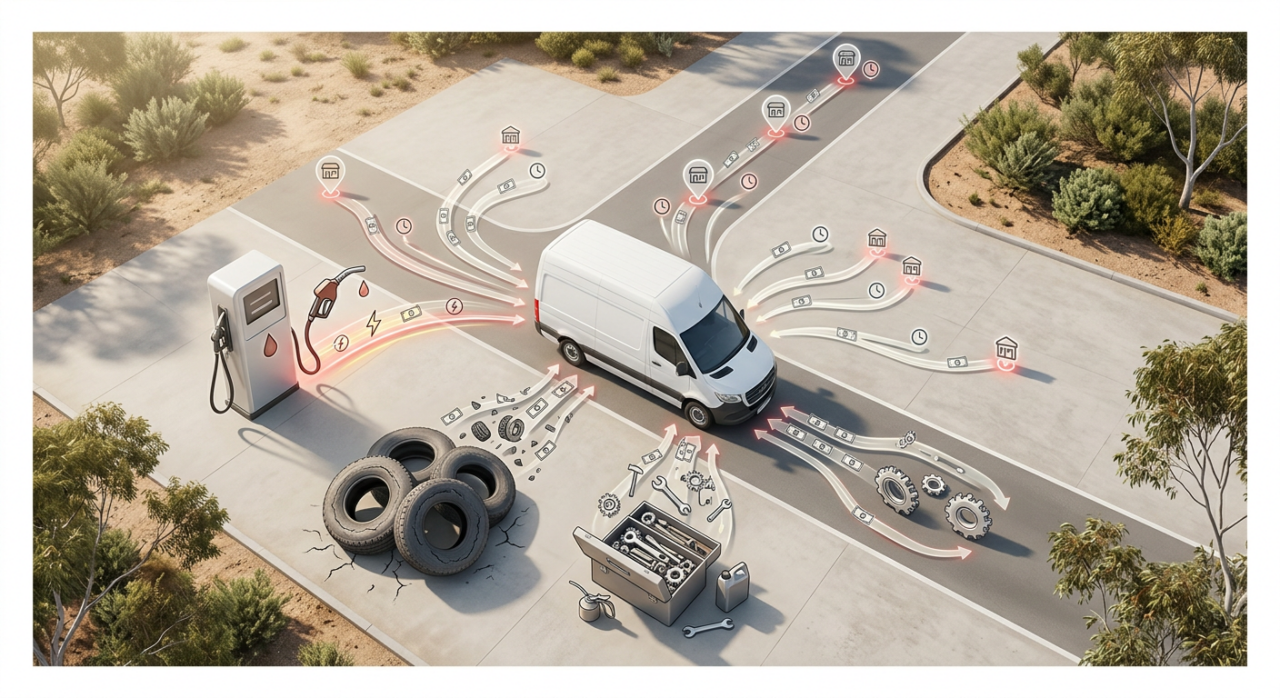
To find your all-in Cost Per Mile, you need to gather some numbers from your business records. Open your accounting software, like Xero or MYOB, and pull out your fuel card statements and vehicle loan documents. You are looking for two sets of numbers.
Now, use this formula to get your number.
Cost Per Mile =
This number tells you the real story of your fleet’s financial health. As a general guide, a well-run 2-tonne van in a city area should operate for about $0.65 to $0.85 per mile. A bigger 6-tonne truck might cost between $1.10 and $1.50 per mile. Even if your records are a bit messy, getting a number that is 80% correct is much better than guessing. Once this number is clear, you can figure out what is causing it to be so high. From my experience, the highest hidden cost is almost always your people.
To lower your people costs, you need to focus on keeping your good drivers. A high Cost Per Mile is often a sign of high driver turnover.
Studies from the Upper Great Plains Transportation Institute show that replacing just one driver can cost between $8,000 and $10,000. That cost comes from the time and money spent on recruitment and training, plus the work that doesn’t get done while the new driver gets up to speed. This is a huge hidden cost that many business owners don’t track. Building a stable team of drivers protects your revenue and lowers your Cost Per Mile.
Here is a simple and respectful system I recommend to keep your drivers happy.
Let us provide dedicated drivers and a fixed rate to help you control your costs.
To take control of your fleet, you should run a 30-day audit. This playbook helps you analyse your fleet’s data like a professional. It’s the exact and proven process we refined for our own Fleet XRAY™ analysis. It’s a proven process for getting clarity.
| Week | Action | The Mechanic |
|---|---|---|
| 1 | Establish a Baseline | Use the formula from Step 1 to find your true Cost Per Mile. |
| 2 | Audit Utilisation | Check your satellite tracking logs or driver timesheets. Is each truck on the road earning money 85% of the time, or is it sitting idle? |
| 3 | Analyse Truck Performance | Look at your records to find which trucks have the highest maintenance costs or the worst fuel efficiency. These are your “lemons.” |
| 4 | Make The Smart Pivot | Compare your true Cost Per Mile against the fixed rate from a professional outsourced provider. Does the data show that making a change is the right move? |
Here’s what I see savvy operators do. When the data shows that the total cost of running their own fleet is too high, they outsource the unpredictable parts of the business. This isn’t about giving up control. It’s about trading daily headaches for the certainty of a fixed-rate partnership. It’s about taking back control of your budget.
A dedicated delivery partner reduces lost or stolen stock by adhering to professional handling procedures. An in-house team may have inconsistent training, but a professional partner uses trained drivers who follow strict procedures. This leads to better security and less damage.
Yes, for most businesses, a dedicated courier is the more secure choice. Professional delivery companies invest heavily in security systems, such as live vehicle tracking and secure depots. Their drivers are also fully background-checked, which creates a safer chain of custody for your goods.
The main financial benefit is turning many unpredictable costs into a single, fixed cost. An in-house fleet comes with costs that fluctuate, such as fuel, unexpected repairs, and driver overtime. A dedicated courier partner usually works on a fixed-rate agreement. This lets you budget with certainty and removes the financial risk of surprise operational problems.
A delivery partner reduces damage by using the right vehicles and trained staff for your specific products. This includes using specialised vans to keep goods stable and training drivers on how to load and unload freight safely. The partner also takes financial responsibility for any damage, which gives them a strong reason to maintain the highest standards of care.
“I’m sharing this blueprint because, after two decades in this business, I’ve seen too many good business managers get hurt by problems they couldn’t see coming. You now have the same framework I use to analyse a business and its transport challenges. The best next step I recommend is to get a professional set of eyes on your numbers. It’s the fastest way to turn this new knowledge into powerful action.”
—Walter Scremin, CEO of Ontime Delivery Services
Let us help you analyse your numbers and build a plan to make your fleet a predictable asset.
From pickup to drop-off, we make every step easier.
Need drivers? 1300 778 919