A How-To Guide On Integrating Your Delivery Fleet into an Omnichannel Fulfillment Strategy

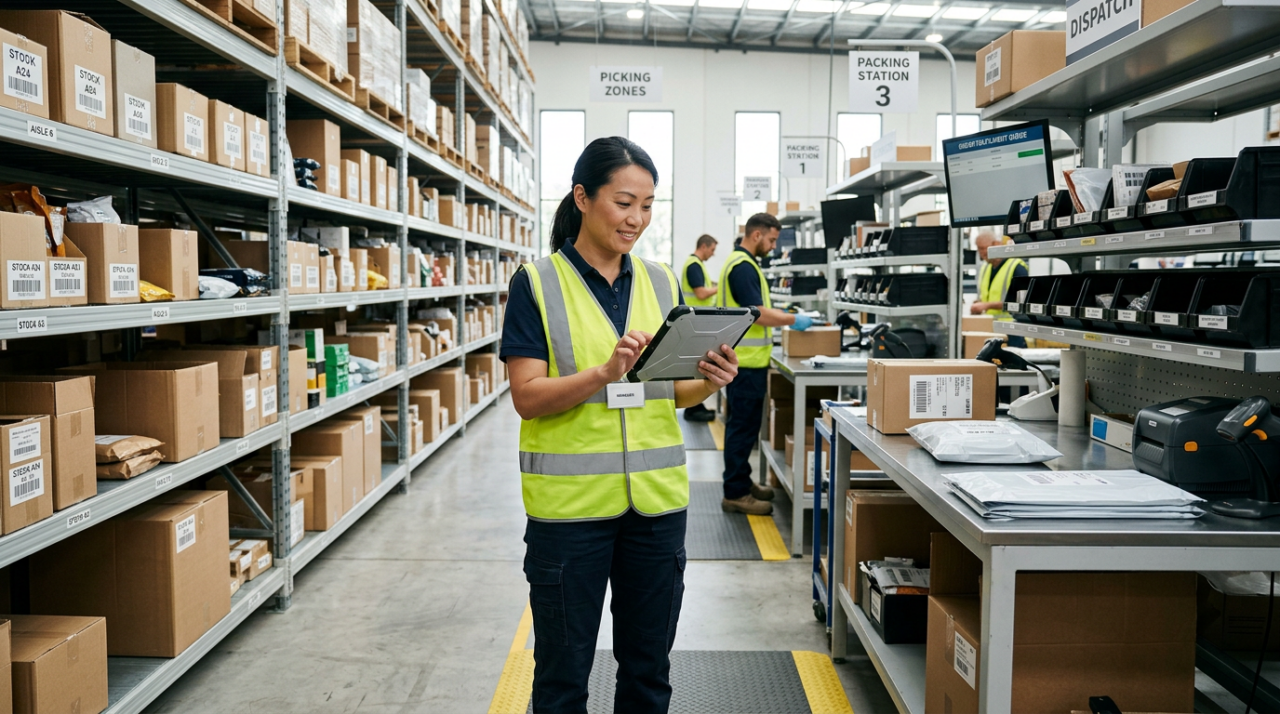
A logistics manager and a delivery driver wearing yellow-green safety vests or jackets, reviewing online orders and delivery routes on a tablet.

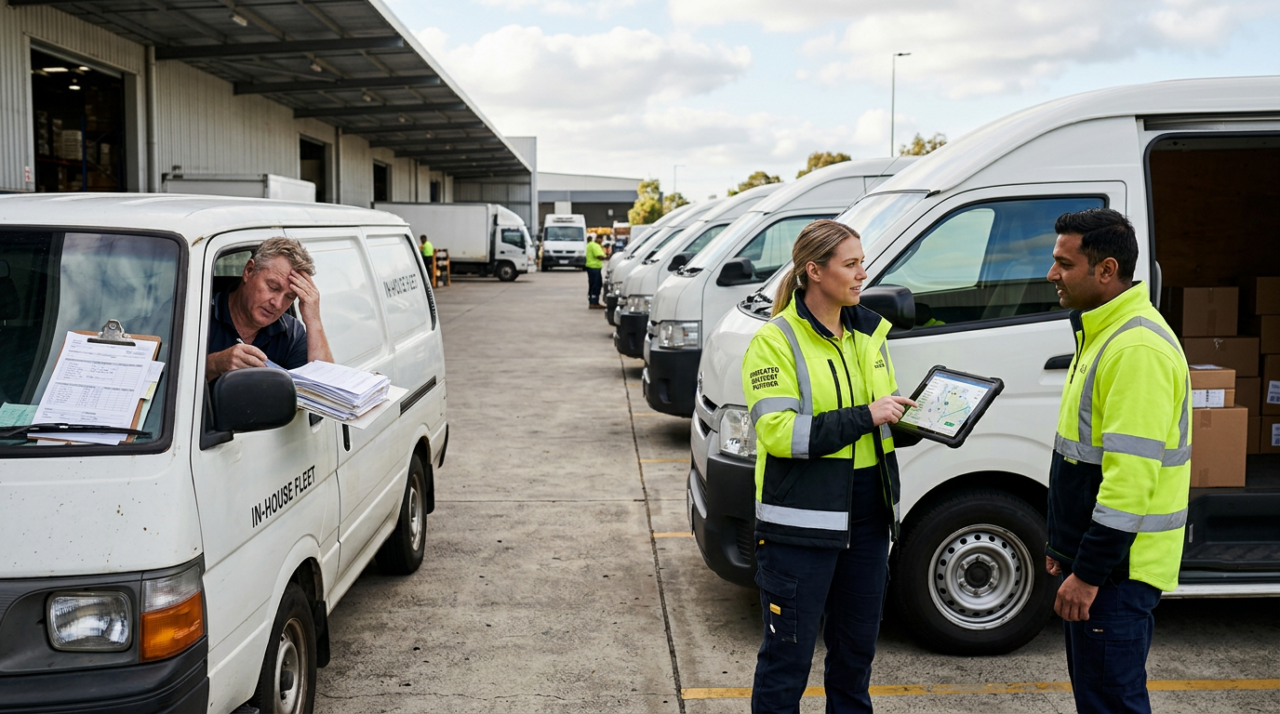
A logistics manager and delivery driver reviewing orders and routes on a tablet beside a delivery van.

To succeed with omnichannel fulfilment, you must first centralise your inventory, establish a fleet model, and then deploy it for key tasks like ship-from-store. Your customers expect a seamless experience between your online presence and physical shops, which is vital now that modern businesses use multiple sales channels.

This means integrating your fleet is a non-negotiable part of a winning omnichannel fulfilment approach. This guide provides a direct, step-by-step blueprint to transform your fulfilment operation from a rigid cost centre into a flexible asset. It’s time to stop playing catch-up and start kicking some serious business goals.

Key Takeaways On The 4-Step Blueprint for an Omnichannel Fleet

  • Step 1: Centralise Your Inventory View. The first step involves syncing online channels with physical fulfilment operations by getting a single, real-time view of your stock via robust inventory management software.
  • Step 2: Establish Your Fleet Model. Decide whether to build an in-house fleet or use a dedicated outsourced partner to physically move your stock and handle transport.
  • Step 3: Implement the Core Omnichannel Tasks. Deploy your fleet to perform ship-from-store, inter-branch transfers, and click-and-collect replenishment runs across multiple channels.
  • Step 4: Train for Brand Experience at the Doorstep. Ensure your drivers are trained professionals who understand the fleet’s role in the customer delivery experience.

Step 1: Centralise Your Inventory View

The first step in any sound logistics strategy is to get a single, unified view of your stock. You can’t efficiently move products if you’re blind to where they are. The goal is to unify your inventory management system, because syncing all channels with physical fulfilment operations is impossible if your systems treat online and in-store stock as separate pools.

Putting It Into Practice: A Hypothetical Sale

  • Poor Practice (Siloed Inventory) A customer in Perth wants to buy a dress. Your website, which only shows warehouse stock, says “Sold Out.” However, you have three of that exact dress sitting unsold in your Sydney store. The sale is lost forever.
  • Good Practice (Unified Inventory) Your inventory management system shows all stock. The Perth customer sees the dress is “Available”, and the system automatically flags it for “ship from store.” The sale is made, and you’ve cleared stock from a branch where it wasn’t selling.

A retail fulfilment manager checking stock availability on a tablet.

Step 2: Establish Your Fleet Model

Once you can see all your stock, you’ll need the physical capability to move it. You have two main choices for your fleet model.

  • In-house Fleet: You buy or lease your own vehicles and hire your own drivers. This gives you maximum control but also comes with high capital costs and significant inventory management burdens.
  • Outsourced Dedicated Partner: You partner with a logistics provider for customised logistics solutions. They’ll supply a dedicated driver and vehicle that operates only for your business. This is a core part of an effective fulfilment setup, converting unpredictable capital costs into a fixed operational expense.

A business owner and logistics partner meeting at a warehouse loading area, discussing delivery operations.

Ready to Optimise Your Business Logistics Today?

Don’t let delivery logistics slow your growth. Partner with Ontime Delivery Solutions for a dedicated fleet that scales with your omnichannel strategy. Enjoy fixed costs, professional drivers, and the reliability your brand deserves. We’re helping businesses across Australia streamline their operations right now!

Call Our Logistics Team Now!

Step 3: Implement the Core Omnichannel Tasks

With your fleet model in place, you can now use it as a physical bridge between your multiple channels and customers. A key consideration is the optimisation of click-and-collect vs home delivery to ensure both fulfilment options are handled smoothly.

Putting It Into Practice: A Hypothetical Daily Route

Here is how a single driver can perform multiple tasks in one efficient loop:

  1. Morning: The driver picks up click and collect orders from the main warehouse.
  2. Mid-day: The driver completes a replenishment run, dropping off the click and collect stock at Locations A, B, and C. While at each store, they also pick up any new ship from store online orders.
  3. Afternoon: The driver delivers the collected shipments from store orders to local customers on the way back to the depot.

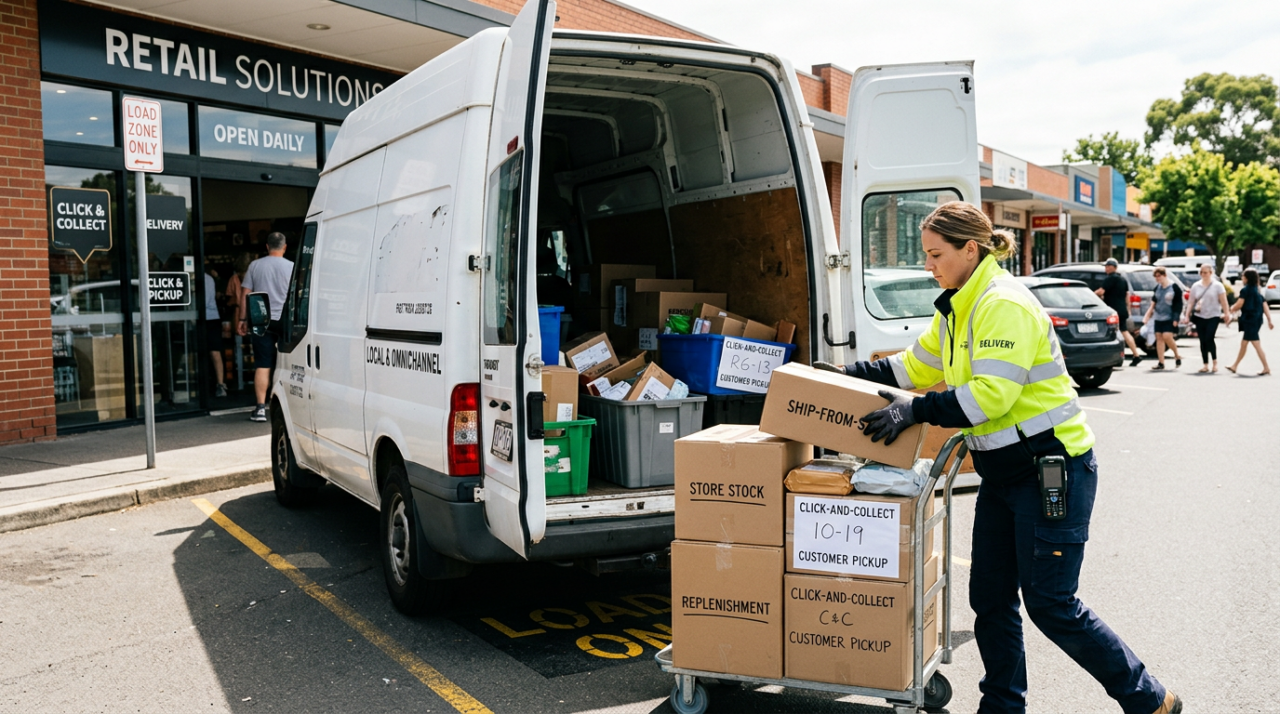
a delivery driver in a yellow-green safety jacket making a multi-stop omnichannel run during the day.

This integrated approach is far more cost-effective than using separate, random delivery services for each individual task. This is the kind of smart shipping that defines a successful omnichannel operation.

Step 4: Train for Brand Experience at the Doorstep

The final step is to recognise that your driver is now a customer service representative. In an online transaction, the delivery driver is often the only human face of your brand the customer sees. This final stage of fulfilment is a crucial part of the customer experience and your overall approach to omnichannel fulfilment.

Putting It Into Practice: A High-Value Delivery

  • Poor Practice (Random Driver): A driver in a generic uniform rushes to the door, hands over the expensive item, gets a quick signature on a dirty device, and leaves without a word. The experience feels cheap and transactional.
  • Good Practice (Dedicated Driver): A driver in a clean, co-branded uniform arrives. They’ll greet the customer by name, confirm the item, and say, “Enjoy your new [Product Name] from [Your Brand].” The experience feels premium and builds brand loyalty.

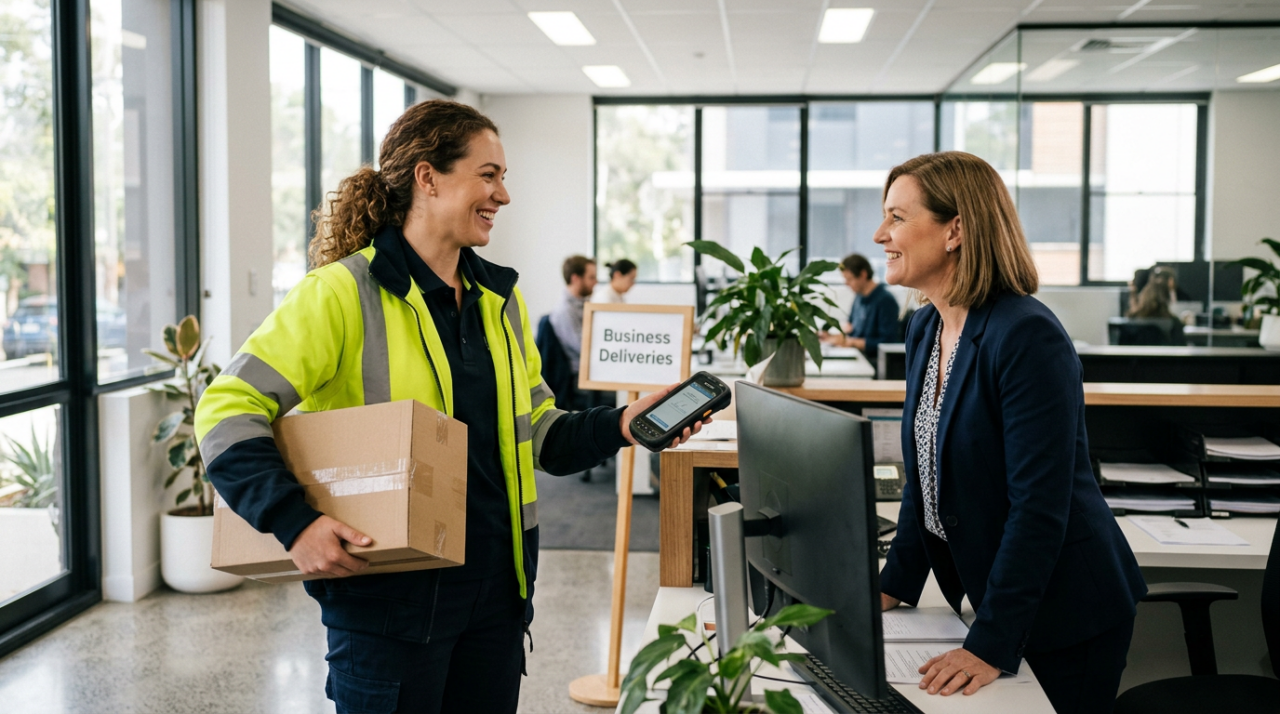
A dedicated delivery driver arriving at a business customer’s store or reception area, warmly greeting the staff member.

An Omnichannel Fulfillment Strategy for Order Management

To prevent your omnichannel fulfilment from falling into chaos, you’ll need a solid plan and technology to manage the complexity. A dedicated logistics partner typically provides this management software as part of their service. This includes:

  • Route Optimisation Software: This shipping software is used to plan complex, multi-stop routes based on custom routing rules, ensuring both home delivery and store replenishment are handled efficiently.
  • Real-Time Tracking: This gives both your team and your customers full visibility on where your drivers and products are at all times, a key part of modern delivery management.

Support team members in a modern office, smiling and talking.

Frequently Asked Questions

How do you start shipping from a store without causing chaos?

The safest way to start a ship-from-store program is with a controlled pilot. This involves three steps:

  1. Choose one or two high-performing stores
  2. Limit the program to a small selection of popular products
  3. Arrange a single, scheduled pickup with a reliable fleet partner each day. This approach allows you to test and refine the workflow, staff training, and inventory adjustments on a small scale before implementing it across your entire network of physical shops.

How does a dedicated fleet help with omnichannel customer returns?

A dedicated fleet supports omnichannel returns by creating an efficient, centralised reverse-logistics channel. When a customer returns an online order to a physical store, the dedicated driver can collect these items from multiple branches during their daily replenishment route. Compared to using ad-hoc drivers for individual returns, this consolidated process is significantly more cost-effective and ensures returned stock is processed back into your warehouse inventory faster.

What is the most critical technology for omnichannel logistics?

The single most critical technology for omnichannel operations is a centralised inventory management system. This system provides a real-time, unified view of stock levels across all locations, including your warehouse and physical stores. This functionality is often handled by a warehouse management system or an order management system. Without this single source of truth, effective order management and order fulfilment are impossible, as staff can’t see available inventory outside their own location. This is where your omnichannel fulfilment can fall apart.

Building a true omnichannel fleet is a step-by-step process, not an overnight switch. Omnichannel fulfilment is complex and requires careful planning and execution. By following this blueprint, you’re not just integrating systems; you’re building a resilient, profitable business that exceeds customer expectations.

Need help with your omnichannel fleet?

Our Fleet XRAY™ analysis can show you how a dedicated partner can help.

Get My Free Fleet Analysis

Related articles

Ontime Reliable delivery partner
Blogs -

The Smart Alternative to Risky Independent Courier Contracts To Secure Your Brand

Secure guaranteed zero downtime ✓ and a dedicated, permanent delivery team ✓ at Ontime Delivery Solutions.…

A delivery partner taking proof of delivery.
Blogs -

What Your Business Needs to Know About Proof of Delivery vs Bill of Lading

Enjoy complete delivery transparency ✓ with real-time tracking and digital PODs ✓ at Ontime Delivery…

A delivery driver holding a package for final delivery.
Customer Focused -

What is Last Mile Delivery? Here’s A Guide to Optimising Your Final Step

Use data-driven route optimisation ✓ to slash your overall delivery costs ✓ at Ontime Delivery Solutions.…

Contact Us

Please complete all mandatory fields

Please select an option
Please enter your first name
Please enter your last name
Please enter a valid phone number
Please enter a correct email address
Please select a state
Please tell us your industry.
Please enter message
Please agree to the terms