The Insider’s Blueprint to Reduce Inventory Shrinkage with a Delivery Partner

Walter Scremin CEO at Ontime
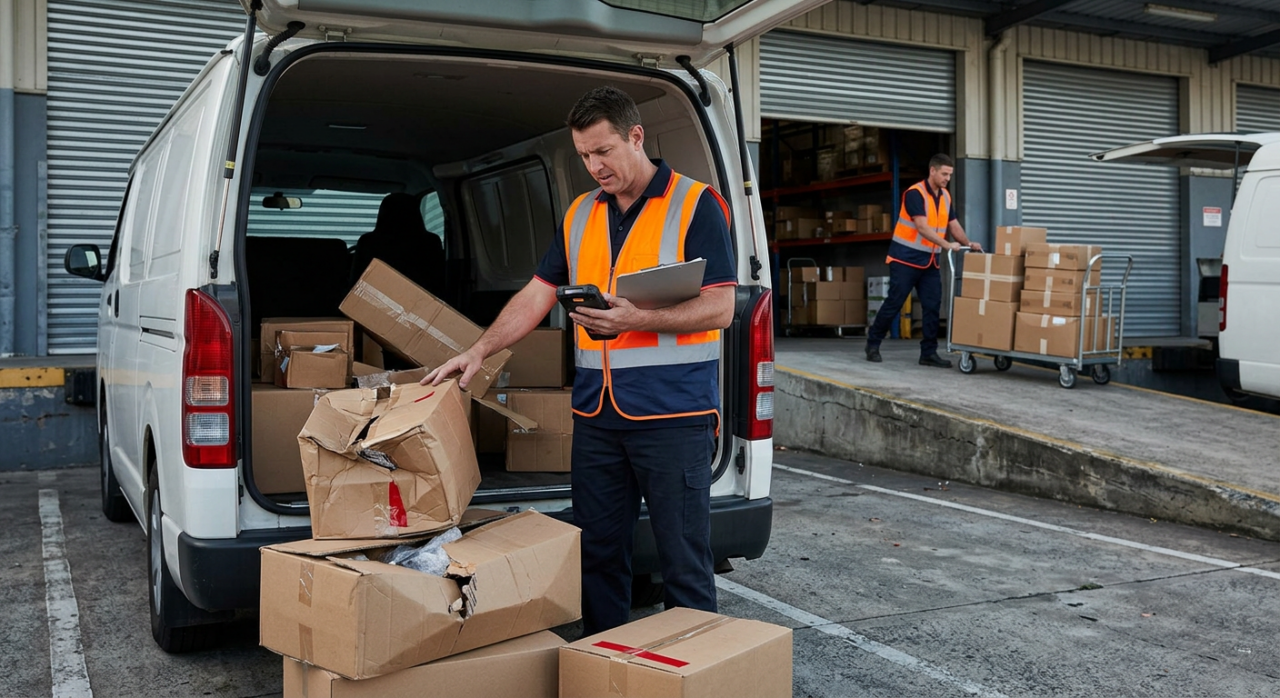
A delivery partner carefully unloading package

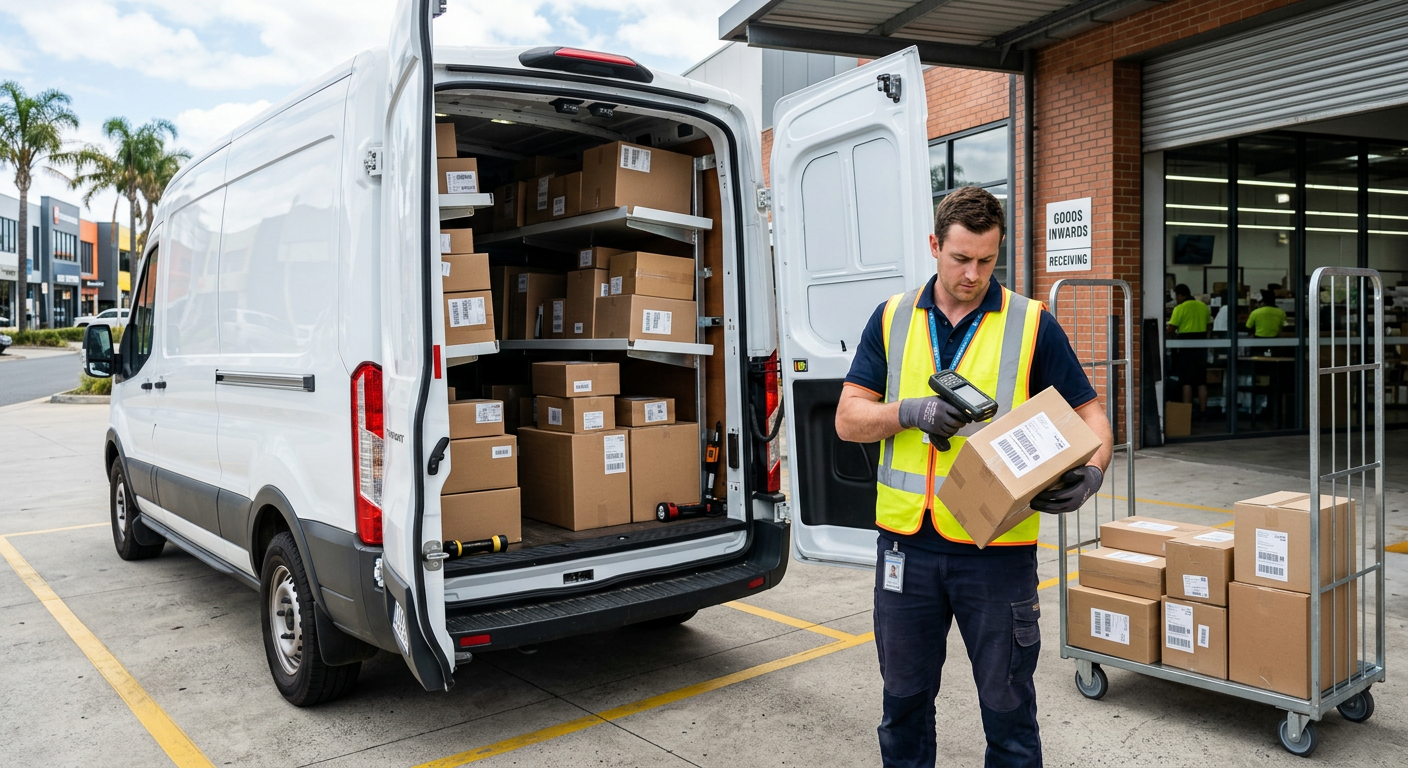
A team of delivery partners and staff collaborating in a clean, organised warehouse while actively handling packages.

After 30 years in logistics, I’ve learned a hard truth about inventory shrinkage. It doesn’t just vanish. For many Australian retailers, it represents 1-3% of annual revenue walking out the door, pushed through invisible cracks in your supply chain. This blueprint walks you through my 4-step diagnostic to find where your profit’s leaking, calculate its true cost and implement a 30-day action plan with clear strategies to fix your fulfillment system. The payoffs are simple. You’ll stop funding hidden inventory losses and start securing the profit that’s already yours with the right dedicated delivery services, a key factor in any robust inventory management plan.

Key Takeaways: A 4-Step Blueprint to Reduce Shrinkage

  • Step 1: Find the Real Leak. Audit the hand-off points between your dock, courier and customer as this is where most inventory loss happens.
  • Step 2: Calculate the True Cost. Add up replacement goods, wasted staff hours and ghost stock to see what cheap delivery really costs your retail operation.
  • Step 3: Diagnose the System. Recognise that repeated errors are symptoms of a flawed system, like no proof-of-delivery standard, not just bad luck.
  • Step 4: Implement the 30-Day Fix. Use shipment tagging and require photographic proof of delivery to create accountability and map every leak to prevent inventory shrinkage.

On This Page

  • Step 1: Where the Real Inventory Shrinkage Happens
  • Step 2: How to Calculate the True Cost of Delivery
  • Step 3: Why Your Deliveries Fail and Inventory Suffers
  • Step 4: The 30-Day Action Plan to Reduce Inventory Shrink

Step 1: Where Real Inventory Shrinkage Happens (It’s Not Your Warehouse)

My advice is to start by auditing your hand-off points. While the first instinct’s often to check the warehouse for theft or errors, my experience shows that issues like damaged parcels or missing items almost always happen in the transition zones. That’s the moment your valuable inventory moves from your dock to a courier and finally to your customer. This is where the majority of inventory shrinkage occurs, far from the watchful eyes of your internal team.

The core of this problem comes down to one thing: is your courier Transactional vs Custodial?

A Transactional courier is paid only to move a box. They’ve no real investment in your brand’s success or your inventory management goals. Their focus is volume, not care, which breeds errors and loss.

A Custodial partner is paid to protect your inventory and your reputation as if they were their own. These partnerships are fundamental to preventing theft and reducing shrinkage.

This distinction is critical because, according to IBISWorld, 89% of Australia’s 56,550 courier enterprises are sole operators. That market structure naturally creates a transactional environment.

Consider the real-world cost: We worked with a home goods supplier who accepted a 2% ‘shrinkage’ rate as normal. But when we audited their hand-off points, we found their transactional courier was leaving heavy, fragile items on doorsteps without a signature, leading to damage and theft. That 2% wasn’t just a number; it was $8,000 a month in replacement costs and negative customer reviews. A custodial approach, focused on proper handling and proof of delivery, eliminated that loss almost overnight.

Step 2: How to Calculate the True Cost of Cheap Delivery and Inventory Shrinkage

To get your real delivery expense, you need to add up the hidden costs. A cheap courier invoice is often misleading because it doesn’t show the hidden tax you’re likely already paying. To get the true number, I recommend tracking three specific things for one month.

A delivery partner inspecting damaged or missing parcels at the back of a van, with some boxes visibly crushed or disorganised.

Let’s see how this ‘hidden tax’ adds up for a business shipping 500 parcels a week:

  • Full Replacement Cost. If just 1% of parcels are lost or damaged (5 parcels/week) with an average value of $150, that is $750 per week or $3,000 per month** in direct cost.
  • Wasted Staff Hours. If your team spends just 4 hours a week lodging claims and dealing with customer complaints at a staff cost of 40/hour, that is 160 per week or $640 per month** that could have been spent on growing the business.
  • The Value of Ghost Stock. This is any item your system shows as despatched, but for which the courier cannot provide proof of delivery. If another 1% of parcels lack proof and are refunded, that’s another $3,000 per month in losses.

Suddenly, a ‘cheap’ delivery service is costing this business over $6,640 a month in real, quantifiable losses that never appear on an invoice. In that kind of high-volume environment, a generic provider simply cannot give your freight the focus it needs.

Stop the Leak in Your Inventory Profits

Are you tired of ghost stock and damaged deliveries draining your bottom line? Partner with Ontime Delivery Solutions for a custodial approach that protects your freight like our own. Our Fleet XRAY Analysis identifies exactly where your supply chain’s failing so you can secure your profit today.

Request Your Free Fleet XRAY Analysis Now!

Step 3: Why Your Deliveries Fail and Inventory Suffers

When a delivery goes wrong, the problem is almost always the system the driver is forced to work in. A weak system allows for thousands of tiny, repeated errors that eventually cause a major failure. Blaming one person is easy, but fixing the systemic cause of inventory shrinkage is how you start kicking goals. This is why focusing on a partner’s system integrity is paramount. A disciplined, well-designed delivery process with built-in checks and balances prevents these errors before they can impact your customers or your bottom line.

Here are the mechanical points of failure I see most often:

  • No Scan Discipline. Drivers skip depot or delivery scans to save time. This creates black holes where parcels disappear from tracking. For your business, this means you can’t answer a customer’s ‘Where is my order?’ query, leading to cancelled orders and a loss of trust. It’s a problem that sophisticated track and trace technology is designed to eliminate.
  • No Proof of Delivery Standard. A scribble on a screen offers you zero protection from customer claims of missing items. It effectively forces you into a ‘no questions asked’ refund policy, where you are financially liable for every unsubstantiated claim, funding these losses directly from your profit margin.
  • No Damage Protocol. A driver notices a crushed box but has no process for reporting it, so they deliver it anyway. The damage isn’t just the cost of the product; it’s the damage to your brand’s reputation when a customer unboxes a crushed item you sent them. This is how loyal customers are lost and negative one-star reviews are born.

My Method. When I’m evaluating a partner, I only ask one question: “Tell me about the last time you had a delivery failure and what specific step did you add to your system to make sure it never happens again?” A great partner talks about redesigning their process, not just reprimanding a person.

—Walter Scremin, CEO of Ontime Delivery Solutions

Step 4: The 30-Day Action Plan to Reduce Inventory Shrink

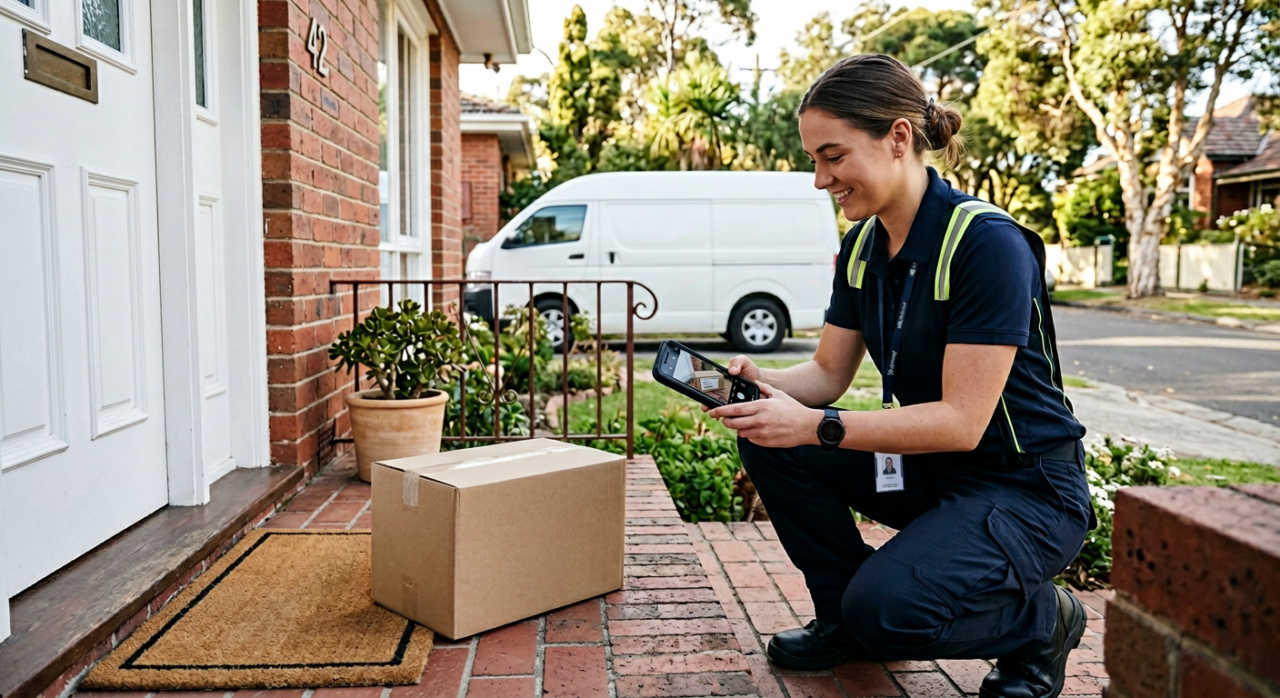
A delivery partner completing a professional delivery with clear proof — taking a photo of the delivered package at a customer’s doorstep while holding a device for confirmation.

Here’s the 3-step action plan you can complete over 30 days that I recommend to every business that’s serious about getting answers and stopping the leaks.

  1. Tag Every Shipment with a Quality Flag. This can be a simple shared spreadsheet. If a customer reports any issue, you immediately flag that order and categorise the problem (e.g., Damage, Missing Item). This turns vague complaints into hard data.
  2. Measure Yourself Against the Market. Industry reports on retail loss are a helpful benchmark. The typical shrinkage rate for Australian retail businesses hovers around 1.5% of revenue. If your rate, calculated from your flagged shipments, is 2.5%, you know you’re not just experiencing ‘bad luck’—you have a systemic leak that is costing you 1% more than your average competitor. That’s a clear benchmark that justifies immediate action.
  3. Require Photographic Proof for Every Delivery. In my opinion, the most powerful change you can make is to eliminate the ‘leave it at the door’ culture. A new policy requiring a signature and a clear photo for every delivery should be non-negotiable. If your current provider cannot do this or charges extra for it, they are showing you they aren’t a true custodial partner in your efforts to reduce inventory shrinkage.

My Final Recommendation

For the last 20 years, I’ve built Ontime Delivery Solutions by focusing on fixing the systems that cause these problems. You aren’t just shipping a product; you’re delivering your reputation. My advice is to find a delivery partner who is built to protect both.

If this playbook has resonated with you, the first step I personally take with any business is what I call a Fleet XRAY Analysis. It’s the practical application of everything we’ve discussed today, designed to give you a clear map of your vulnerabilities and a solid prevention strategy.

Take Control of Your Deliveries Today!

Get a dedicated delivery team that acts as an extension of your business.

Call Us Now for a No-Obligation Chat

Related articles

A delivery van in motion
Blogs -

In-House vs Outsourced Fleet: Which Is Truly Better for Business Profit?

Scale your business without the burdens of fleet management ✓ at Ontime Delivery Solutions. We're…

Line of white delivery vans parked at a distribution center
Blogs -

A Guide to the Last Mile Delivery Metrics Your Business Should Track

Last-Mile Delivery Metrics: Track What Actually Matters

A delivery partner carefully unloading package
Blogs -

The Insider’s Blueprint to Reduce Inventory Shrinkage with a Delivery Partner

Feel like we're an extension of your own staff ✓ with dedicated drivers ✓ at Ontime Delivery…

Contact Us

Please complete all mandatory fields

Please select an option
Please enter your first name
Please enter your last name
Please enter a valid phone number
Please enter a correct email address
Please select a state
Please tell us your industry.
Please enter message
Please agree to the terms