Why a Simple Proof of Delivery App Isn’t Enough for a Professional Fleet
Go beyond basic apps at Ontime Delivery Solutions. Discover full fleet control ✓ and real transparency ✓.…
This guide provides a framework for diagnosing the true cost of your in-house delivery operation and reveals how our solutions can transform your logistics from a costly headache into a powerful competitive advantage with professional fleet management.
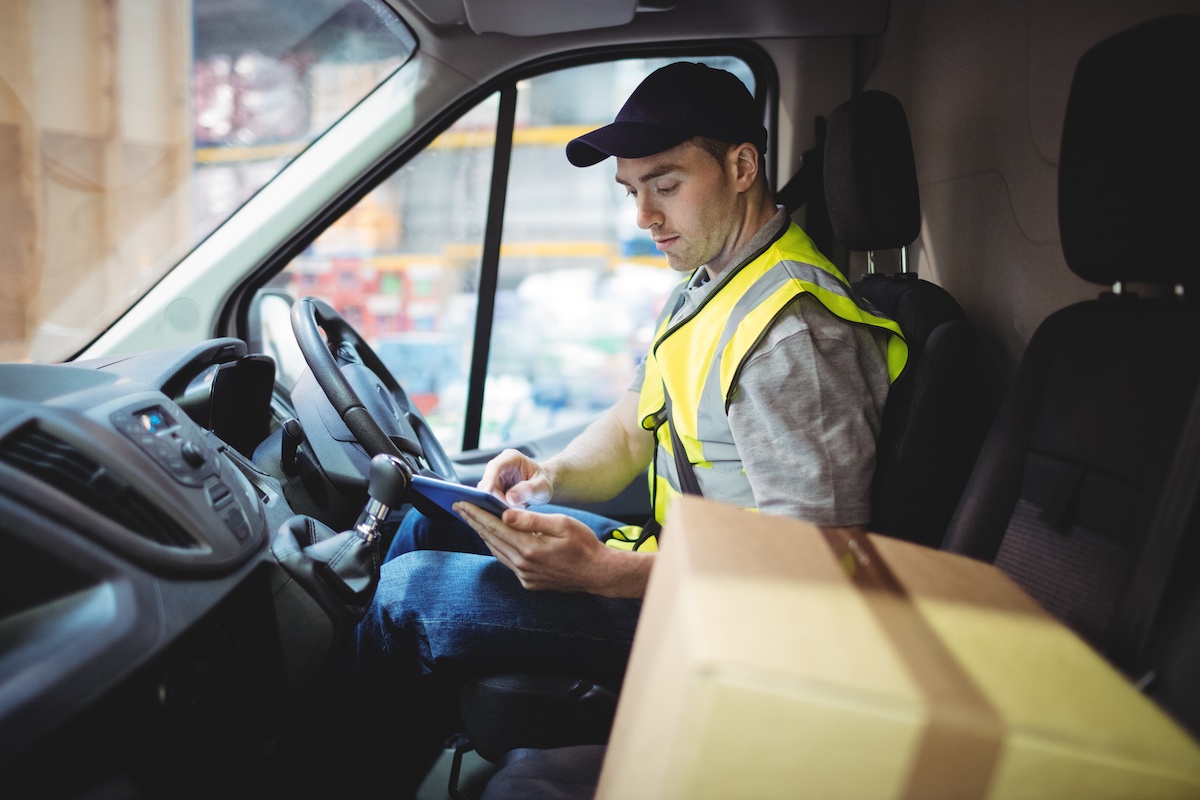
You’re drowning in delivery headaches and logistics management issues. Calls from workshop managers about late auto parts, frantic texts from drivers stuck in queues, and the constant, nagging feeling that your fleet costs are spiraling out of control. So you did the sensible thing: you invested in a Proof of Delivery app for your delivery service.
But the problems didn’t stop. We are Ontime Delivery Solutions, a dedicated delivery service built for businesses that need reliable, professional logistics support. This isn’t just another blog post. This is a diagnostic tool for your transport management. It is the same framework, powered by our advanced delivery technology, that we’ve used to help hundreds of business owners get control of their deliveries and fleet optimisation so they can get back to building the business they love.
Our goal is to give you the clarity to make the right decision for your business’s overall delivery process, whether that’s with our delivery solutions or on your own.
Here’s the journey we’ll take together to improve your delivery operations:
Let’s start with what you did right. Implementing an electronic Proof of Delivery system is a smart first move for any company managing a delivery fleet.
With millions of Australians having parcels lost or stolen each year, a digital proof of delivery is non-negotiable for protecting your business against false claims and improving customer service. This proof of delivery is crucial.
But here’s the problem you’re feeling now: the app only confirms the final step of a delivery. It gives proof of the drop-off while ignoring the entire inefficient and expensive supply chain journey that came before it. A basic app can’t provide true fleet optimisation.
The latest Fleet Technology Trends Report shows that while the majority of fleets now use some form of real-time vehicle tracking, cost reduction remains the top priority for managers. This proves that having a piece of technology isn’t the same as having a comprehensive delivery solution.
The Expert Insight: A simple Proof of Delivery app is dangerous because it gives you a false sense of control over your delivery management. It provides proof of a single event, the drop-off, while completely masking the operational chaos and financial leakage that happened all day to achieve that delivery.
True control over your fleet management doesn’t come from a simple delivery confirmation; it comes from knowing how each delivery was made, and how to make it better and cheaper next time. For example, your proof of delivery app confirms a pallet of parts was delivered to a workshop, but it doesn’t tell you why the driver was an hour late or how it impacts your overall logistics.
It doesn’t show you the inefficient route taken through peak hour traffic, which can increase fuel consumption by nearly 30%. You solved the problem of proof for each delivery, but you’re still blind to the real fleet management problems draining your profit.
Book your free, no-obligation Fleet XRAY Analysis™.
Feeling like you’re leaking money but not knowing exactly where from is frustrating. It’s a systemic problem that every growing business with an in-house delivery fleet faces. Effective transport management starts with a clear financial picture.
The first step to fixing it is to get an honest, data-backed picture of your reality. Here is the framework to calculate your total delivery expenses.
The Philosophy: The first step is to stop thinking about your vehicles as just assets and start evaluating them as tools for a specific job. If the tool is wrong for your delivery service, every single delivery it does will be inefficient and costly.
We’ve seen the same expensive mismatches hundreds of times. Here are the most common ones to check for in your own commercial fleet:
| Vehicle & Use Case | Common Mismatch (The Problem) | The Real-World Impact |
| 4-Tonne Pantech for Bulky Goods | No tailgate lift, forcing manual handling. | Massive inefficiency, increased risk of injury, and longer delivery times. |
| 2-Tonne Van for Multi-drop Runs | Wrong internal shelving, forcing drivers to double-handle goods. | Adds 5–10 minutes to every stop, killing daily productivity and increasing labour costs. |
| Refrigerated Van for Food/Medical | No real-time temperature monitoring. | Huge risk of entire load spoilage, contract loss, and a major compliance breach. |
Finally, your audit must include safety compliance and proof of adherence. You might hear the term “Chain of Responsibility.” As the National Heavy Vehicle Regulator makes clear, these are Australian laws that hold everyone in the supply chain legally responsible for safety, and you must have proof of compliance. A simple check is to ensure you have the right load restraints for your typical freight.
Completing this vehicle audit gives you a clear list of the physical problems in your fleet, so that you can stop leaking money on inefficiency and start building a foundation for profitable growth and better delivery solutions.
The Philosophy: Your standard Profit & Loss statement hides the real cost of your fleet. To make a smart decision about your logistics management, you need a single, honest number that includes not just the obvious bills, but the hidden financial drains that come from being a part-time transport manager.
To find your “True Cost of Operation,” you must add up four categories:
Most owners are shocked to discover their gut-feel estimate is 40–50% too low. The number that shocks them the most is always the last one. The hours you or your managers spend solving delivery problems instead of selling to customers or improving your product is the single biggest hidden cost in your logistics. It never shows up on a balance sheet, but it costs you your future.
Calculating this number is essential, so that you have a single, undeniable figure to benchmark your delivery system against, giving you the confidence to make a strategic decision based on data, not emotion.
Numbers on a page are one thing, but what does fixing these fleet management issues actually look like? A Melbourne-based auto-parts distributor we worked with, Welch Auto Parts, had 18 vehicles. Their analysis put their costs at around $1.4m. After our analysis, we discovered their true, fully-absorbed cost was **$1.84m per year**.
Our managed delivery solution was $1.38m. That was a $460,000 saving in year one, so that the owner could take his first proper family holiday in six years and reinvest the savings into expanding his product line. This principle of fleet cost reduction scales for fleets of any size.
Once you have an honest picture of your fleet costs, you have two choices for your delivery management strategy. Both are valid, but they require commitment to achieve meaningful cost savings and efficiency gains.
If you decide to keep your fleet in-house, we respect that. To make a real difference in your delivery operations, you need to go beyond minor tweaks and focus on the three areas that actually move the needle for professional fleet management.
The Philosophy: The goal isn’t just for tracking your vehicles. It is to use data to change driver behaviour and make smarter routing decisions in real time. This is more than a simple route planner. It is about dynamic route optimisation.
This phased approach proves the ROI with minimal risk, so that you can be confident your investment in this fleet software and technology will pay for itself.
The Philosophy: You need to move from simply paying for time to incentivising the right outcomes: reliability, efficiency, and professionalism. A great delivery driver is an asset who saves you money.
This structure ensures you are compliant and rewards your best performers, so that you create a culture of accountability and reduce costly driver turnover.
The Philosophy: If everyone is responsible for the fleet, no one is. You need a single point of accountability whose only job is to manage assets, compliance, and delivery efficiency.
This process forces you to make a data-driven decision about a new hire, so that you understand the true investment required to manage your fleet professionally.
The alternative is to leverage a logistics partner that has already made these investments in technology, processes, and people. The philosophy here is that an external benchmark from an outsourced delivery expert gives you the ultimate clarity. It’s a no-obligation way to see what a fully optimised delivery solution looks like and compare your own numbers to it.
The first step is usually a strategic consultation. For example, a comprehensive Fleet XRAY Analysis is a deep dive where we take your raw data and provide a clear, side-by-side comparison of your transport management costs. It’s not a sales meeting. It is a strategy session, so that you can make the right decision for your business with complete confidence.
The primary difference is scope. A Proof of Delivery app is a single-function tool designed to solve one problem: capturing a signature or photo to confirm a delivery was completed. In contrast, a full fleet management system is a comprehensive software platform designed to optimise the entire delivery operation. The tradeoff is simple: apps like these are a low-cost solution for proof, while a fleet management system is an investment in operational efficiency.
The largest hidden cost is typically Management Distraction. While direct costs like fuel, tyres, and maintenance are easy to track, the time your non-logistics staff (including owners and managers) spend handling delivery issues is an unrecorded expense that directly impacts business growth. Other significant hidden costs include:
A business should consider outsourcing its deliveries when the “True Cost of Operation” becomes a strategic liability rather than a manageable expense. If you are evaluating whether to hire a dedicated logistics partner, the key trigger point is when the time and capital spent on managing an in-house fleet could generate a higher return if invested back into your core business activities, such as sales, product development, or customer service.
Fleet telematics, the technology behind vehicle tracking systems, provides data that directly reduces operating costs in several key areas. This system allows for proactive management rather than reactive problem-solving. According to industry data, effective use of telematics can reduce fuel costs by 10-25%.
Book your free Fleet XRAY Analysis™.
Get the clarity you need with a free, no-obligation chat.
From pickup to drop-off, we make every step easier.
Need drivers? 1300 778 919