

The 4 Core Functions of Logistics – A Simple Framework for Business Owners
Benefit from a fully outsourced fleet ✓ allowing you to focus on core business growth ✓ at Ontime Delivery…
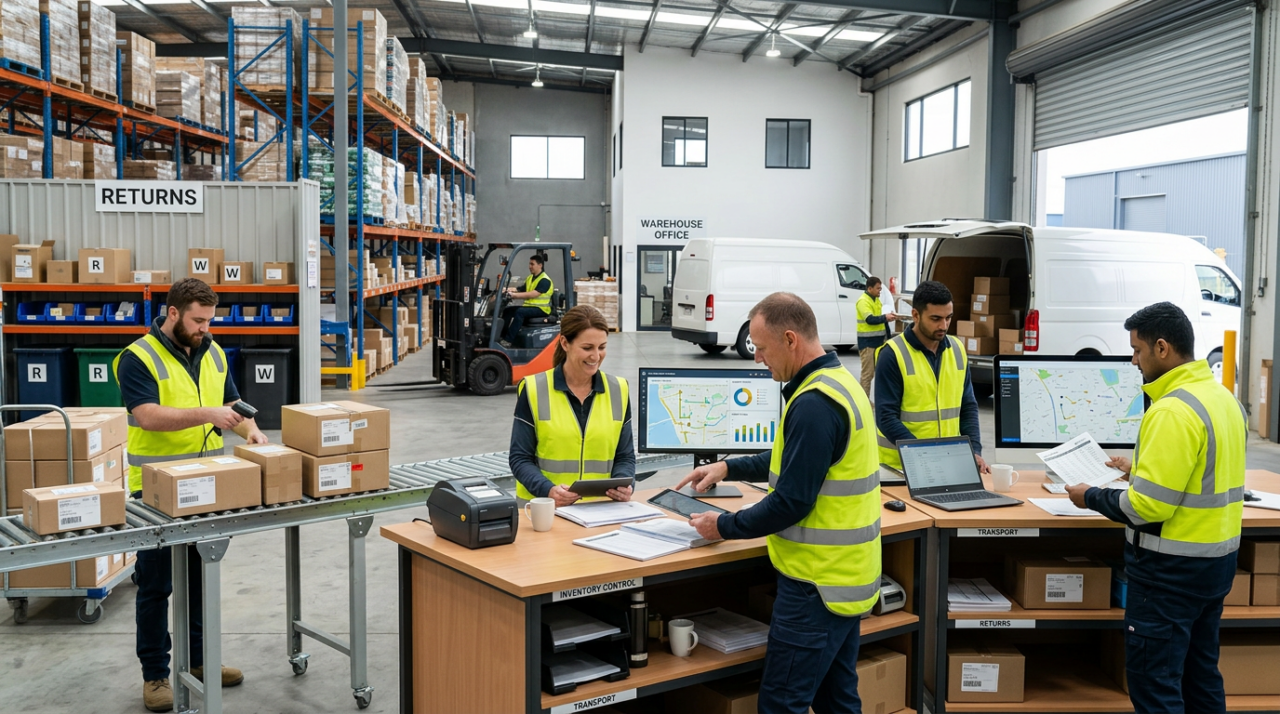
The four core functions of logistics, considered the major logistics functions, are Order Processing, Inventory Management, Transportation, and Managing Returns. For a growing business owner, “logistics” often feels like an overwhelming and expensive problem.
Mastering these components is fundamental to building a robust supply chain. This guide provides a simple framework to understand your entire logistics operations, helping you identify the biggest weaknesses in your process.
By making targeted improvements to the movement of your goods and products, you’ll increase efficiency, find better solutions, and boost your bottom line. The effective management of these logistics functions is the difference between surviving and thriving.
This is the digital starting point of the logistics journey. The mechanics of effective order processing involve the seamless transfer of data from a sales platform, such as Shopify, or a management system to the warehouse floor. A breakdown here, such as a manual data entry error or a process lag, is the root cause of most incorrect shipments. These errors lead directly to costly redeliveries and negative customer experiences, disrupting the entire supply chain. Efficiently handling orders is the first step in successful distribution and ensures the correct products are allocated from the outset.
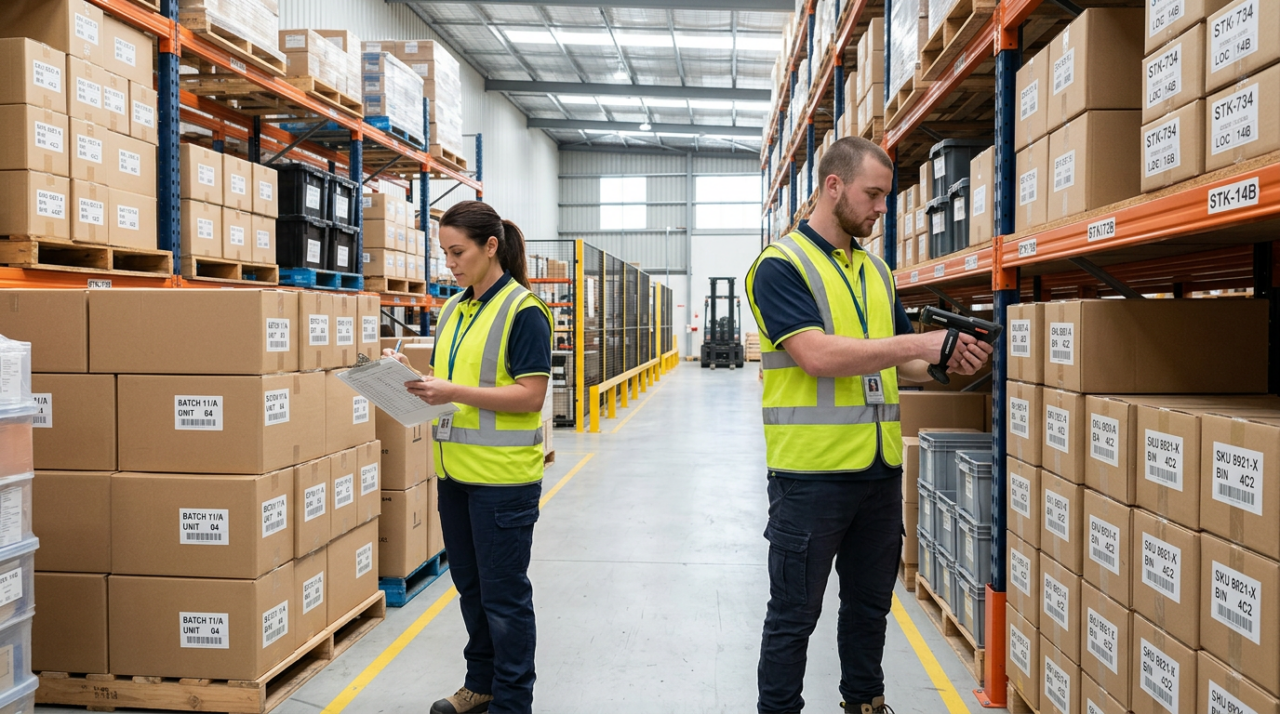
This function is about the physical control of your stock. Your inventory isn’t just a collection of products: it’s cash sitting on shelves. Smart inventory control uses a structured process to track exactly what stock you have and where it’s located within your storage facility. This goes beyond simple tracking: it encompasses the strategic storage of goods, warehouse operations, and ensuring the integrity of your supply. Proper organisation within your facility is vital for coordinating quick retrieval and dispatch, forming a critical link in the logistics chain. Good management here allows for a smooth transition from storage to transportation.
The “Trench Reality”: The goal of effective inventory management isn’t just to prevent theft. It’s to balance two opposing financial risks: overstocking (which traps cash in unsold goods) and under-stocking (which leads to lost sales and disappointed customers). A good methodology finds that profitable middle ground, helping your business kick some serious financial goals.
Mastering your inventory and warehouse is only half the battle. Partner with Ontime Delivery Solutions to ensure your products move seamlessly from your shelves to your customers’ doors. We provide the reliability and expertise you’ll need to scale without the logistical headaches.
Speak to our Logistics Experts Today!
Transportation is the physical movement of your goods, and it’s where most businesses feel the biggest financial and operational strain. Overseeing an in-house delivery fleet today is like running your own IT server room 15 years ago: it’s an expensive, high-risk distraction from your core business. This single function is responsible for the majority of logistics costs and carries enormous risk related to everything from freight management to final-mile shipping. The complexity of routing, vehicle maintenance, and driver oversight makes this a prime area for optimisation within your strategy.
Handling your own fleet means you personally absorb the financial and operational risk of these specific events:
| The Risk Event | The Inevitable Business Impact |
|---|---|
| Vehicle Purchase and Maintenance | High upfront capital expenditure on vehicles, plus unpredictable and volatile costs for fuel, insurance, and major mechanical repairs. These resources could be better allocated. |
| Driver Oversight | The constant, time-consuming cycle of hiring, training, and directing drivers, including payroll, compliance, and covering last-minute sick days. This adds significant administrative burden. |
| Operational Failure | A single van breaking down or a driver calling in sick brings the entire delivery schedule to a halt, breaking promises to customers. |
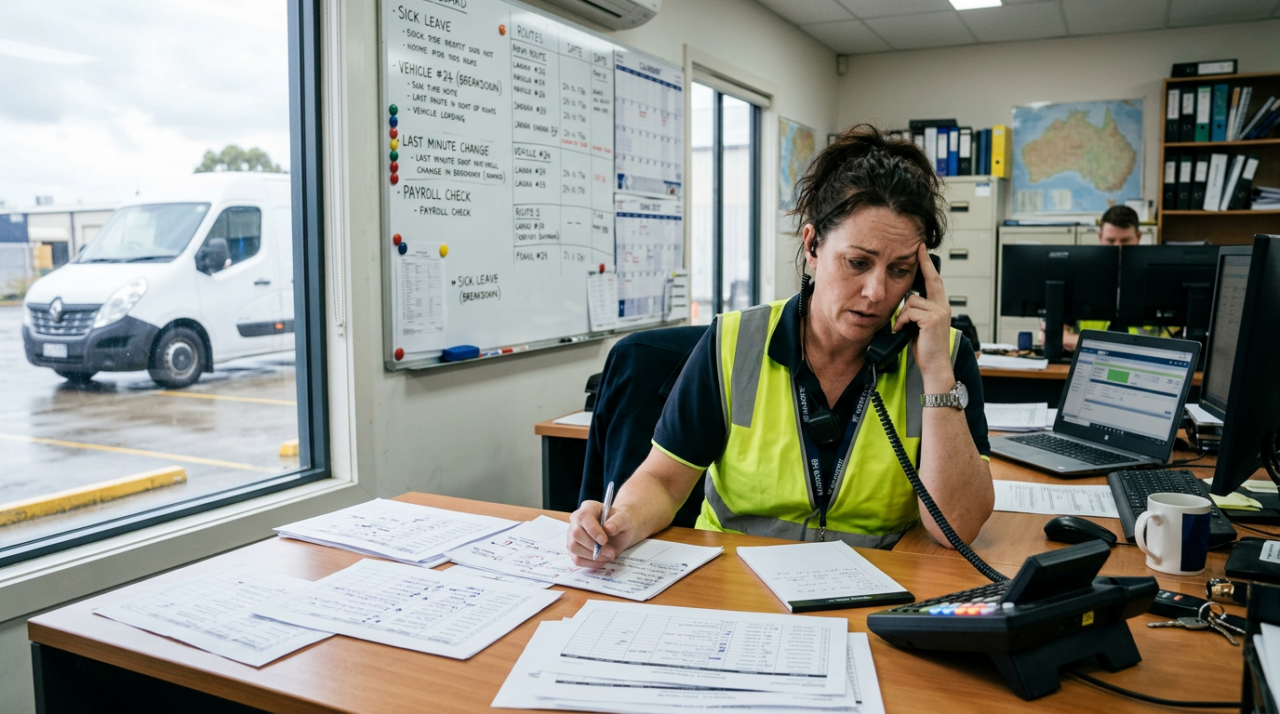
This is the function where outsourcing to a specialist partner provides the most significant and immediate financial and operational advantage. Our processes, for example, are built with fleet redundancy, meaning a replacement vehicle is automatically dispatched if a primary vehicle has an issue, ensuring zero operational downtime for our clients. This approach to logistics management provides stability and reliable distribution for all your products and goods.
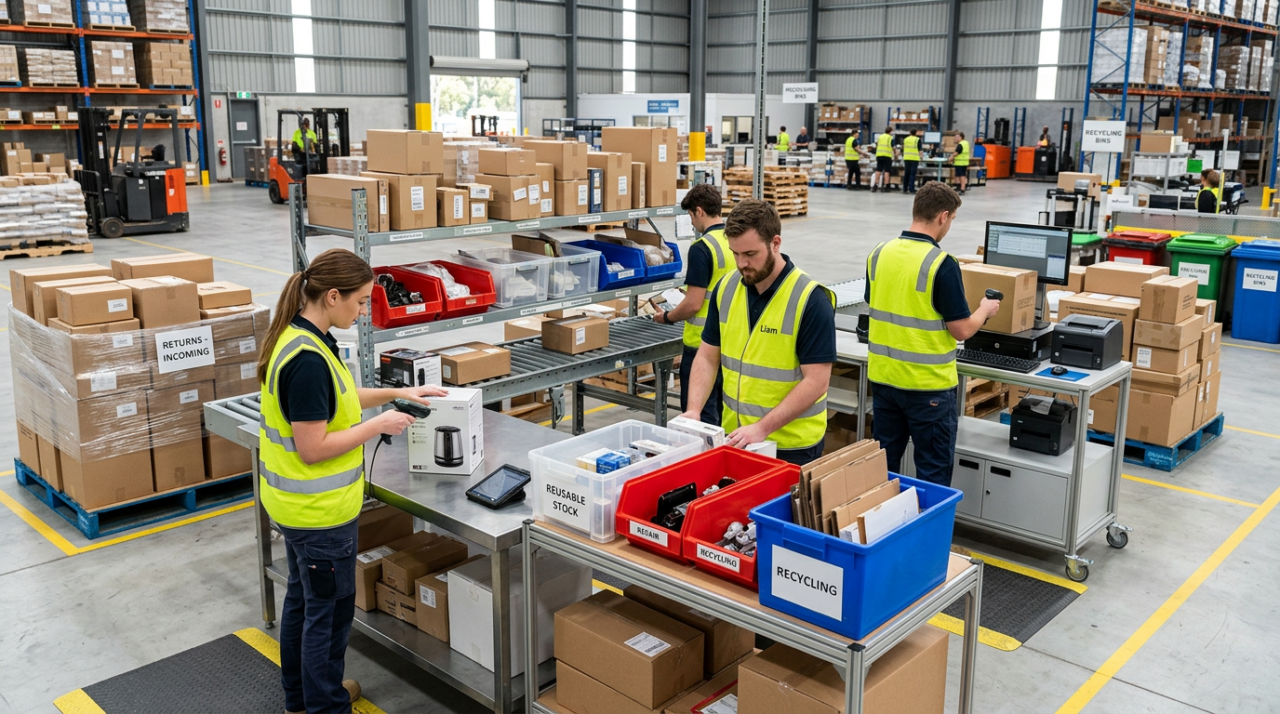
A customer return isn’t a failure: it’s a second chance to deliver excellent service. The returns process is the framework for handling returns, repairs, and recycling of goods. A poor or nonexistent process results in two negative outcomes: wasted stock accumulates in your storage that you can’t resell, and unhappy customers who’ll complain publicly about a difficult returns experience. A well-oiled returns process is a mark of mature supply chain management and can be a competitive differentiator, reinforcing customer loyalty and optimising available resources.
For most businesses, transportation is the highest-leverage function to fix first. While optimising an order process or inventory practices yields benefits, they’re often complex, internal projects. In contrast, improving transportation provides immediate, external results. It cuts the largest cost centre (fuel, wages, maintenance) and reduces the primary operational risk (failed deliveries). This directly impacts cash flow and customer satisfaction, making it the most critical part of your logistics to address for swift, tangible improvements in overall business performance.
The core difference is strategic versus transactional. Using an ad-hoc courier is a transactional solution for a single delivery, providing variability with a different driver each time. Outsourcing to a dedicated partner is a strategic decision to integrate a consistent team, vehicle, and technology into your daily operations. For business owners seeking a long-term solution for their supply chain, a dedicated partner provides operational stability and serves as an extension of the business. In contrast, an ad-hoc courier is best for unpredictable, one-off jobs, whereas many specialised logistics companies focus on creating lasting, integrated solutions.
Outsourcing your fleet transfers operational uptime responsibility from your business to the logistics partner. If an in-house van breaks down, the operation stops, and your business absorbs 100% of the financial and reputational damage. A dedicated partner, bound by a service agreement, is contractually required to provide a replacement vehicle and driver. Their business model depends on absorbing the risk of failure, so yours doesn’t have to. It’s about letting you soar above the daily grind of delivery management dramas, knowing your goods are in safe hands.
By viewing your operation through this four-pillar framework, you’ll move from feeling overwhelmed to being in control. Identifying which function is causing the most financial drain or operational stress is the first step toward building a more resilient, profitable business with a powerful logistics foundation.
Our complimentary Fleet XRAY Analysis can reveal hidden costs in your transportation function and provide a clear, data-driven path to improving your logistics efficiency.
Get My Free Fleet XRAY Analysis
From pickup to drop-off, we make every step easier.
Need drivers? 1300 778 919