

Proof of Shipment vs Proof of Delivery And Our Guide to Winning Every Dispute
Get reliable, real-time proof of delivery ✓ and understand the key differences ✓. We explain proof of…
A single “I never received it” claim from your customers can cost your business thousands and create significant operational headaches. This guide gives you a clear breakdown of the two critical shipping documents you’ll need to protect your business, Proof of Shipment and Proof of Delivery, and shows you how to build a system that wins disputes. Understanding these key differences in the shipping process is vital for managing your logistics and resolving delivery discrepancies effectively, ensuring every shipment reaches the right recipient with the right delivery technology.
A Proof of Shipment is your official handover document, the first piece of critical documentation in the fulfilment journey. In Australia, it’s typically a physical or digital consignment note. It’s the definitive confirmation that a carrier has taken possession of your goods from your warehouse. It is the moment you can confidently tell a customer their order has been shipped.

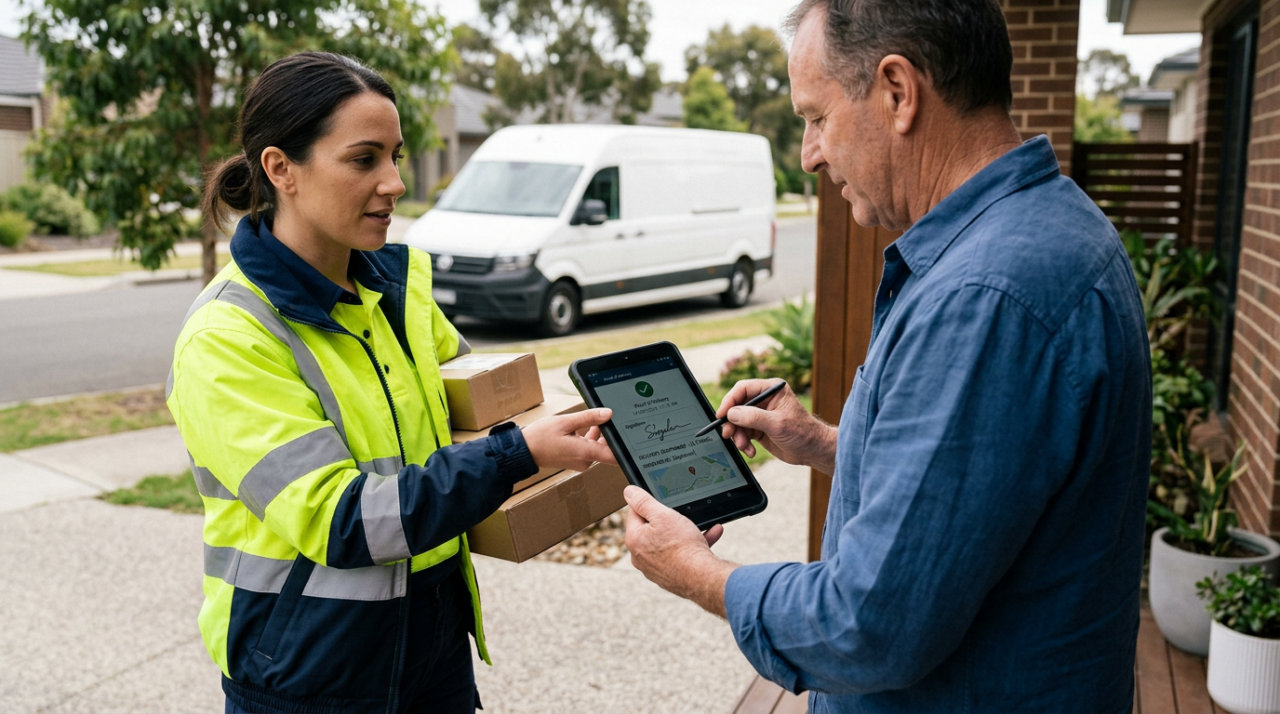
A Proof of Delivery is your final, conclusive evidence that the delivery was successfully received by the end customer. In any “I never received it” dispute, this document is your most important legal shield. The importance of this specific delivery documentation cannot be overstated here: it closes the loop on the entire shipping and delivery process.

You need both documents to create a complete, unbroken chain of liability. Understanding the key differences between Proof of Shipment and Proof of Delivery helps you leave no room for doubt. It’s about kicking goals with your logistics, not just ticking boxes. Here’s a side-by-side breakdown of these essential documents:
| Feature | Proof of Shipment | Proof of Delivery |
|---|---|---|
| What it Proves | Goods and freight have left your control. | Goods were received by the customer. |
| Dispute it Solves | “You never sent it.” | “It never arrived.” |
Need help protecting your business from delivery disputes? Our free Fleet XRAY Analysis shows how a professional system can give you total control over your logistics and proof of delivery processes.
Call our logistics experts at 1300 778 919 to schedule yours today.
A single failed delivery can cost a business far more than just the replacement goods; it can impact customer satisfaction and strain your resources. To protect your revenue and reputation, here are three non-negotiable actions you should take for managing delivery disputes.
Paper dockets are a liability. They get lost or damaged, causing huge delays in getting paid. An electronic proof of delivery system automates this process. It gives your finance team instant, searchable access to every delivery confirmation, providing clear evidence for all your shipments.
Your finance and customer service teams shouldn’t have to waste time chasing physical paperwork. A centralised digital platform allows them to log in, enter a consignment number, and see the signed Proof of Delivery in seconds. This highlights the importance of having organised delivery documentation technology and robust logistics management.

This is where many businesses get caught out. A rushed driver who gets an illegible squiggle is collecting weak data. While it’s technically an acknowledgement, it’s almost useless in a dispute. A dedicated driver, however, is trained to always get a clear, printed name alongside a signature, creating a valid Proof of Delivery every time.
Let’s imagine a customer disputes a $2,000 delivery, claiming they never received the shipment.
You present a digital record with a location stamp and an acknowledgement that is just a wavy line.
You present a digital confirmation with a location stamp, a clear signature, and the driver’s printed name, “John Smith,” clearly entered.

Yes, a digital signature captured via a digital system is legally valid in Australia. Its validity is established under the Electronic Transactions Act 1999, making electronic records a reliable tool for businesses.
For the acknowledgement to be considered legally binding in a dispute, the system used must meet two key criteria:
A professional system that also captures location data, a timestamp, and a clearly printed name provides robust, legally admissible evidence.
The strength of a Proof of Delivery document in a legal dispute depends on the quality and verifiability of the data it contains. An illegible or incomplete Proof of Delivery is considered weak evidence, while a detailed electronic version is very strong.
Here is a direct comparison:
Responsibility for goods lost in transit is determined by which party has possession at the time of loss, which is established by the chain of documentation.
Therefore, if you have a signed Proof of Shipment but the shipper cannot produce a matching Proof of Delivery, the party responsible for transport is liable for the value of the lost goods.
Our free Fleet XRAY Analysis shows how a professional system can give you total control over your logistics and proof of delivery processes.
Call our logistics experts at 1300 778 919 to schedule yours today.
From pickup to drop-off, we make every step easier.
Need drivers? 1300 778 919